
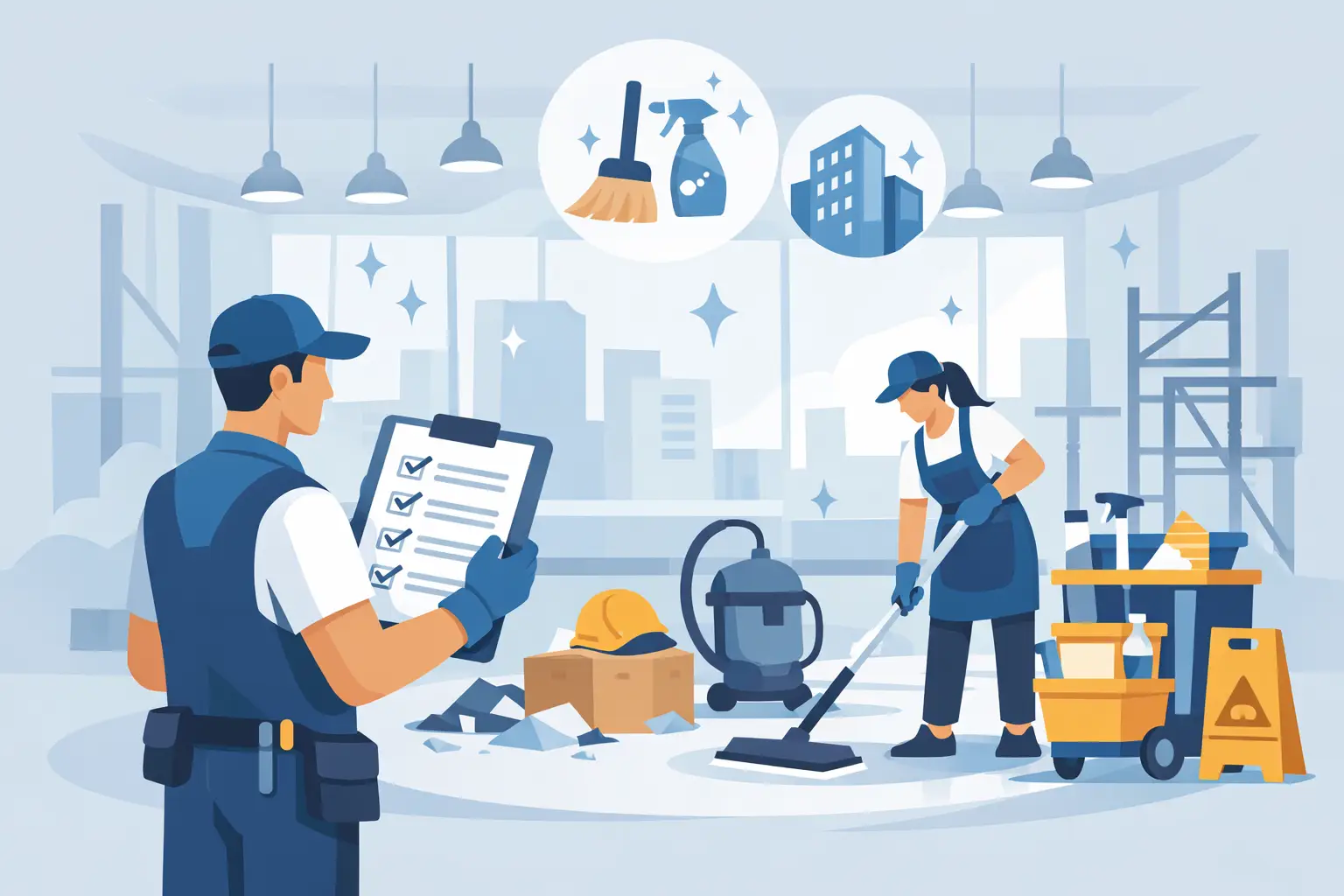

A construction project can look complete while the space is still nowhere near ready for employees, tenants, patients, customers, or inspectors. Fine dust settles after the trades leave, protective film remains on glass and fixtures, and debris can collect in places that affect safety and appearance. Post construction commercial cleaning is the final operational step that turns a finished buildout, renovation, or tenant improvement into a usable business environment.
For facility managers and project teams, this work is not simply a deeper version of routine janitorial service. It requires a defined scope, the right sequencing, and a cleaning crew that can work around final punch-list items, delivery schedules, and occupancy deadlines.
What Post Construction Commercial Cleaning Covers
Post-construction work removes the dirt, dust, adhesives, packaging, and residue created during construction or renovation. The scope changes based on the property type, the extent of the work, and whether the facility is opening for the first time or returning to normal operations after a phased renovation.
A proper service generally addresses floors, walls, baseboards, doors, glass, interior windows, ledges, light fixtures, vents, cabinetry, washrooms, break rooms, and accessible high-touch surfaces. Crews also remove labels and protective coverings where authorized, detail fixtures, vacuum upholstered surfaces, and clean dust from horizontal and elevated areas.
The objective is a space that is visibly clean and operationally presentable, not merely free of large debris. In a medical office, that may mean detailed cleaning before equipment installation and inspection. In a retail location, it may mean streak-free glass, clean shelving, and floors ready for merchandising. In a warehouse, it may mean clearing fine dust from work areas, offices, restrooms, and traffic paths before staff return.
Why Routine Cleaning Is Not Enough
Construction dust behaves differently from everyday office soil. It moves through open ceiling areas, settles inside cabinets, gathers along baseboards, and can reappear after an initial wipe-down. Drywall dust, sawdust, grout haze, paint splatter, caulk, tape adhesive, and fingerprints on new finishes each call for different methods.
Using the wrong product or tool can damage a new surface at the worst possible time. Abrasive pads may scratch glass or polished metal. Harsh chemicals can dull finished flooring, strip sealants, or leave residue on sensitive materials. A professional crew should identify the surface first, follow manufacturer guidance where available, and test an inconspicuous area when there is any uncertainty.
There is also a health and safety reason to treat the job separately. Fine dust can affect indoor air quality and trigger complaints once HVAC systems begin running. Loose debris, exposed fasteners, and slick residue can create hazards for staff, visitors, and contractors completing final work. Cleaning does not replace the contractor’s responsibility for site safety, but it helps prepare the facility for a controlled handoff.
Plan the Cleaning in the Right Sequence
Timing has a direct effect on results. Scheduling cleaning too early can mean paying to clean the same surfaces twice after electricians, painters, flooring crews, or installers return. Scheduling too late can delay furniture delivery, equipment setup, inspections, or a planned opening.
The most effective approach is usually phased. A rough clean takes place after major construction debris is removed and before final finishes or installations are complete. It clears accessible dust, packaging, and waste so the remaining trades can work more safely and efficiently. The final clean follows once construction is substantially complete and the area can be protected from renewed dust and traffic.
For larger projects, a touch-up clean may be needed immediately before occupancy. This final pass focuses on fingerprints, tracked-in soil, newly settled dust, and presentation details. It is particularly valuable for tenant turnover, grand openings, medical facilities, classrooms, showrooms, and spaces being handed over to an owner or property manager.
Before setting a date, confirm that water, power, HVAC, elevators, and site access will be available. Ask who is responsible for hauling construction waste, which areas remain active, and whether any finishes need special care. A clear answer to these questions prevents crews from arriving at a site that is not ready to clean.
Set a Scope That Matches the Building
A generic checklist can miss the areas that matter most in your facility. The cleaning scope should reflect how the building will be used on day one.
An office renovation may require detailed workstation areas, conference rooms, kitchen cabinetry, glass partitions, and entryways. A restaurant needs attention to food-service-adjacent finishes, restrooms, dining areas, grease-prone surfaces, and front-of-house presentation. Schools and daycares need a careful approach to classrooms, washrooms, cubbies, play areas, and high-contact points. Industrial facilities may need cleaning around administrative areas, locker rooms, production support spaces, and safe pedestrian routes without interfering with commissioning or equipment startup.
Property managers should also identify common areas, elevator cabs, corridors, lobbies, loading areas, and vacant suites. These are often the first spaces a prospective tenant or visitor sees, and they can collect the most traffic during the final stages of a project.
Document exclusions as clearly as inclusions. Hazardous materials, exterior window cleaning at height, post-construction waste hauling, duct cleaning, and equipment-specific sanitation may require separate arrangements. Clear boundaries protect the schedule and prevent avoidable disagreements at handoff.
The Areas Most Often Missed
The visible floor is rarely the whole job. Dust collects above door frames, on sprinkler heads, along window tracks, inside drawers, behind toilets, and on return-air grilles. New cabinets and appliances may look clean until protective film, labels, adhesive residue, or construction dust is found inside them.
Glass deserves its own inspection. New partitions, mirrors, storefront glass, and interior windows can show haze, paint specks, caulk residue, and smudges under natural or overhead light. Cleaning should be checked from several angles rather than judged from a single doorway.
Floors require the same attention to detail. Hard surfaces may need vacuuming before damp cleaning so fine grit does not scratch the finish. Carpet may need post-installation vacuuming or extraction depending on the condition and manufacturer requirements. Newly installed flooring should never receive a product or process that conflicts with the installer’s maintenance instructions.
Choose a Commercial Cleaning Partner Carefully
The lowest quote is not always the lowest project cost. An incomplete scope, an untrained crew, or a missed deadline can force your team to arrange emergency cleaning, postpone occupancy, or accept a poor first impression. The provider should be able to walk the site, ask operational questions, and explain how the work will be staffed and inspected.
Look for commercial experience, trained and insured staff, appropriate equipment, safe cleaning practices, and the ability to schedule around construction activity. After-hours availability can be valuable when final work is happening during the day or when a property must be ready before the next business morning.
Ask how quality control will be handled. A useful answer includes a site-specific checklist, supervision, a final walkthrough process, and a point of contact for corrections. For occupied properties undergoing renovation, confirm how the team will separate work zones, control dust transfer, and protect tenants or staff from disruption.
Pristine Maintenance and Services builds cleaning programs around the facility, its operating hours, and the standards required for the space. That same site-specific approach is essential when a project transitions from construction to daily use.
Prepare the Site Before the Crew Arrives
A few project-side preparations make the cleaning visit more productive. Construction waste should be removed, major tools and materials should be cleared from the service area, and contractors should identify any surfaces that are still curing or cannot be cleaned yet. Access instructions, parking details, security procedures, and contact information should be provided in advance.
It also helps to establish who can approve the completed work. If the decision-maker cannot attend the final walkthrough, photographs and a documented checklist can support a prompt review. For larger facilities, divide the inspection by zone so that small concerns are resolved before they affect the entire handoff.
Use the Final Walkthrough to Protect Opening Day
The final walkthrough is where cleaning becomes part of project closeout. Review the space under normal lighting, turn on faucets where appropriate, open cabinets, inspect glass, and walk primary traffic paths. Look from the perspective of the first employee, customer, patient, tenant, or visitor who will enter the building.
If the space will open in stages, prioritize the occupied areas while keeping the cleaning plan flexible for the remaining work zones. A reliable post-construction cleaning partner can adjust timing and scope as the project changes without losing sight of the required standard.
A clean handoff gives your team room to focus on move-in, setup, training, and opening operations. Treat it as a planned project milestone, and the building will be ready to make the right first impression when it matters most.

0 Comments