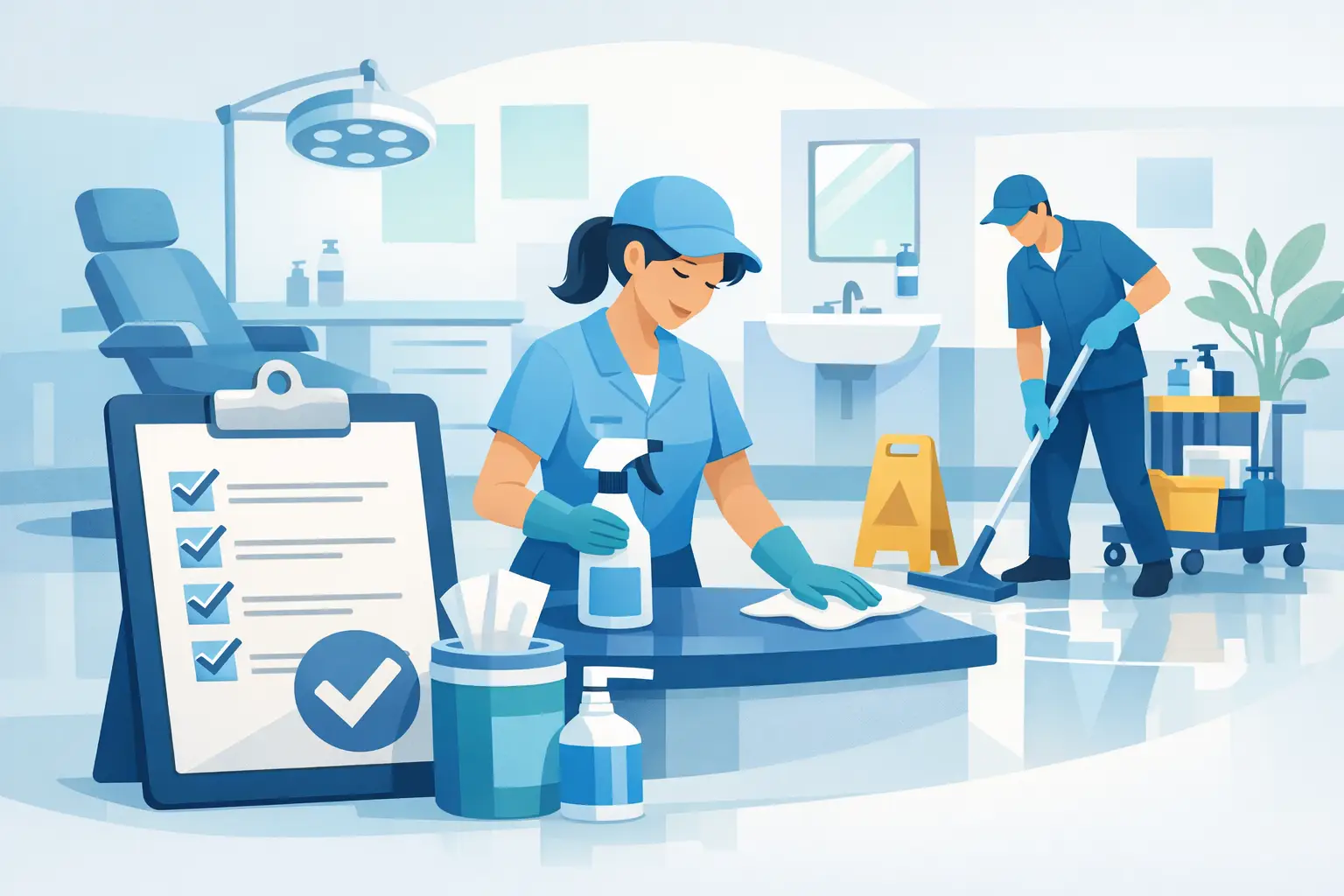

The first patient of the day should enter a clinic that looks orderly, smells neutral, and is ready for care – not a space still carrying signs of yesterday’s traffic. A practical clinic sanitation checklist example gives managers and cleaning teams a repeatable standard for every room, every shift, and every service visit. It also makes gaps easier to spot before they affect patient confidence, staff workflow, or infection-control expectations.
For most clinics, sanitation is not one task completed at closing. It is a coordinated routine that separates ordinary cleaning from targeted disinfection, accounts for high-touch surfaces, and documents work clearly. The exact scope depends on your services, patient volume, room turnover, and local requirements, but the operational structure should remain consistent.
Start With the Clinic’s Risk and Traffic Patterns
A family practice, dental office, physiotherapy clinic, and diagnostic center should not use identical cleaning schedules. A treatment room with frequent patient turnover needs more attention during operating hours than a private administrative office. Restrooms, reception counters, waiting rooms, door hardware, and shared staff areas usually require frequent service because many people touch them throughout the day.
Before building a checklist, divide the facility into zones and assign a cleaning frequency to each one. Reception and waiting areas may need touchpoint disinfection several times daily, while storage rooms may only need a daily or weekly service. Exam rooms should be cleaned and disinfected between patients when the clinic’s procedures require it. This approach prevents both under-cleaning and wasted labor on low-risk areas.
It also helps to identify surfaces that require special handling. Upholstery, electronics, medical equipment, paper records, and specialty flooring may have manufacturer instructions that limit which products can be used. A checklist should never encourage staff to apply a disinfectant where it may damage equipment or create a safety concern.
Clinic Sanitation Checklist Example
The following example is designed for a general outpatient clinic. It can be adjusted for the building layout, staffing model, service hours, and clinical protocols in place. Cleaning staff should use approved products, follow label directions, wear appropriate personal protective equipment, and allow disinfectants to remain wet for the required contact time.
Opening checklist
At the start of the day, the goal is to prepare patient-facing areas and confirm that essential hygiene supplies are available. The opening team should:
- Empty waste and replace liners where needed, including restroom, reception, and staff-area bins.
- Clean and disinfect high-touch points such as entry handles, elevator buttons, light switches, reception counters, payment terminals, chairs, pens, and door plates.
- Inspect restrooms, clean fixtures and touchpoints, replenish soap, paper towels, toilet tissue, and hand sanitizer, then mop floors as needed.
- Vacuum or damp mop floors in reception and waiting areas, addressing visible debris, salt, moisture, or tracked-in dirt at entrances.
- Check waiting-room seating, side tables, water stations, and children’s areas for spills, clutter, or surfaces requiring disinfection.
Opening service should be completed before patient traffic begins whenever possible. If the clinic opens early or operates extended hours, an after-hours commercial cleaning schedule may be the least disruptive option, with staff completing only touch-up tasks during the day.
Between-patient and daytime checklist
Daytime sanitation protects the clinic during its busiest periods. Responsibilities may be shared by clinical employees and designated cleaning staff, depending on the facility’s procedures. The checklist should clearly state who owns each task so that surfaces are not missed because everyone assumes someone else completed them.
For treatment and exam rooms, remove waste, dispose of single-use materials according to clinic policy, and clean then disinfect approved high-touch surfaces between patients as required. This may include chair arms, counter surfaces, door handles, examination tables, keyboards, drawer pulls, and other items touched during care. Follow the clinic’s process for reusable equipment and do not handle regulated medical waste outside approved procedures.
In public areas, disinfect entrance handles, reception counters, payment devices, restroom touchpoints, and common seating based on traffic levels. Clean visible spills immediately using the appropriate response procedure. Staff should also restock hand hygiene supplies before dispensers are empty, not after patients report a shortage.
Closing checklist
Closing service is the time to restore the clinic for the next business day and complete deeper daily cleaning. A dependable checklist includes:
- Clean and disinfect reception desks, workstations, phones, shared keyboards, printers, break-room counters, refrigerator handles, and staff tables.
- Clean and disinfect restrooms from high surfaces to low surfaces, including dispensers, partitions, faucets, flush handles, fixtures, and floors.
- Vacuum carpeted areas and damp mop hard floors using products appropriate for the floor type and soil level.
- Remove waste and recycling, replace liners, and move materials to the designated collection point according to site procedures.
- Wipe fingerprints from glass entry doors and interior partitions, straighten waiting areas, and report damaged furnishings, leaks, or supply shortages.
A closing checklist should include security steps as well. Cleaning personnel need a defined process for securing doors, handling found items, protecting patient information, and reporting any incident that occurred during service.
Cleaning, Disinfection, and Sanitizing Are Not the Same Task
Many checklists fail because they use these terms interchangeably. Cleaning removes visible dirt, dust, residue, and organic material. It is usually the first step because soil can reduce the effectiveness of a disinfectant. Disinfection uses an appropriate product to address pathogens on hard, nonporous surfaces, following the product label for dilution, dwell time, and safe use.
Sanitizing may be appropriate for certain lower-risk surfaces or settings, but it is not automatically a replacement for disinfection in patient-care areas. The right standard depends on the room, surface, exposure risk, and clinical direction. Facility managers should align the cleaning plan with internal infection-control procedures and applicable public health requirements rather than relying on a generic product claim.
Add Documentation That Supports Accountability
A checklist only works when it can be verified. Each task sheet should identify the date, service time, area cleaned, employee initials, and any issue that requires follow-up. Digital logs can be useful for multi-site clinics or facilities with several shifts, while a clearly posted paper checklist may work well in smaller locations.
Documentation should capture exceptions, not just completed tasks. If a restroom dispenser was empty, a spill required extra attention, or a room could not be accessed, record it and assign a follow-up action. This creates a useful operating record for managers and makes vendor communication more direct.
Quality inspections should be scheduled as well. A supervisor or facility representative can review high-touch surfaces, restroom condition, floor appearance, supply levels, odor control, and overall presentation. If recurring problems appear in the same zone, the answer may be more frequent service, different products, additional training, or a revision to the room’s workflow.
Build Frequency Into the Checklist
Daily tasks are essential, but a complete clinic sanitation plan also includes weekly and periodic work. Weekly service may cover detailed dusting of vents and ledges, spot cleaning walls, thorough cleaning of waiting-room furniture, and deeper floor care. Monthly or scheduled specialty work may include carpet extraction, machine scrubbing, high dusting, interior glass cleaning, and detailed cleaning of areas behind movable furniture.
Frequency should reflect actual use. A high-volume walk-in clinic may need several restroom checks per day and frequent disinfection of reception touchpoints. A specialty clinic with scheduled appointments may need less daytime attention but more detailed treatment-room turnover. Flexibility matters because the right plan follows the facility’s operations, not a fixed package of tasks.
Train for Consistency and Safety
Even the best checklist cannot replace proper training. Cleaning staff need to understand chemical labeling, dilution instructions, contact times, cross-contamination prevention, color-coded tools where used, and safe handling of sharps or biohazard concerns. They also need clear boundaries around clinical materials, patient records, and restricted areas.
Use separate tools and cloths for restrooms, patient-care areas, and general office spaces. Replace mop water and soiled materials as needed rather than carrying contamination from one room to another. Supervisors should reinforce these practices through routine inspections and retraining, especially when the clinic changes its layout, services, or hours.
A dependable commercial cleaning provider can help translate these requirements into a site-specific schedule that works after hours or around patient flow. The most useful checklist is the one your team can follow consistently, verify easily, and adjust when the clinic’s real operating conditions change.


0 Comments