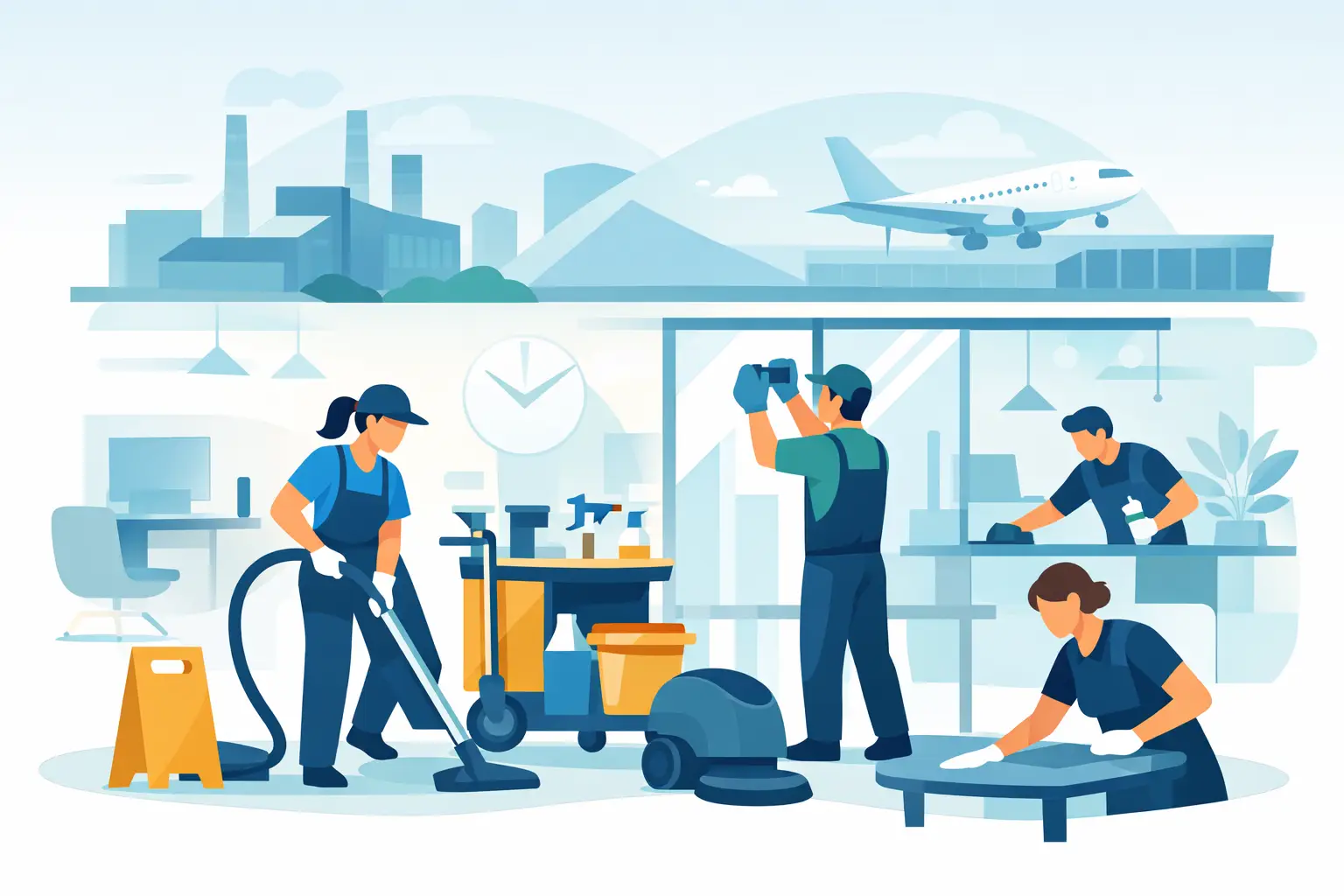

A missed trash pull in an office is frustrating. A missed disinfection step in a clinic, daycare, or gym is a much bigger problem. That is why commercial cleaning services cannot be treated like a generic checklist. For business owners, property managers, and facility teams, cleaning is part of daily operations, risk control, and the way a building is experienced by staff, visitors, tenants, and customers.
The right provider does more than keep surfaces looking presentable. They help maintain hygiene standards, reduce disruption, and support the way a facility actually functions. That matters even more in high-traffic, regulated, or customer-facing environments where cleaning quality affects health expectations, brand perception, and operational continuity.
What commercial cleaning services should actually cover
At a basic level, commercial cleaning includes recurring tasks such as trash removal, restroom sanitation, dusting, vacuuming, mopping, and touchpoint cleaning. In practice, that definition is too broad to be useful. A warehouse, medical clinic, retail store, and condominium common area may all need recurring service, but the cleaning scope, timing, and procedures are very different.
A strong commercial program starts with facility use. Offices often need workstation detailing, breakroom cleaning, restroom maintenance, and after-hours service that does not interrupt employees. Medical spaces may require stricter disinfection protocols, attention to exam rooms and waiting areas, and a higher standard for cross-contamination control. Schools and daycares need frequent touchpoint cleaning and a plan that reflects constant movement, shared surfaces, and sanitation concerns. Industrial sites may require floor care, debris control, and cleaning methods appropriate for production environments.
This is where many buyers run into trouble. Some vendors sell the same package to every client and simply adjust the price by square footage. That may work for a small low-traffic space, but it falls apart in buildings with compliance demands, multiple users, long operating hours, or specialty areas.
Why facility-specific commercial cleaning services matter
Cleaning quality is not just about whether a floor shines at the end of the night. It is about whether the service plan fits the building. A property manager overseeing a mixed-use facility has different concerns than a restaurant operator or an office administrator. The schedule, access points, security protocols, and hygiene priorities all change the cleaning approach.
A facility-specific program accounts for traffic patterns, vulnerable areas, and the hours when cleaning can happen without getting in the way. In some buildings, daytime porter support makes sense because washrooms, lobbies, and shared areas need attention throughout the day. In others, after-hours service is the better fit because cleaning crews need full access without disrupting staff or customers.
There is also a staffing and training issue. Not every environment should be cleaned the same way, and not every worker is prepared for every site. Medical offices, schools, food-adjacent areas, industrial settings, and residential common spaces each require different procedures, products, and expectations. A reliable provider understands those differences before service begins, not after problems appear.
What business buyers should evaluate before hiring
Price matters, but low cost by itself is rarely a good indicator of value. When evaluating commercial cleaning services, buyers should look at the parts of service that affect consistency over time.
The first is scope clarity. A proposal should explain what is being cleaned, how often, and under what conditions. Vague language usually creates service gaps later. If floor care, disinfection, supply replenishment, or specialty cleaning is needed, those expectations should be clear from the start.
The second is scheduling flexibility. Many facilities cannot pause operations for cleaning. Offices may need evening service. Gyms may need overnight cleaning. Retail may need early morning work before opening. A provider that cannot align with operating hours will create friction even if the cleaning itself is acceptable.
The third is staffing reliability. Trained and insured crews, documented procedures, and consistent supervision matter because commercial cleaning is repetitive work that only stays strong with oversight. High turnover and poor communication usually show up first in missed details, then in larger quality problems.
Responsiveness is another major factor. Buildings change. Tenants move in, flu season hits, events create extra traffic, and an unexpected spill or outbreak concern can change priorities quickly. Buyers should ask how the provider handles adjustments, urgent requests, and quality concerns. A service partner should be reachable and able to adapt without turning every change into a problem.
Different facilities need different standards
One reason commercial cleaning services are often misunderstood is that the term covers too many building types. Decision-makers should think less about buying a category and more about matching a program to the environment.
In office settings, consistency and appearance usually lead the conversation, but hygiene still matters. Shared kitchens, conference rooms, washrooms, and reception areas shape how employees and guests judge the workplace. If service is inconsistent, people notice quickly.
In medical clinics and health-sensitive spaces, the stakes are higher. Cleaning must support sanitation expectations, reduce risk on high-touch surfaces, and follow a clear process. Here, a provider needs discipline more than speed.
Warehouses and industrial facilities bring a different challenge. Dust, debris, heavy foot traffic, and operational constraints can make standard janitorial routines ineffective. Safety and practicality need to guide the plan.
Schools, daycares, gyms, restaurants, and condominiums all have their own pressure points as well. Shared surfaces, public visibility, odors, washroom use, and traffic volume can all shift what “clean” really means in that setting. A useful vendor understands those operational differences instead of forcing every site into the same routine.
The role of disinfection and specialty cleaning
Not every building needs intensive disinfection every day, and that is where nuance matters. Routine cleaning and targeted disinfection are related, but they are not the same service. High-touch surfaces, washrooms, breakrooms, and health-sensitive areas may need a more deliberate disinfection process depending on the environment and risk level.
Specialty cleaning also becomes important over time. Carpet extraction, hard floor maintenance, post-construction cleanup, high dusting, deep restroom restoration, and periodic detailing are often necessary to maintain standards that routine service alone cannot hold. Buyers should ask whether these services are available as part of a broader program or handled separately.
A provider that can manage both recurring cleaning and specialty work is often easier to work with because they already understand the building, the schedule, and the expectations. That said, bundling only makes sense if quality remains strong. More services do not automatically mean better execution.
What good service looks like after the contract starts
The real test of commercial cleaning services begins after onboarding. Early walkthroughs and polished proposals are helpful, but ongoing quality depends on execution. Good service feels steady. Restrooms are maintained, floors are addressed before they become a complaint, supplies are monitored, and issues are handled before they grow.
Communication should also be straightforward. Facility teams should know who to contact, what the escalation process looks like, and how service changes are documented. If a provider is hard to reach during normal operations, that becomes a bigger issue when something urgent happens.
The best relationships are operational, not transactional. That means the cleaning provider understands the building, notices changes, and adjusts with the client instead of waiting for repeated complaints. For many businesses in Toronto and the GTA, that is exactly where a company like Pristine Maintenance and Services adds value – not by offering a generic package, but by aligning service with the way the facility actually runs.
A clean building should not require constant follow-up from your team. It should support the way people work, move, and interact in the space every day. When commercial cleaning is planned around operations instead of sold as a standard commodity, the result is not just a better appearance. It is a more dependable environment for everyone who uses the building.


0 Comments