
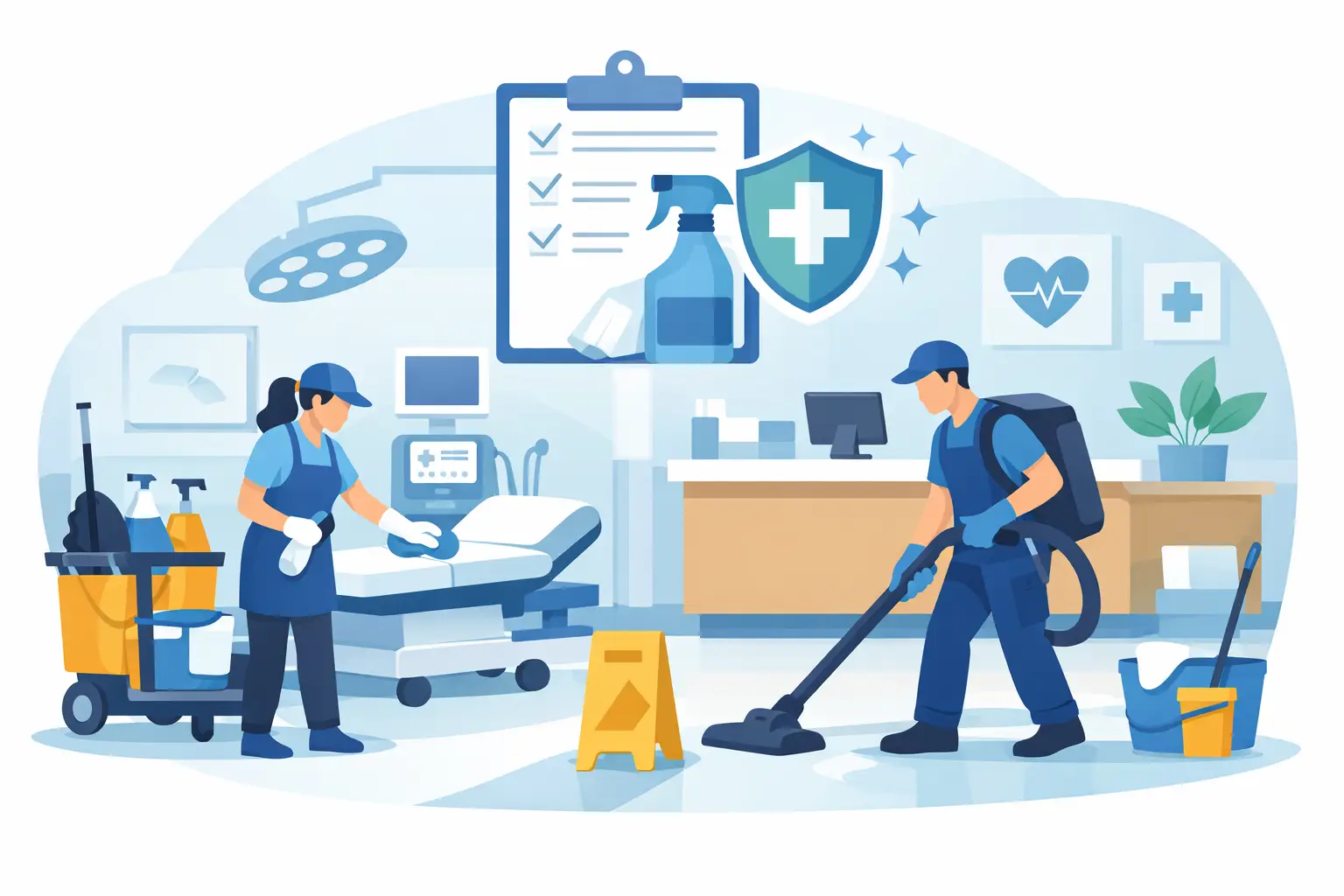

A waiting room can look tidy and still fall short of what a clinical environment actually needs. That is the gap many facilities run into when they hire general cleaners for a medical setting. Medical clinic cleaning services are not just about appearance. They are about supporting infection control efforts, protecting staff and patients, and keeping the facility presentable without interrupting care.
For clinic managers, physicians, and operations teams, the real question is not whether cleaning matters. It is whether the cleaning program matches the way the clinic actually runs. A family practice, walk-in clinic, specialist office, imaging center, and multi-tenant medical building all have different traffic patterns, room turnover needs, and sanitation priorities. A one-size-fits-all scope usually creates blind spots.
What medical clinic cleaning services should cover
In a medical environment, cleaning has to follow the logic of risk and use. Reception areas, exam rooms, charting stations, staff kitchens, restrooms, treatment spaces, and high-touch corridors do not require the same frequency or the same process. The best service plans account for that instead of treating the clinic like a standard office.
Day-to-day work often includes dust control, floor care, restroom cleaning, waste removal, touchpoint disinfection, and detailed cleaning of common surfaces. In a clinic, though, the details matter more. Door handles, chairs, light switches, counters, sink fixtures, shared devices, and waiting room surfaces can see constant contact throughout the day. If those areas are missed or cleaned inconsistently, the entire program becomes less effective.
Exam and treatment rooms also need a more disciplined approach. Even when in-room clinical sanitation is partly handled by staff between patients, the broader cleaning program still has to support the space properly. That can include floors, baseboards, corners, cabinetry exteriors, supply area surfaces, and non-critical touchpoints that build up soil and contamination over time.
Why clinics need a custom cleaning plan
Medical facilities operate on tight schedules. Some open early, some run into evenings, and many have unpredictable patient flow. That is why medical clinic cleaning services should be built around the clinic’s actual hours, staffing patterns, and room usage.
A custom plan starts with the layout and the type of care being delivered. A pediatric clinic may need more frequent attention in waiting areas and restrooms. A dermatology or procedure-based office may place more emphasis on treatment rooms and sharps-adjacent waste zones. A physiotherapy practice may need extra focus on equipment-touch surfaces and therapy rooms. These are not small differences. They shape the entire service schedule.
Frequency also depends on volume. A low-traffic specialist office might need a different nightly scope than a busy urgent care setting. Some clinics benefit from after-hours cleaning only. Others need a combination of regular evening service and daytime porter support for lobbies, restrooms, or urgent touchpoint cleaning. The right answer depends on the building, the patient load, and internal staffing.
Medical clinic cleaning services and infection control support
Cleaning companies do not replace clinical infection prevention protocols, but they do play an important supporting role. That is why the process matters as much as the checklist.
Products must be appropriate for healthcare-adjacent use, and staff need to understand dwell times, contact points, cross-contamination prevention, and safe handling procedures. Using the wrong product on the wrong surface can damage finishes or leave behind residues. Rushing through disinfection steps can create the appearance of sanitation without delivering the intended result.
Color-coded tools, clean-to-dirty workflows, and clear separation between restroom cleaning materials and other equipment are basic but necessary controls. Staff training matters here. So does supervision. In medical environments, inconsistency shows up quickly, whether it is in streaked surfaces, trash overflow, odor issues, or missed touchpoints.
Areas that are commonly overlooked
When clinics review cleaning quality, they often focus on what is easy to see. Floors, counters, and restrooms get attention first. The more revealing question is what gets missed repeatedly.
High-touch but low-visibility areas tend to be the problem. Chair arms in waiting rooms, door plates, interior glass, reception ledges, staff breakroom handles, switch plates, and edges around exam room furniture are easy to overlook if the team is working from a generic office routine. Dust on vents, buildup around baseboards, and neglected corners can also undermine the overall impression of cleanliness, even when the main surfaces appear fine.
Waste handling is another area where detail matters. Clinics may have multiple waste streams, and even where regulated disposal is managed separately, janitorial staff still need to understand boundaries, container handling expectations, and escalation procedures if something is found outside the normal scope.
Scheduling without disrupting patient care
The timing of service is one of the biggest operational decisions. In most clinics, after-hours cleaning is the safest option because it avoids interference with patients, front desk activity, and exam room use. It also gives the cleaning team full access to the space, which usually leads to more thorough results.
That said, some facilities need support during business hours. High-volume clinics may need daytime attention for restrooms, waiting areas, entry glass, and spill response. Multi-practice buildings may require shared area maintenance throughout the day while private suites are cleaned after close.
A dependable provider should be able to adapt to those realities. That means building a schedule around access, alarm procedures, tenant coordination, and the points in the day when traffic is lowest. Flexibility is not just a convenience. In a healthcare setting, it helps maintain standards without creating operational friction.
How to evaluate a provider for medical clinic cleaning services
The safest choice is usually not the lowest quote. Clinics should look at whether the provider understands commercial healthcare environments and can explain how the service plan will be executed.
Start with scope clarity. A serious cleaning partner should be able to define what is cleaned, how often, with what methods, and at what time. Vague proposals tend to produce vague results. It is also worth asking who supervises the account, how issues are documented, and how service adjustments are handled if clinic hours or needs change.
Insurance, worker training, and reliability are essential. In a medical setting, access and trust are significant parts of the relationship. Staff should be trained, insured, and prepared to work in sensitive environments with confidentiality and professionalism. If keys, alarm codes, or after-hours entry are involved, those procedures should be controlled and documented.
Responsiveness matters too. Clinics cannot wait days to resolve missed service, supply issues, or unexpected sanitation concerns. A provider that supports businesses well will usually have a clear communication process and a realistic approach to quality control.
What good cleaning looks like in practice
A well-run clinic cleaning program is often noticed by what does not happen. Restrooms stay stocked and clean. Floors remain presentable despite daily traffic. Waiting rooms do not develop stale odors or visible dust. Trash is removed consistently. Touchpoints do not feel neglected.
Just as important, the service should feel stable. Managers should not have to repeat instructions every week or chase down the vendor after missed visits. Good medical clinic cleaning services reduce friction for the client. They support the professional standard of the facility in a way that is visible to patients and reliable for staff.
For organizations managing one clinic or several locations, consistency becomes even more valuable. Standardized reporting, scheduled service windows, and a provider that can tailor programs by facility type can save time and reduce risk across the portfolio. This is where an experienced commercial partner stands apart from a general cleaner offering broad promises.
At Pristine Maintenance and Services, the approach is built around facility-specific cleaning programs because that is what regulated and high-traffic environments require. Clinics need practical support, dependable execution, and service hours that work around patient care, not against it.
If you are reviewing vendors, the most useful starting point is simple: look for a cleaning plan that reflects how your clinic actually operates. When the scope, schedule, and standards match the space, cleanliness stops being a daily concern and becomes one less thing your team has to manage.



0 Comments