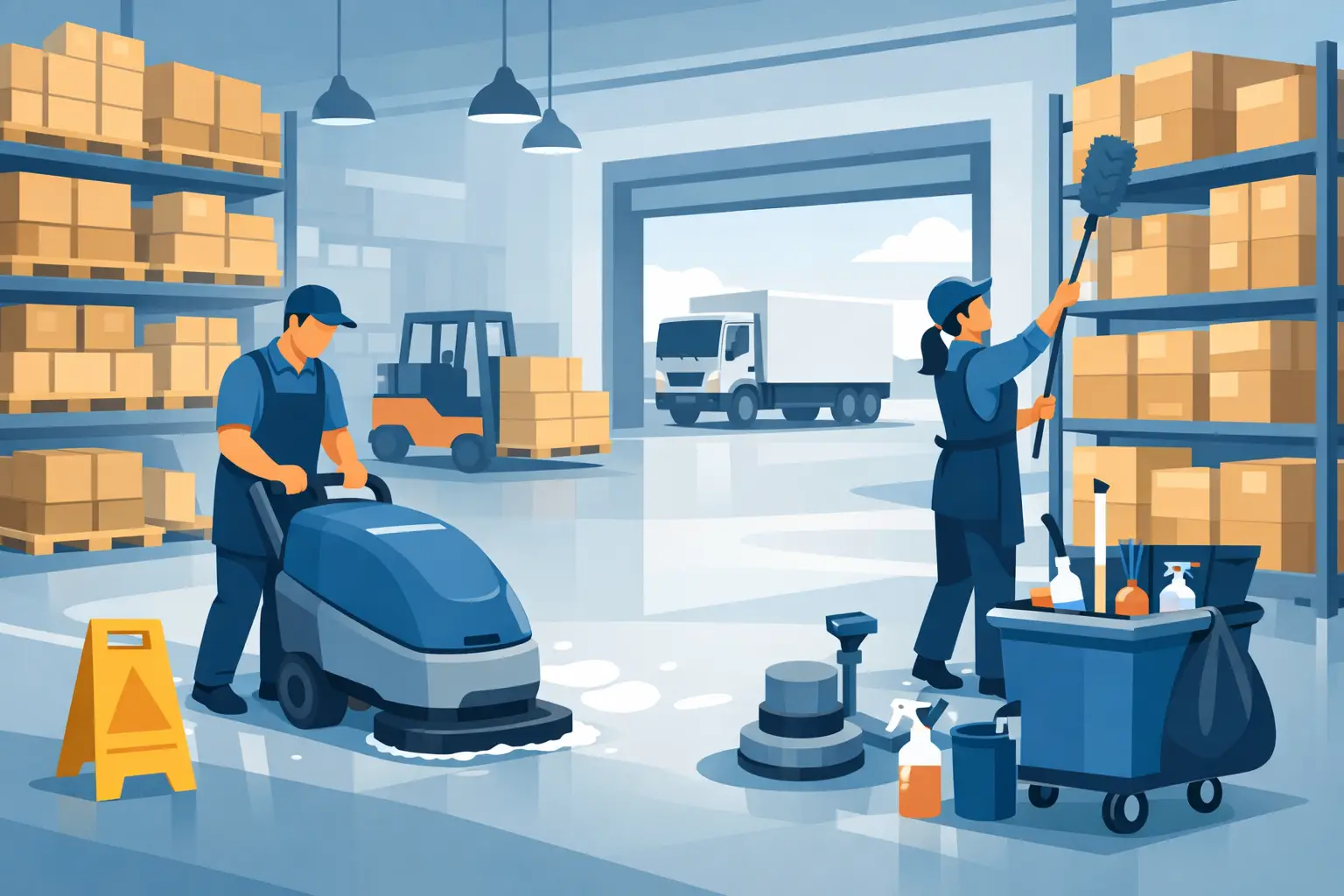

A warehouse can look functional from the loading dock and still have cleaning problems that affect safety, product integrity, and day-to-day efficiency. Dust on racks, debris in aisles, buildup around dock doors, and neglected breakrooms or restrooms all create risk over time. That is why warehouse cleaning services are not just about appearance. They are part of how a facility stays safe, organized, and ready to support consistent operations.
Unlike office environments, warehouses deal with heavier traffic, open floor space, equipment movement, shipping activity, and constant exposure to dirt from outside. Cleaning has to work around forklifts, staging zones, inventory access, and production schedules. If the plan is too generic, it usually misses the real pressure points in the building.
What warehouse cleaning services should actually cover
A warehouse cleaning program should reflect how the building operates, not just how often someone wants a mop bucket on site. In most facilities, priorities start with floor care, high-dust areas, common touchpoints, and support spaces such as restrooms, locker rooms, lunchrooms, and offices within the warehouse.
Floor cleaning is usually the most visible need, but it is not the only one. Dust accumulation on beams, ledges, racking, vents, and equipment surfaces can become an ongoing issue, especially in industrial and logistics environments. In some operations, that dust is mostly a housekeeping concern. In others, it can affect product quality, employee comfort, or compliance expectations.
Loading docks and entry points also need attention because they bring in moisture, dirt, salt, cardboard debris, and pallet fragments. These areas often wear down faster than the rest of the facility and can become slip or trip hazards if cleaning is not timed properly. A good service plan accounts for that traffic pattern instead of treating every square foot the same way.
Why warehouses need a different cleaning approach
Warehouse environments are rarely static. One week may involve heavy inbound freight, while another may be focused on outbound fulfillment, inventory counts, or seasonal spikes. Cleaning has to fit around those demands without interfering with movement, staffing, or access to materials.
That is where many one-size-fits-all providers fall short. A warehouse needs a crew that understands operational constraints, restricted zones, and the difference between cleaning a public-facing commercial space and cleaning an active logistics or industrial facility. Timing matters. So does communication with site contacts, especially when service needs to happen after hours or around staggered shifts.
There is also the issue of surface type and use. Polished concrete, sealed floors, epoxy coatings, warehouse restrooms, metal shelving, office partitions, and employee welfare areas all require different methods and products. Using the wrong process may leave residue, create slip risk, or simply fail to remove the buildup that is causing the problem.
High-impact areas that are often overlooked
Many facilities focus on the main floor and forget the secondary spaces that employees use every day. Restrooms, lunchrooms, locker rooms, and shared office areas shape how staff experience the building. If those spaces are neglected, the whole facility feels less controlled, even if the warehouse floor itself looks acceptable.
Another area that is often missed is high dusting. Out of sight tends to mean out of mind, but overhead dust eventually settles onto racks, inventory surfaces, equipment, and workstations. In some facilities, that can create a constant cycle where floors are cleaned but never stay clean for long. Periodic high dusting helps break that pattern.
Touchpoints also matter more than some operators assume. Door handles, time clocks, shared workstations, railings, breakroom surfaces, and restroom fixtures are used constantly. In higher-traffic environments, routine disinfection or sanitizing protocols may be part of the cleaning scope, especially during illness seasons or when workforce density is high.
How to evaluate warehouse cleaning services
The right provider should start by asking questions about the facility, not by quoting a flat rate based only on square footage. Square footage matters, but it does not tell the full story. A 100,000-square-foot warehouse with light storage has very different cleaning needs than a smaller facility with active shipping lanes, multiple shifts, and constant pallet movement.
Look for a company that wants to understand your traffic patterns, floor conditions, staffing hours, sensitive areas, and any operational restrictions. If there are food-adjacent zones, manufacturing processes, temperature-controlled rooms, or regulated sanitation requirements, that should shape the cleaning plan from the start.
It also helps to evaluate how the provider handles staffing, supervision, and consistency. Warehouses typically need dependable service more than flashy presentations. Trained and insured crews, clear scopes of work, reporting processes, and responsive communication matter because cleaning issues in these spaces can quickly affect safety or productivity.
Custom scheduling matters more than frequency alone
One of the most common mistakes in warehouse cleaning is assuming that more visits automatically solve the problem. Sometimes they do. Often, the better answer is smarter scheduling.
For example, a facility with intense dock activity may need targeted attention several times per week at entrances and shipping areas, while low-traffic storage aisles may only require less frequent maintenance. A warehouse operating overnight shifts may need service during a narrow off-peak window, while another site may benefit from weekend deep cleaning to avoid disrupting active work zones.
That balance is where custom service planning makes a real difference. The goal is to maintain clean, safe conditions without putting a crew in the way of forklifts, inbound deliveries, or order fulfillment. In practice, that means cleaning plans should be built around operations, not forced onto them.
The business case for a cleaner warehouse
A clean warehouse supports more than appearances. It helps reduce avoidable hazards, supports employee morale, and makes the building easier to manage. When aisles are clear, floors are maintained, and common areas are consistently cleaned, the facility tends to run with fewer distractions.
There is also a reputational side to it. Vendors, inspectors, clients, and job candidates may all pass through the space at some point. A warehouse that looks controlled and professionally maintained sends a very different message than one with dusty surfaces, dirty restrooms, and debris gathering near work areas.
That said, the return on cleaning depends on the type of operation. In some facilities, the primary value is safety and housekeeping control. In others, it is brand presentation, sanitation support, or creating better conditions for staff retention. The right cleaning program should reflect those priorities rather than assuming every warehouse has the same goals.
Warehouse cleaning services in active facilities
Active facilities need cleaning teams that understand how to work within real-world constraints. That includes restricted access zones, safety protocols, lockout considerations, equipment traffic, and the simple fact that warehouse work does not stop just because cleaning is scheduled.
A dependable provider will define what gets cleaned, when it gets cleaned, and what conditions may require adjustment. If certain zones can only be serviced after trailers are unloaded or after production stops, that should be built into the plan. If weather increases salt and moisture at entrances, seasonal adjustments should be part of the conversation.
For businesses that need a practical, facility-specific approach, companies such as Pristine Maintenance and Services focus on cleaning programs built around how commercial and industrial spaces actually operate. That matters in warehouses, where consistency and scheduling discipline usually matter more than broad promises.
What a strong long-term plan looks like
The best warehouse cleaning services are structured, repeatable, and flexible enough to adapt as the facility changes. A strong plan usually includes routine janitorial work for support areas, scheduled floor care, periodic deep cleaning, and clear attention to high-dust or high-traffic zones.
It should also evolve. If inventory layouts change, staffing increases, or new shipping patterns create pressure on different areas of the building, the cleaning scope should be reviewed. Warehouses are operational environments, and cleaning should be managed the same way – with attention to use, risk, and performance.
A clean warehouse does not happen by accident. It comes from a service plan that matches the facility, respects the schedule, and addresses the parts of the building that matter most. When cleaning is aligned with operations, it stops being a side task and starts supporting the way the business runs every day.
If you are evaluating options, the best next step is not asking who has the cheapest rate. It is asking who understands your building well enough to clean it properly.

0 Comments