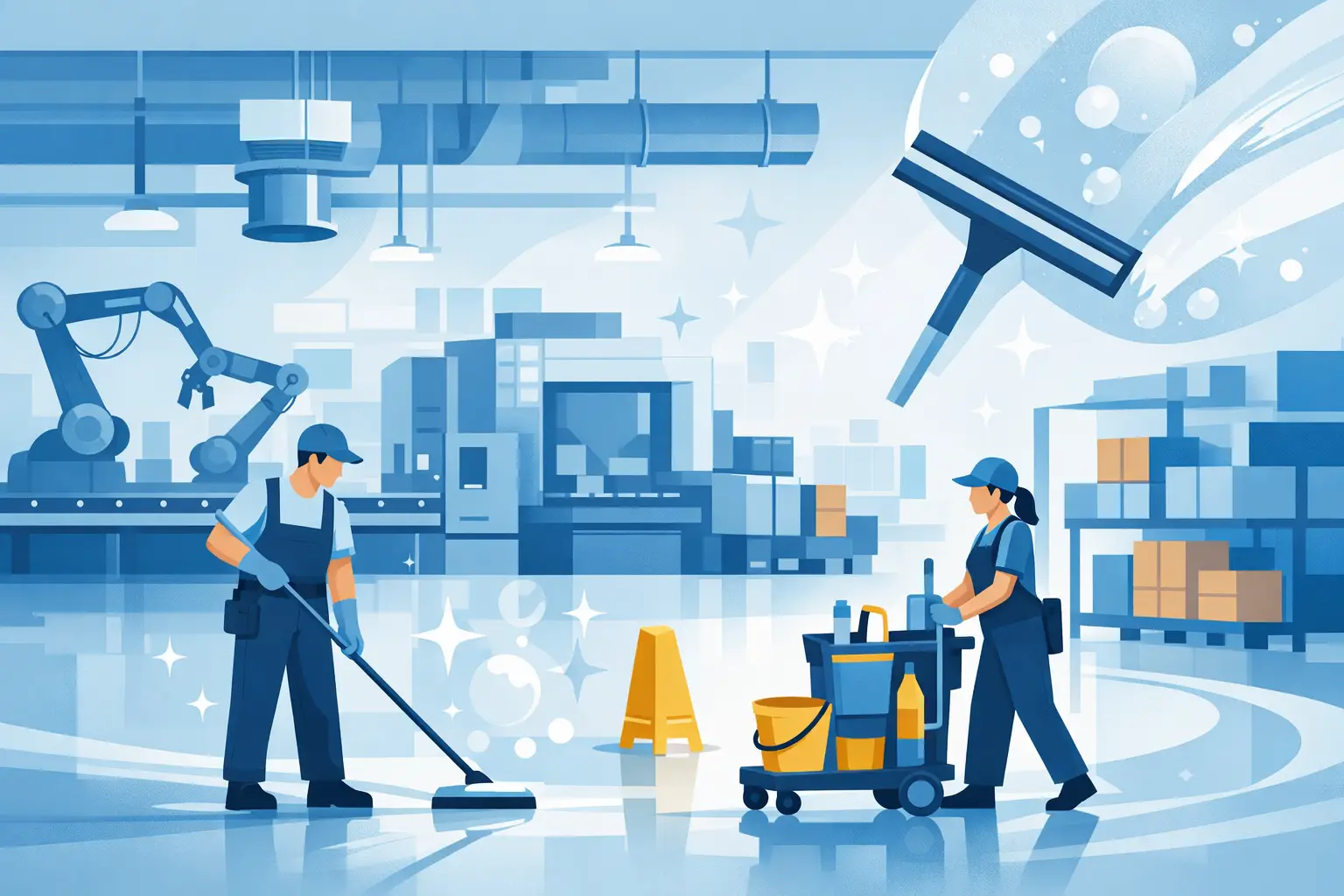

A production floor can look acceptable at a glance and still create problems that slow operations, increase risk, and wear down equipment. That is why manufacturing facility cleaning is not just a housekeeping task. In active industrial environments, cleaning affects safety, product quality, employee confidence, inspections, and how reliably the facility runs from shift to shift.
For operations leaders and facility managers, the real question is not whether a plant needs cleaning. It is whether the cleaning program matches the way the building actually functions. A light-duty office approach will not hold up in a facility with forklift traffic, oil residue, dust accumulation, packaging waste, washrooms used across multiple shifts, and shared touchpoints that need regular sanitation.
Why manufacturing facility cleaning needs a different standard
Manufacturing spaces put much more stress on a cleaning program than a typical commercial building. Dirt is not limited to tracked-in debris or fingerprints on glass. It can include fine dust, grease, metal shavings, pallet splinters, adhesive residue, and buildup around loading zones, production lines, and maintenance areas.
That matters because soil in a manufacturing environment does more than look unprofessional. It can create slip hazards, interfere with machinery, affect indoor air quality, and increase wear on surfaces. In some facilities, especially those with regulated production or strict quality expectations, poor cleaning also creates concerns around contamination control and audit readiness.
A proper program starts by recognizing that not every area should be treated the same way. Offices, breakrooms, restrooms, locker rooms, warehouse aisles, production floors, mezzanines, and receiving areas all have different traffic patterns and different sanitation needs. Cleaning frequency, products, equipment, and timing should reflect those differences.
What a practical manufacturing facility cleaning plan should cover
The best cleaning plans are built around use, risk, and schedule. A facility that operates one daytime shift has different needs than a plant running around the clock. A packaging operation will not have the same cleaning demands as metal fabrication or light assembly. The square footage alone does not tell the full story.
Production floors and operational zones
Production areas need focused attention because they carry the highest operational risk. Dust, residue, and debris can collect under equipment, around workstations, and along perimeter edges where routine in-house cleanup may not reach. Floors often require more than simple mopping. Depending on the material and soil load, auto scrubbing, degreasing, spot treatment, and edge detail work may all be necessary.
Cleaning in these spaces also has to respect the workflow. In some plants, after-hours service is the best option because it avoids interference with crews and equipment movement. In others, cleaning must be split into smaller service windows between shifts or around maintenance schedules. The right approach depends on how tightly the production schedule is managed.
Warehousing, loading, and storage areas
Warehouse sections are often overlooked because they are built for function, not appearance. But dust and debris in these areas move quickly through the rest of the building on wheels, pallets, footwear, and air circulation. Loading docks, staging zones, and high-traffic aisles usually need regular sweeping and floor care to prevent buildup.
There is also a safety dimension here. Dirt near dock doors, shrink wrap remnants, broken pallet pieces, and spills in traffic routes can all contribute to incidents. Cleaning support should reduce these risks, not just improve presentation.
Shared employee spaces
Breakrooms, washrooms, locker rooms, entrances, and administrative offices shape how staff and visitors perceive the facility. They also carry a heavier sanitation expectation. In manufacturing, these rooms often see constant use across shifts, which means surfaces, fixtures, dispensers, and waste removal need dependable attention.
If these areas are neglected, it reflects on the operation as a whole. A clean production floor loses credibility if restrooms are poorly maintained or if the lunchroom is not consistently sanitized.
The role of safety and compliance
In industrial environments, cleaning cannot be disconnected from safety. The wrong product, the wrong method, or poor timing can create as many issues as dirt itself. That is why trained crews matter.
Staff working in a manufacturing setting should understand basic site protocols, restricted areas, PPE expectations, and how to work around production equipment without creating disruption. They should also know when a spill is a routine cleaning issue and when it requires escalation under the facility’s safety procedures.
Compliance expectations vary by industry, and that is where a one-size-fits-all service tends to fall short. Some facilities mainly need reliable janitorial support and strong floor maintenance. Others need documented sanitation practices, more frequent touchpoint disinfection, or stricter controls around certain zones. The cleaning vendor should be able to adapt to those operational requirements rather than forcing the building into a generic checklist.
Common problems with generic cleaning programs
Many manufacturing sites do have cleaning in place, but not always the right kind. The most common issue is a mismatch between scope and reality. A service plan may look complete on paper while missing the actual trouble spots that affect day-to-day performance.
Sometimes the problem is frequency. High-use areas may only be serviced a few times a week when they need daily attention. In other cases, crews focus on visible surfaces while neglecting floor edges, touchpoints, drains, partition walls, or buildup near equipment bases.
Another common issue is scheduling. If cleaners arrive during active operations without coordination, they may have limited access or create friction with staff trying to keep production moving. A strong program is built around the facility schedule, not against it.
How to evaluate a manufacturing facility cleaning provider
The right provider should ask detailed questions before proposing a plan. They should want to understand the building layout, number of shifts, production type, traffic flow, floor conditions, and any sanitation or compliance concerns. If the proposal is too generic, the service usually will be too.
Look for a company that can explain how it will staff the account, supervise quality, handle after-hours access, and respond if needs change. Manufacturing facilities are not static environments. Volumes shift, usage changes, and certain areas may need more support during busy periods, shutdowns, or seasonal demand.
It also helps to work with a provider that understands the difference between routine janitorial work and operational cleaning support. The latter requires more planning and more consistency. Reliable service is not only about showing up. It is about showing up prepared, working safely, and cleaning to the standard the facility actually needs.
For businesses that need dependable outsourced support, companies such as Pristine Maintenance and Services typically stand out by building cleaning programs around the facility itself rather than offering preset packages that ignore operational realities.
A customized scope delivers better results
Customization is not a sales phrase in industrial cleaning. It is what makes the program effective. The right scope should identify which areas need daily service, which need periodic deep cleaning, and which require special treatment based on residue, traffic, or surface type.
That may include floor scrubbing in warehouse paths, detailed restroom sanitation, dust control in non-production zones, cleaning of high-touch points in shared spaces, and scheduled attention to entrances, glass, offices, and waste management. In some facilities, consumable restocking and day porter support may also be useful. In others, after-hours cleaning is the better fit because it protects uptime.
The trade-off is straightforward. A narrower scope may reduce short-term cost, but if it leaves behind safety issues, sanitation complaints, or visible wear, the facility usually pays for it elsewhere through disruptions, image problems, or reactive cleanup.
Manufacturing facility cleaning as an operational support function
The most effective cleaning programs are almost invisible to production because they support the operation without getting in the way. Floors stay usable. Shared spaces stay sanitary. Waste is managed. Traffic paths stay clearer. Managers spend less time chasing service issues and more time focusing on output, staffing, and maintenance.
That is the real value of manufacturing facility cleaning. It helps protect the working environment people rely on every day. When the scope is tailored, the schedule is practical, and the execution is consistent, cleaning becomes part of how the facility stays safe, presentable, and ready for work.
If you are reviewing your current service, start with the areas where dirt, dust, and neglect are affecting operations most. The right cleaning plan should solve those problems directly and keep pace with the way your facility actually runs.
0 Comments