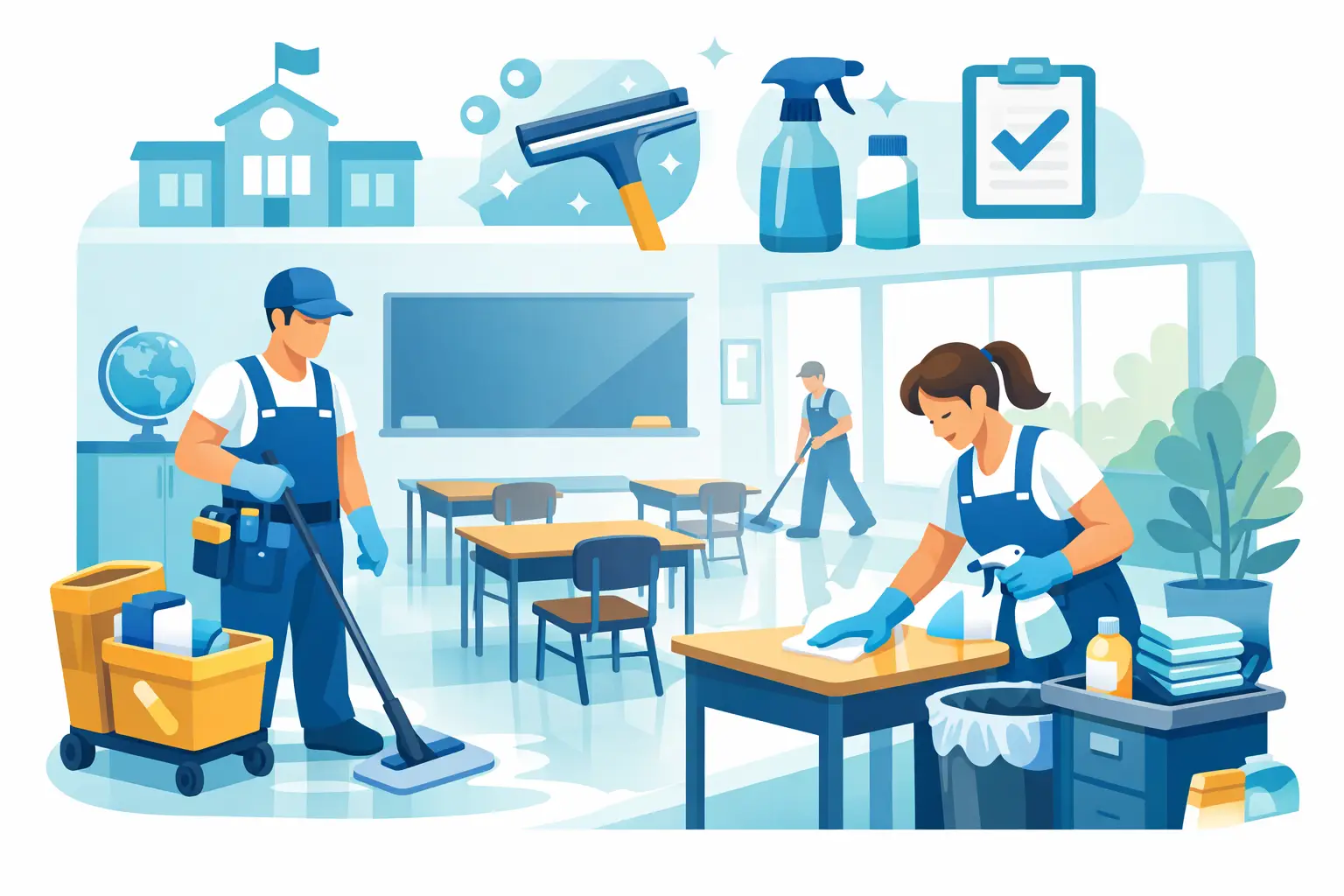

A school can look fine at 8:00 a.m. and feel worn down by lunch. Hallways pick up tracked-in dirt, restrooms cycle through heavy use, cafeteria floors turn slippery, and classroom touchpoints collect germs fast. That is why school cleaning services need to be built around how the facility actually runs, not around a generic janitorial checklist.
For school administrators, facility managers, and operations teams, the standard is higher than simply keeping a building presentable. Cleaning has to support student health, staff confidence, safety, and uninterrupted daily operations. In a school setting, small gaps show up quickly. A missed restroom refill, poorly maintained floor, or inconsistent disinfection routine can create complaints, health concerns, and avoidable risk.
Why school cleaning services need a facility-specific plan
Schools are not cleaned the same way as offices, retail stores, or apartment common areas. The traffic patterns are different, the occupancy is denser, and the number of shared surfaces is much higher. A campus may include classrooms, administrative offices, libraries, nurse stations, cafeterias, gymnasiums, locker rooms, hallways, entrances, and outdoor transition points. Each area has different cleaning demands and different consequences if standards slip.
A practical cleaning plan starts with how the building is used. An elementary school may need more attention on classroom surfaces, restrooms, and touchpoints at lower heights. A high school may require more intensive care in locker rooms, athletic areas, and large common spaces. A private school with evening events may need after-hours service that resets the building for the next day without interfering with programs.
This is where many providers fall short. A one-size-fits-all scope may cover basic tasks, but it rarely accounts for seasonal illnesses, weather-related soil, lunchroom volume, or special event turnover. Effective school cleaning services are structured around the site, schedule, and risk profile of the building.
The areas that matter most in a school cleaning program
Classrooms are an obvious priority, but they are only one part of the picture. Restrooms, entrances, and shared spaces often determine whether a building feels clean and whether it actually supports hygiene goals. A good program separates routine appearance cleaning from targeted sanitation work.
Classrooms and learning spaces
Desks, tables, chairs, door handles, light switches, and shared equipment need regular attention because they are touched constantly throughout the day. Dust control also matters more than many people realize. Dust buildup affects indoor appearance, air quality, and how well a room is maintained over time. In schools with younger children, spills, adhesive residue, and fingerprints are part of normal use and should be expected in the service plan.
Restrooms and nurse-adjacent areas
If school restrooms are not maintained consistently, complaints happen fast. These spaces need more than quick visual checks. Fixtures, partitions, dispensers, sinks, and floors should be cleaned thoroughly, restocked reliably, and monitored for odor control. In health-sensitive areas such as nurse offices or isolation rooms, cleaning methods may need to align with stricter sanitation expectations.
Cafeterias, gyms, and common areas
These spaces experience dense traffic and a high mix of moisture, food debris, and body contact. Cafeteria floors can become a slip risk if they are not cleaned correctly. Gym floors need methods and products that protect the surface while still addressing sweat, dust, and marks. Bleachers, benches, and entry points also deserve attention, especially in schools that host games, assemblies, or evening events.
Cleaning versus disinfection in schools
One of the most common misunderstandings is assuming cleaning and disinfection are the same thing. They are related, but they are not interchangeable. Cleaning removes dirt, residue, and visible soil. Disinfection is a separate process intended to reduce harmful microorganisms on appropriate surfaces.
In schools, both matter, but not every surface needs the same level of treatment at all times. Overapplying disinfectants can be unnecessary in some areas, while under-addressing high-touch surfaces can create health concerns. A dependable vendor should know the difference and build a sensible routine around actual use patterns.
That usually means prioritizing high-touch points such as door hardware, handrails, shared desks, faucet handles, cafeteria tables, and restroom surfaces. During flu season or after an illness-related concern, frequency and scope may need to increase. The right plan is not the most aggressive one. It is the one that is appropriate, consistent, and safe for the school environment.
Scheduling matters as much as the cleaning itself
A school is not an easy building to service during active hours. Students are moving, classes are in session, and staff need the facility to stay functional. That is why after-hours and low-disruption scheduling are often central to successful school cleaning services.
Nightly cleaning allows crews to work more thoroughly without interfering with instruction. It also gives schools a clean reset before the next day starts. At the same time, some facilities benefit from daytime porter support, especially larger campuses or schools with extended programs. Restroom checks, spill response, cafeteria cleanup, and entryway maintenance may be hard to manage with night service alone.
The right schedule depends on building size, enrollment, staffing levels, and how the campus is used outside standard school hours. A school with sports programming, community rentals, or daycare operations may need a broader service window than a school that closes promptly in the afternoon.
What decision-makers should look for in a cleaning vendor
Price matters, but in school environments, reliability and fit usually matter more over the life of the contract. An inexpensive proposal can become costly if standards are inconsistent, communication is weak, or the crew does not understand the facility.
A strong provider should offer a clear scope of work, documented routines, trained and insured staff, and a realistic plan for quality control. Responsiveness also matters. Schools are dynamic environments. There are weather events, stomach bugs, assemblies, parent nights, and unexpected messes. A vendor should be able to adjust without creating operational friction.
It also helps to ask how the provider handles product selection and safety. Schools need methods that are effective but appropriate for occupied educational environments. Floors, finishes, and high-contact surfaces all require correct care. The wrong product can create odor issues, residue, damage, or safety concerns just as easily as poor cleaning can.
For many institutions, communication is the deciding factor. Facility managers do not want to chase updates or repeat issues. They want a vendor that reports clearly, follows through, and understands that cleaning performance affects the entire building experience.
Signs a school cleaning program is falling short
Problems with cleaning are often noticed before they are formally reported. Teachers start wiping down surfaces themselves. Restrooms run out of supplies. Entrance mats stay saturated. Floors look dull even after service. Odors linger in locker rooms or shared spaces. These are not minor appearance issues. They are signs that the cleaning program may be mismatched to the building.
Another warning sign is when the scope looks adequate on paper but breaks down in practice. That usually points to staffing, supervision, or unrealistic scheduling. A school may technically be cleaned every night and still not be cleaned well if the workload is too compressed or the tasks are not prioritized properly.
This is why customized planning matters. A provider that understands institutional facilities will look beyond square footage and ask how the building functions. That is the difference between simply assigning labor and building a workable school cleaning program.
Why consistency is the real benchmark
In school environments, consistency is what builds trust. One good deep clean before an open house is easy. Delivering the same standard week after week, through weather changes, illness season, staffing shifts, and special events, is the real measure of service quality.
That consistency comes from process. It depends on defined responsibilities, site-specific instructions, regular supervision, and enough flexibility to respond when conditions change. For organizations that need dependable support, working with an experienced commercial provider such as Pristine Maintenance and Services can make the difference between managing cleaning issues constantly and having a system that simply works.
The best school cleaning services do not call attention to themselves. They support the day quietly, keep standards steady, and help the people running the building focus on students, staff, and school operations.


0 Comments