
When cleaning performance slips, the problem often is not effort. It is the lack of a clear commercial cleaning scope of work. If expectations live only in email threads, verbal walk-throughs, or a basic monthly quote, missed tasks and service disputes become much more likely.
For facility managers, property managers, and business owners, the scope of work is the document that turns cleaning from a general promise into an operational standard. It defines what gets cleaned, how often it gets done, who is responsible for it, and what quality level the site should expect. In commercial environments, that clarity matters because no two buildings run the same way. A medical clinic has different sanitation priorities than a warehouse. A daycare needs a different touchpoint plan than a corporate office. A condo common area has a different traffic pattern than a retail store.
A well-written scope protects both sides. It gives the client a clear service standard and gives the cleaning provider a realistic framework to staff, schedule, and deliver the work properly.
What a commercial cleaning scope of work actually does
At a basic level, the scope of work documents the cleaning program for a facility. But its real value goes further than a task list. It aligns operations, pricing, accountability, and performance measurement.
Without a clear scope, clients often assume certain services are included because they seem standard. Vendors may assume those same services are extra because they require more time, equipment, or training. That gap creates friction. The issue is not always poor service. Sometimes it is poor definition.
A strong scope of work answers practical questions early. Which areas are included in nightly service? Which are serviced weekly or monthly? Are consumables restocked by the janitorial team? Are interior glass, carpet spotting, high dusting, or disinfection part of the recurring contract or handled separately? Are there restricted areas that require special access, special chemicals, or daytime cleaning?
For larger or more complex facilities, this document also helps internal stakeholders stay aligned. Operations, facilities, procurement, and on-site management may all have different priorities. The scope creates one shared reference point.
What should be included in a commercial cleaning scope of work
The best scopes are specific without becoming impractical. They should be detailed enough to prevent confusion, but still usable in day-to-day operations.
Facility areas and service boundaries
Start with the spaces covered under the contract. That includes lobbies, offices, restrooms, breakrooms, corridors, elevators, stairwells, locker rooms, treatment rooms, classrooms, warehouse floors, or common areas, depending on the site.
This sounds obvious, but service boundaries are where many misunderstandings begin. Exterior windows, parking garages, tenant suites, production lines, or post-construction areas may require separate pricing or a different crew. If those areas are not clearly identified, the scope leaves too much room for assumption.
Task descriptions by area
The next step is defining what happens in each space. Restroom service may include cleaning and disinfecting fixtures, replenishing soap and paper products, spot-cleaning partitions, mopping floors, and removing trash. Office areas may include dusting accessible surfaces, vacuuming, trash removal, and spot-cleaning glass.
The wording matters. Terms like clean as needed can be too vague unless both sides already share the same standard. More precise language helps. For example, high-touch surfaces disinfected daily is easier to verify than sanitize regularly.
Service frequency
Frequency should be stated clearly for each task or zone. Some services are daily, some several times per week, and some monthly or quarterly. High-traffic restrooms may need multiple checks per day, while high dusting above reachable areas may only be needed monthly.
This is one of the biggest factors affecting labor planning and price. A facility that wants five-night service with regular daytime porter support is not the same as a site that needs three evening visits per week. Both may be commercial cleaning, but the workload is very different.
Standards, restrictions, and special procedures
Many facilities have requirements beyond routine appearance. Medical spaces may need approved disinfectants and documented protocols. Schools and daycares may require attention to touchpoints, child-safe practices, and scheduling around occupancy. Industrial facilities may need procedures for dust control, safety zones, or restricted equipment areas.
If a building has alarm procedures, badge access, loading dock rules, elevator restrictions, or tenant quiet hours, those details belong in the scope or supporting operating documents. The more operational reality is reflected upfront, the smoother service becomes.
Supplies, equipment, and responsibility splits
A commercial cleaning contract should identify who provides what. That includes chemicals, consumables, liners, dispensers, floor machines, vacuums, and specialty tools. In some agreements, the janitorial company provides labor and standard cleaning supplies while the client supplies paper goods and soap. In others, the vendor manages everything.
This is not just administrative detail. It affects price, service consistency, storage needs, and reorder responsibility. If no one defines it, shortages and service interruptions are more likely.
Why generic scopes usually fail
A generic scope may be enough for a very small, simple site. In most commercial settings, it creates more problems than it solves.
The issue is that building use drives cleaning needs. An office with light weekday traffic can be cleaned on a very different schedule than a 24-hour fitness center. A restaurant has grease, food contact concerns, and restroom turnover that differ from a law office. A warehouse may need attention to break areas, entrances, washrooms, and floor debris, but not the same desk-level detail expected in an executive suite.
That is why one-size-fits-all cleaning packages often underperform. They price quickly, but they do not always reflect actual conditions. When the scope is built around the facility instead of a preset template, staffing and inspection standards become more realistic.
For organizations with regulated or health-sensitive spaces, a generic scope can also create risk. If touchpoint disinfection, waste handling, or documented cleaning procedures matter, vague service language is not enough.
How scope affects pricing and accountability
Buyers often compare quotes line by line, but quote comparisons are only meaningful if the scope is equally clear. A lower price may reflect fewer service days, fewer included tasks, or unrealistic production expectations.
This is where a detailed scope helps procurement make better decisions. It allows decision-makers to compare service models instead of just totals. If one proposal includes full restroom consumable management, periodic floor care, and after-hours service while another does not, those differences should be visible.
The scope also creates accountability after the contract begins. If a concern comes up, both sides can return to the document and review what was agreed. That makes performance conversations more objective. Instead of discussing cleaning in general terms, the client and vendor can address specific frequencies, areas, and responsibilities.
A good provider should be comfortable with that level of clarity. It supports inspections, quality checks, onboarding, and staffing continuity.
Building a scope that works in the real world
The most useful commercial cleaning scope of work is built from an actual site review, not copied from an old contract. Walk the space. Review traffic patterns. Identify pain points. Look at restrooms, common areas, touchpoints, floor types, waste volume, and occupancy schedules.
Then match the cleaning plan to the building’s operating reality. If a site has heavy daytime traffic, evening-only cleaning may not be enough. If certain spaces are empty only after hours, the schedule should reflect that. If the facility has seasonal changes, event-based demand, or tenant turnover, the service plan should leave room for adjustments.
This is also the stage where trade-offs should be discussed honestly. Some clients want maximum coverage at minimum cost. Sometimes that is possible. Often it is not. Higher frequencies, detailed touchpoint work, and specialty floor care all add labor time. A realistic scope balances expectations, risk tolerance, appearance standards, and budget.
That is where experienced commercial providers add value. They can identify where daily service is essential, where reduced frequency may be reasonable, and where specialty tasks should be scheduled separately. For clients managing offices, clinics, schools, industrial sites, retail locations, or condo properties, that guidance helps turn cleaning from a reactive expense into a stable operating system.
Pristine Maintenance and Services approaches scope development this way because dependable service starts with a plan that fits the facility, not a package that forces the facility to fit the plan.
Before you approve any cleaning contract
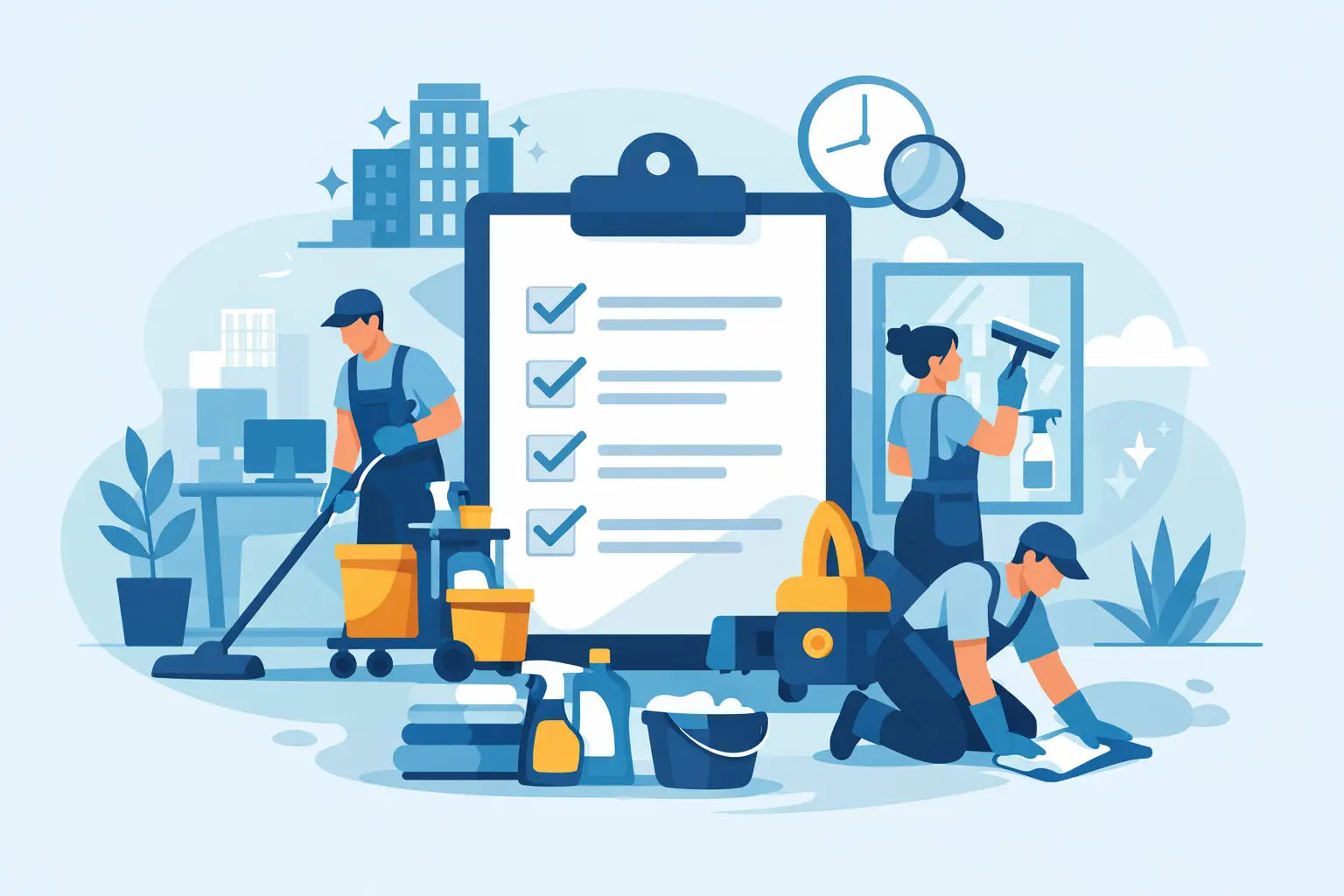
Before signing, make sure the scope answers a few basic questions clearly. Are all service areas named? Are tasks tied to frequencies? Are exclusions identified? Are supply responsibilities defined? Are special access, safety, or compliance requirements documented? And if service levels change, is there a process to update the scope without confusion?
If those answers are not clear, the contract is probably not ready.
A cleaning program works best when expectations are easy to understand, easy to inspect, and realistic to deliver. The right scope of work does exactly that. It gives your building a cleaner baseline, your team fewer service issues, and your vendor a fair framework to perform consistently. That kind of clarity tends to pay for itself long before the first renewal conversation.



0 Comments