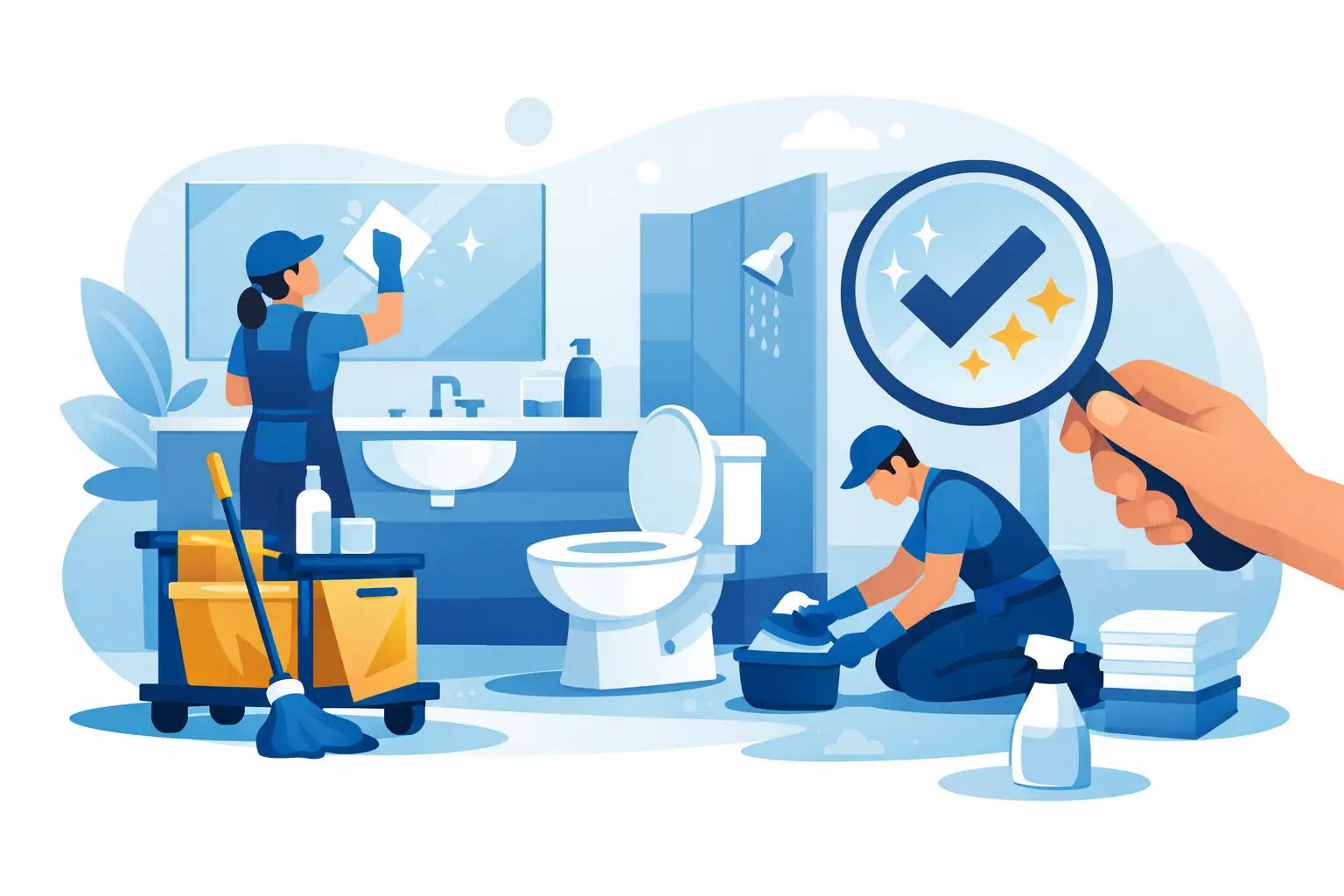

A restroom can look acceptable at 8:00 a.m. and become a complaint source by lunch. Commercial bathroom cleaning standards give facility teams a practical way to prevent that decline by defining what clean means, how often work is completed, and how results are verified. For offices, schools, clinics, retail spaces, gyms, restaurants, warehouses, and multifamily properties, the goal is not simply a pleasant appearance. It is a sanitary, stocked, safe, and dependable space for every user.
What Commercial Bathroom Cleaning Standards Should Cover
There is no single cleaning schedule that works for every commercial restroom. A low-traffic executive office washroom and a public restroom in a busy retail center have different risks, traffic patterns, and expectations. Effective standards are therefore facility-specific, but they should consistently address hygiene, appearance, safety, odor control, and supply availability.
A complete program identifies each restroom, its expected traffic level, the fixtures and touchpoints present, and the service frequency needed during operating hours and after closing. It also clarifies who is responsible for periodic tasks such as descaling fixtures, cleaning vents, washing partitions, and deep-cleaning floors.
For regulated or health-sensitive facilities, internal cleaning procedures should also align with applicable workplace, public health, and industry requirements. Medical clinics, daycares, food-service operations, and schools may need more frequent disinfection, tighter chemical controls, or documentation that a standard office restroom would not require.
Cleaning, Sanitizing, and Disinfecting Are Different Tasks
These terms are often used interchangeably, but they are not the same.
Cleaning removes visible soil, residue, and organic matter from surfaces. Sanitizing reduces bacteria on a cleaned surface to an acceptable level. Disinfecting uses an appropriate product and contact time to kill or inactivate specified germs on hard, nonporous surfaces.
The order matters. Applying disinfectant over soap residue, dirt, or bodily-fluid contamination can reduce its effectiveness. High-touch surfaces should first be cleaned as needed, then treated with the selected disinfectant according to the product label. Staff should not wipe a product away before its required dwell time has elapsed.
This distinction is particularly relevant around toilets, urinals, sinks, faucet handles, flush levers, door hardware, grab bars, baby-changing stations, and dispensers. A restroom may appear clean while still missing the touchpoint disinfection steps expected in a high-traffic commercial setting.
Daily Bathroom Cleaning Standards for High-Use Areas
The daily standard should be built around condition, not only a fixed time on a calendar. A restroom used by 20 employees may need one thorough service each day and a supply check. A public-facing restroom may need inspection and attention several times per shift.
At a minimum, routine service should leave the room free of visible debris, spills, hair, soap buildup, paper waste, and offensive odors. Floors must be dry enough to reduce slip risks, while toilet seats, sink areas, and counters should be visibly clean and disinfected where appropriate.
A reliable restroom service visit typically includes these core actions:
- Empty waste receptacles and replace liners before overflow becomes a problem.
- Clean and disinfect toilets, urinals, sinks, counters, faucets, flush points, door handles, and grab bars.
- Refill soap, toilet tissue, paper towels, hand sanitizer, and feminine hygiene supplies where provided.
- Sweep or vacuum dry debris, then mop floors with the correct product and method for the surface.
- Check fixtures, dispensers, lighting, drains, and locks for issues that require maintenance follow-up.
The final inspection is as important as the cleaning itself. A cleaner should look at the restroom from the user’s perspective: Is there a streaked mirror, an empty dispenser, water on the floor, an overflowing bin, or an odor that remains after service? These small details shape how tenants, staff, visitors, and customers judge the entire facility.
Odor Control Requires Source Control
Fragrance products may improve the immediate perception of a restroom, but they do not resolve the cause of odors. Persistent odor usually points to urine splash around fixture bases, dirty floor edges, poorly maintained drains, waste buildup, inadequate ventilation, or moisture held in grout and caulking.
Standards should require cleaners to address the source. That can mean detailed cleaning around toilet hinges and bases, attention to wall surfaces near urinals, cleaning floor corners, and using an approved drain-maintenance approach when appropriate. If an odor persists after proper cleaning, it should be reported as a possible plumbing or ventilation issue rather than repeatedly covered with air freshener.
Frequency Should Follow Traffic and Facility Risk
Setting frequencies is a balance between user volume, operating hours, restroom design, and the consequences of a missed service. More frequent cleaning improves the restroom experience, but it also requires coordination so staff can work safely without disrupting customers, employees, students, or patients.
A practical schedule often includes a daily detailed clean, routine daytime inspections, and planned periodic work. High-use restrooms may require multiple daytime touchups for waste removal, replenishment, spot-cleaning, and disinfection of touchpoints. After-hours service is often the best time for full floor care, detailed fixture cleaning, and work requiring caution signs or temporary restroom closure.
Medical offices, fitness centers, restaurants, daycares, schools, and public retail locations generally need closer monitoring than lightly occupied offices. Industrial and warehouse facilities may require additional attention to dirt tracked in from work areas, changing-room use, and shift-change traffic. Condominium common-area restrooms need scheduling that reflects visitor patterns and building events.
Safety Practices Behind a Consistent Result
Commercial restroom cleaning involves chemical exposure, wet floors, and potential contact with biological contaminants. Strong cleaning standards protect both restroom users and the staff doing the work.
Cleaning chemicals should be selected for the surfaces, soils, and sanitation requirements of the space. Staff need training on dilution, label directions, contact times, storage, personal protective equipment, and never mixing incompatible products. More chemical is not automatically better. Incorrect dilution can damage finishes, leave residue, create avoidable exposure risks, and increase cost.
Color-coded cloths, mops, and tools can help prevent cross-contamination when used consistently. Equipment used on toilets and urinals should not be used on sink counters, mirrors, or other general surfaces. Clean tools must also be laundered, maintained, and stored properly between shifts.
Wet-floor signs and safe work sequencing are essential. Floors should be cleaned in a way that keeps an exit path available whenever possible, especially during business hours. Any broken fixture, sharp object, leak, damaged tile, or recurring drain issue should be documented and reported promptly.
Documentation Turns Expectations Into Accountability
A restroom checklist is not just paperwork. It is a control tool that helps a facility manager verify whether the agreed work is being completed and identify patterns before they become recurring complaints.
For busy or sensitive environments, inspection logs can record service times, supply checks, corrective actions, and maintenance concerns. Digital reporting may be useful for multi-site operations or properties with several restrooms, but a simple, consistently used process is better than a complicated system no one reviews.
Quality checks should include both visible presentation and technical performance. A manager may see clean mirrors and stocked paper towels, while a trained supervisor can also assess floor edges, fixture bases, dispenser buildup, drain odors, and whether disinfectant procedures are being followed correctly. Periodic audits help keep standards from slipping into a quick visual wipe-down.
When a Standard Cleaning Program Needs More Support
Routine cleaning does not replace specialty work. Restrooms with hard-water scale, grout discoloration, recurring drain odors, heavy urine buildup, damaged caulking, or neglected floor finishes may require a scheduled deep clean or maintenance intervention.
This is where a customized janitorial program has real value. Pristine Maintenance and Services builds restroom cleaning procedures around each facility’s traffic, operating schedule, surface types, and hygiene requirements, including after-hours service when daytime cleaning would disrupt operations.
The right standard is one your team can maintain consistently, verify clearly, and adjust when conditions change. When restroom cleaning is treated as an operational process rather than an occasional task, users notice the difference long before they need to make a complaint.

0 Comments