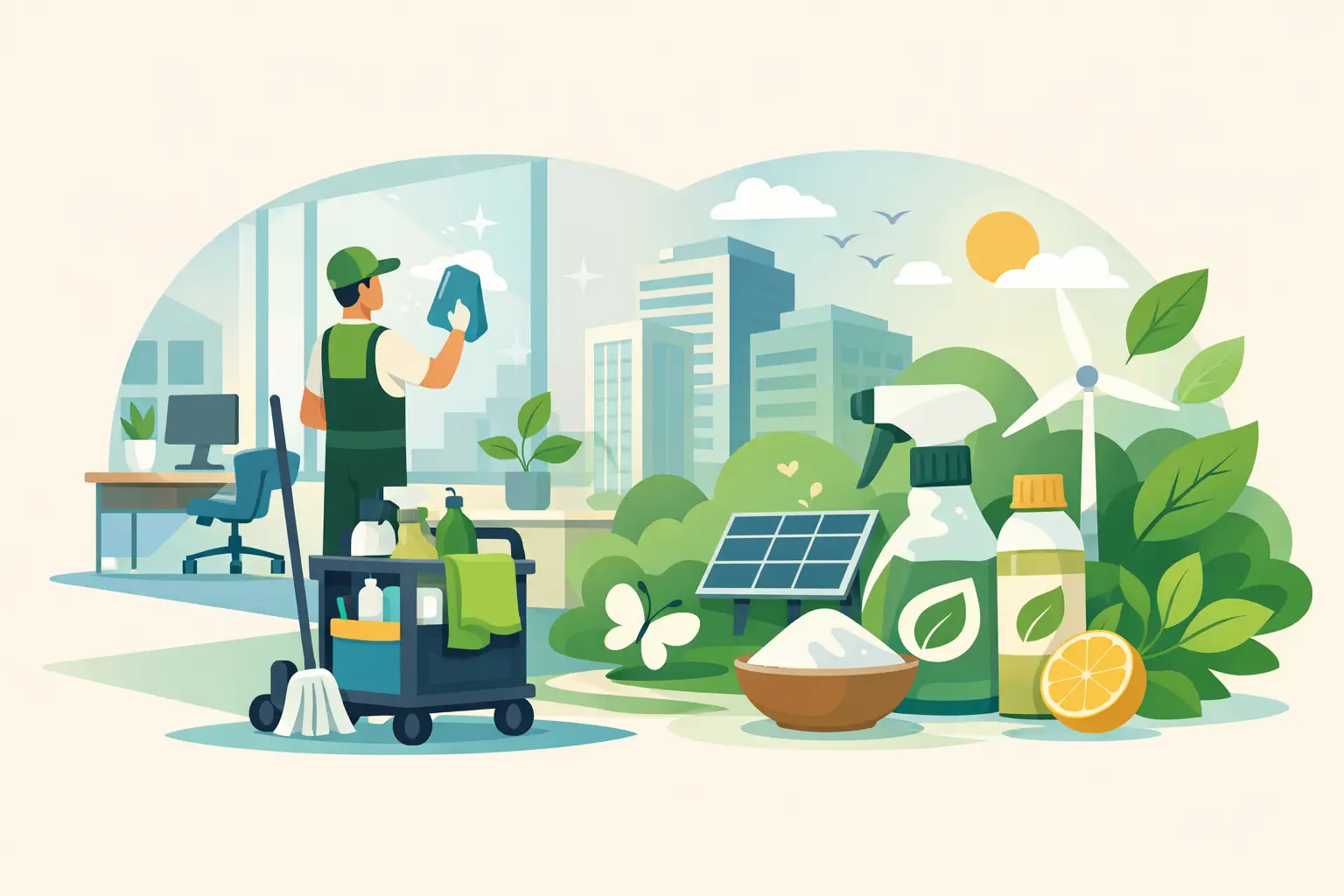

A cleaning program should not force a facility manager to choose between environmental goals and a building that is visibly clean, sanitary, and ready for business. Effective eco friendly commercial cleaning is not about using a green label on every bottle. It is about selecting practical products and processes that reduce unnecessary environmental impact while meeting the hygiene requirements of the space.
For offices, schools, medical clinics, warehouses, retail locations, and multifamily properties, the right approach looks different. A daycare needs careful product selection around young children. A warehouse may benefit most from waste reduction, targeted floor care, and efficient equipment. A medical environment requires cleaning and disinfection procedures that align with its infection-control needs. The goal is a facility-specific program that protects people, supports operations, and produces measurable results.
What Eco Friendly Commercial Cleaning Should Mean
Commercial cleaning is genuinely eco-conscious when it considers the full cleaning process, not just the chemical being used. That includes how products are diluted, how much water and material are consumed, whether equipment is maintained, how waste is handled, and whether staff are trained to use supplies correctly.
A concentrated cleaner that is accurately diluted can reduce packaging and transportation waste. Reusable microfiber cloths can capture dust and soil effectively while reducing reliance on disposable wipes. Properly maintained vacuums with quality filtration can improve dust control in offices, classrooms, and common areas. These choices matter because small inefficiencies become significant in facilities cleaned several times each week.
The environmental benefit must never come at the expense of hygiene. A product may be appropriate for routine surface cleaning but not for a required disinfection task. Similarly, using too little product or skipping contact time can undermine sanitation. A dependable provider distinguishes between cleaning, sanitizing, and disinfecting, then applies the right method to the right surface and risk level.
Cleaning, Sanitizing, and Disinfecting Are Different Tasks
Cleaning removes visible soil, dust, grease, and debris. It is the essential first step for most surfaces because dirt can prevent a sanitizer or disinfectant from working as intended.
Sanitizing reduces bacteria to a level considered safe under public-health standards. It may be appropriate for certain food-service touchpoints and other settings where routine microbial reduction is the objective.
Disinfecting is designed to kill or inactivate specified germs on hard, nonporous surfaces when used according to label directions. In medical clinics, high-traffic restrooms, gyms, and other health-sensitive environments, disinfection may be a central part of the cleaning plan. It should be targeted, documented where required, and performed with the correct dwell time.
Start With the Building, Not a Generic Product List
A sustainable program begins with a site assessment. The cleaning team should understand the building’s traffic patterns, surface types, operating hours, waste streams, and areas of elevated hygiene concern. A downtown office with hybrid schedules has different needs than a condominium lobby, a restaurant kitchen, or a manufacturing floor.
High-touch surfaces deserve particular attention. Door handles, elevator buttons, reception counters, restroom fixtures, breakroom tables, shared equipment, and point-of-sale areas can accumulate soil and require consistent service. The schedule should reflect actual use, not assumptions. Cleaning a rarely used conference room every night while under-servicing a busy washroom is neither efficient nor responsible.
Flooring also affects product and equipment choices. Carpet, polished concrete, vinyl, tile, rubber gym flooring, and sealed industrial surfaces each require a different maintenance approach. Using overly aggressive chemicals can shorten a floor’s service life, create avoidable odors, or leave residue that attracts more dirt. Correct routine care can reduce the need for heavy restoration work and premature replacement.
Practical Choices That Reduce Impact
The strongest green cleaning programs make operational changes that staff can carry out consistently. Product selection is part of the equation, but it is not the whole equation.
Microfiber tools are a practical example. When laundered and maintained properly, they can be used repeatedly and often require less chemical and water than traditional methods. Color-coding cloths and mop heads can also help prevent cross-contamination between restrooms, kitchens, offices, and clinical areas.
Controlled dispensing and measured dilution are equally important. Overusing a cleaner does not make a surface cleaner. It can leave residue, increase supply costs, and create unnecessary chemical exposure. Closed-loop or accurately measured dilution systems help cleaning personnel use products at the intended concentration.
Waste management should be built into routine service. Cleaning teams can help keep recycling and compost streams usable by relining bins correctly, removing contamination when identified, and following a building’s established disposal procedures. However, recycling programs only work when the property has clear signage, suitable containers, and consistent tenant or employee participation. A cleaner cannot solve a poorly designed waste system alone, but a coordinated program can improve results.
Equipment matters as well. Efficient vacuums, low-moisture floor-care methods where appropriate, and well-maintained machines can reduce water use and improve productivity. The right equipment depends on the facility. A low-moisture method may suit a busy office carpet, while a food-service area may require a different process to address grease and soil safely.
Train for Consistency, Not Just Good Intentions
Even well-chosen products will not produce reliable outcomes without trained personnel. Staff need clear instructions on dilution, dwell times, chemical storage, personal protective equipment, cross-contamination controls, and response procedures for spills or incidents.
Training should also explain why each procedure matters. When cleaners understand that a disinfectant must remain wet on a surface for the stated contact time, they are less likely to wipe it away too quickly. When they know which cloth color is assigned to a restroom, they are more likely to maintain separation between zones. This level of discipline protects occupants and supports the facility’s standards.
For managed properties and institutional settings, supervision and quality checks are especially valuable. Routine inspections can identify recurring concerns such as missed corners, supply shortages, overflowing waste stations, or inconsistent restroom presentation. Feedback should lead to adjustments in staffing, task frequency, tools, or site instructions rather than simply repeating the same service plan.
Avoid the Common Green Cleaning Mistakes
The most common mistake is treating every “natural” or “green” product as automatically safe or effective. Some products still require careful handling, and some may not be suitable for disinfecting. Product claims should be reviewed in relation to the intended task, surface compatibility, and applicable facility requirements.
Another mistake is using fragrance to signal cleanliness. Strong scents can be uncomfortable for employees, visitors, students, and patients, particularly in shared or health-sensitive spaces. A clean facility should look and feel fresh without relying on overpowering fragrance to mask odors. Persistent odors should be investigated at the source, whether the cause is a drain, waste area, carpet spill, moisture issue, or ventilation concern.
Finally, avoid setting sustainability goals without a way to monitor performance. A program may track supply consumption, waste volume, missed-service reports, indoor odor complaints, or water-intensive tasks. The best metric depends on the building, but a measurable baseline helps facilities identify what is improving and where service changes are needed.
Build Eco Friendly Commercial Cleaning Into Daily Operations
For most organizations, the practical path is a phased one. Start with the areas that generate the greatest amount of waste, use the most supplies, or create the highest hygiene risk. Update product and tool choices where they make sense, establish clear cleaning procedures, and review the results after the program has had time to operate.
A customized plan also makes it easier to protect business continuity. After-hours service, tailored frequencies, and clearly assigned responsibilities help cleaning occur without disrupting staff, tenants, customers, or visitors. At Pristine Maintenance and Services, this facility-specific approach allows cleaning programs to reflect the actual conditions of commercial properties across Toronto and the GTA.
The right cleaning partner will ask informed questions before recommending solutions: What surfaces are present? Which areas receive the highest traffic? Are there health-sensitive occupants? What waste streams exist? Which tasks must happen after hours? Those answers create a program that is more responsible, more efficient, and easier to manage.
A cleaner workplace and a lower-impact workplace do not have to be competing priorities. When product choices, staff training, equipment, and schedules are aligned with the building’s real needs, sustainability becomes part of dependable daily maintenance rather than an extra promise on a label.
0 Comments