
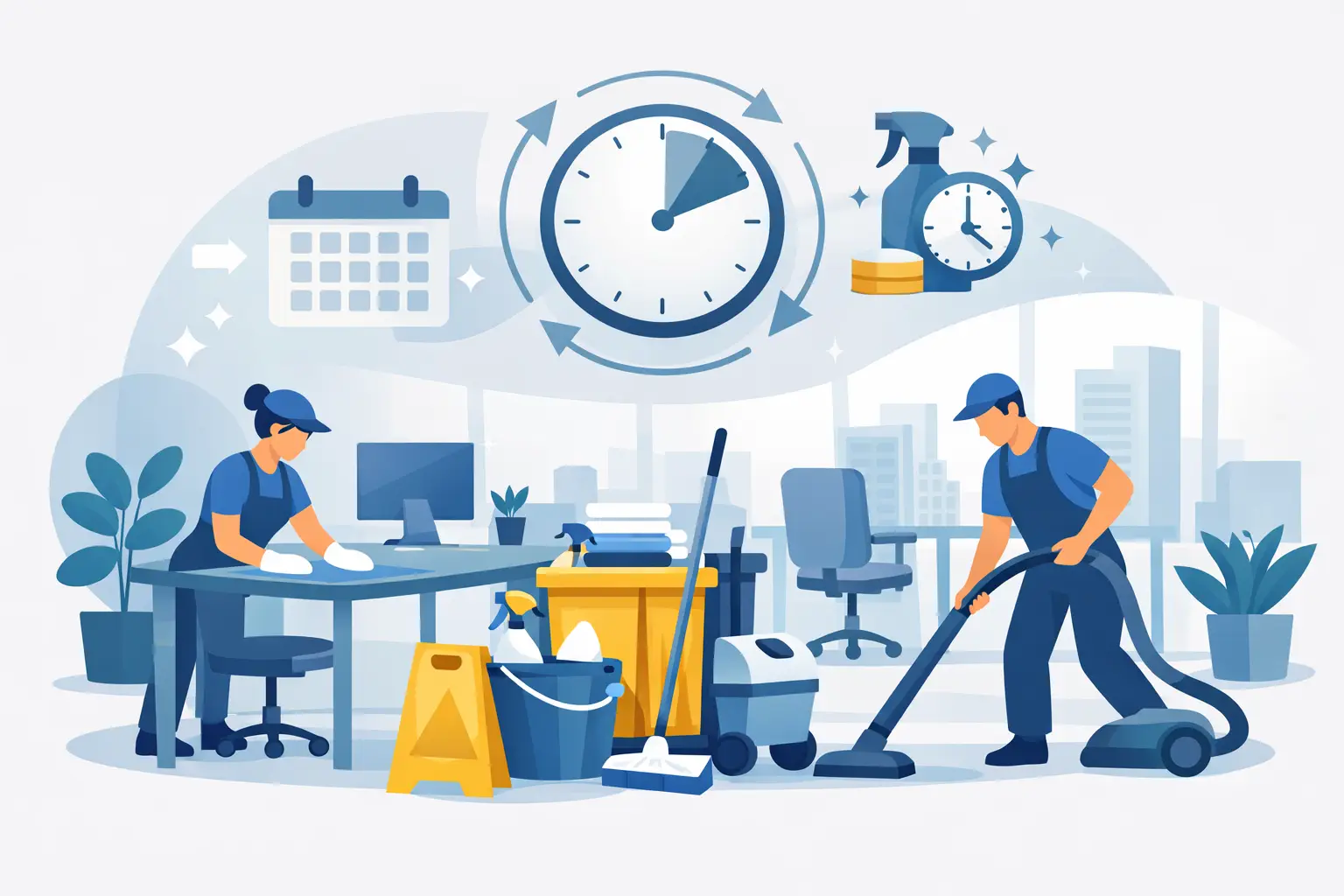

The best cleaning schedule for offices is not simply a checklist posted in a janitorial closet. It is a working plan built around how people move through the building, which surfaces receive the most contact, when the office is occupied, and what standard visitors and employees should experience each day. A schedule that looks good on paper but ignores peak traffic, shared workstations, or after-hours access will create gaps quickly.
For office managers and facility leaders, the goal is consistency without unnecessary disruption. Employees should arrive to clean restrooms, orderly common areas, and workspaces that support productive work. Clients should see a professional environment from the moment they enter. The right frequency depends on the size of the office, headcount, layout, business hours, and whether the space includes higher-risk areas such as lunchrooms, fitness rooms, medical stations, or public reception areas.
Start With the Office’s Actual Use Pattern
Before setting daily, weekly, and monthly tasks, assess how the office operates. A 20-person professional office with mostly assigned desks has very different requirements from a call center with rotating shifts or a multi-tenant building with heavy visitor traffic.
Walk the facility at several points during the day. Note where litter accumulates, which restrooms see the highest use, where fingerprints appear, and how quickly kitchen counters, meeting rooms, and entryways become untidy. These observations are more useful than adopting a generic cleaning frequency.
Pay close attention to high-touch and high-visibility areas. Door handles, elevator buttons, reception counters, shared printers, breakroom appliances, and conference tables can affect both hygiene and the perception of the entire workplace. A single overflowing trash bin or poorly maintained restroom can outweigh an otherwise clean office in the eyes of employees and visitors.
Cleaning also has to fit the operating schedule. Many offices benefit from evening service so cleaners can complete vacuuming, restroom sanitation, trash removal, and floor care without interrupting meetings or focused work. Other locations need daytime porter service for restrooms, lobby touch-ups, spills, and meeting room resets. The best approach may combine both.
Best Cleaning Schedule for Offices: Daily Priorities
Daily cleaning protects the office’s baseline standard. These tasks should be completed on each business day, with additional service for high-traffic facilities or offices open evenings and weekends.
Restrooms require the most disciplined routine. Toilets, urinals, sinks, faucets, counters, mirrors, dispensers, and stall handles should be cleaned and disinfected daily. Floors should be mopped, waste removed, and soap, paper products, and hand sanitizer replenished. In busy offices, a daytime check is often necessary to keep supplies available and address water, paper, or hygiene concerns before they become complaints.
Common areas also need daily attention. Reception desks, visitor seating, lobby floors, elevator interiors, hallways, and glass entrance doors shape the first impression of the business. Trash and recycling should be removed from desks, kitchens, and shared spaces according to the office’s waste volume and local disposal procedures.
Breakrooms deserve more than a quick wipe. Counters, sinks, tables, cabinet handles, refrigerator handles, microwaves, and coffee stations should be cleaned daily. Food debris attracts pests and creates odors quickly, particularly when employees use the space throughout the day. Dishwashing responsibilities can remain with staff, but the cleaning plan should clearly define who handles abandoned dishes, spills, and expired food.
Daily office cleaning should also cover vacuuming or spot-cleaning carpeted traffic lanes, damp mopping hard floors, cleaning visible marks from glass, and disinfecting shared touchpoints. Desks are more nuanced. In offices with assigned workstations, cleaners should generally avoid moving personal papers or equipment unless the client has established a clear desk policy. In hot-desking environments, workstation disinfection may be a daily requirement.
Weekly Tasks That Maintain the Building
Weekly work addresses buildup that daily service may not fully remove. These tasks maintain appearance and extend the life of finishes, flooring, and furnishings.
A strong weekly schedule usually includes detailed vacuuming around furniture edges, cleaning baseboards in visible areas, dusting low and mid-level surfaces, wiping chair arms and table legs, and cleaning interior glass panels. Meeting rooms should receive extra attention because they often host clients and are used by multiple teams throughout the week.
Floor care should be adjusted to the surface and season. Hard floors may need machine scrubbing in busy areas, while carpets may benefit from spot treatment for spills and tracked-in soil. During wet or snowy weather, entrances and walk-off mats require more frequent service than the standard schedule. It is better to increase entryway attention temporarily than to allow dirt and moisture to spread across the office.
Weekly cleaning is also the right time to inspect consumables and facility conditions. Staff can identify loose dispensers, leaking faucets, damaged flooring, overflowing recycling, or persistent odors and report them to the appropriate contact. A dependable cleaning provider does more than complete assigned tasks. It helps facility teams notice conditions that could affect safety, cleanliness, or tenant satisfaction.
Monthly and Periodic Office Cleaning
Monthly tasks provide the detail work that keeps an office from gradually looking neglected. They are especially valuable in facilities where daily cleaning is completed after hours and certain areas are less visible during routine service.
Monthly or periodic work may include high dusting vents and ledges, detailed cleaning of blinds, washing interior windows, wiping doors and frames, polishing stainless steel, cleaning behind accessible furniture, and treating carpet spots. Upholstered seating, fabric partitions, and waiting-room furniture should be inspected for stains and scheduled for extraction or specialty cleaning when needed.
Some work belongs on a quarterly or semiannual plan rather than a monthly one. This can include deep carpet cleaning, machine scrubbing and refinishing resilient floors, detailed upholstery cleaning, exterior window cleaning, and high-level dust removal. Frequency depends on traffic, soil conditions, and the appearance standard required by the organization.
Avoid treating periodic work as optional. When deep cleaning is repeatedly delayed, daily crews are forced to manage accumulated soil with tools and time intended for routine maintenance. The result is lower quality, shorter floor life, and a more expensive recovery later.
Adjust Frequency for High-Risk or High-Traffic Areas
A standard office schedule needs adjustment when the facility has special use areas. Medical offices, childcare spaces, fitness centers, food-service areas, and public-facing locations require a more rigorous approach to sanitation and touchpoint disinfection. These locations may also need documented procedures, approved products, and staff trained for the environment.
Even within a conventional office, certain conditions justify increased service:
- A large number of employees sharing desks, meeting rooms, or equipment
- Frequent client, vendor, or public visits through reception and conference areas
- Long operating hours, multiple shifts, or weekend occupancy
- Seasonal weather that increases moisture, salt, leaves, or dirt at entrances
- Employees eating at desks or relying heavily on a shared kitchen
The trade-off is straightforward. More frequent service increases the cleaning budget, but insufficient service can lead to complaints, unpleasant odors, slip hazards, pest concerns, and an unprofessional appearance. The most cost-effective schedule targets added labor where it has the greatest operational impact rather than applying the same frequency to every room.
Make the Schedule Measurable and Accountable
A cleaning schedule only works when responsibilities are clear. The scope should identify each area, task, frequency, service window, and expected result. Terms such as clean as needed can create disagreements because they leave too much room for interpretation.
For example, a better instruction is to state that restroom fixtures are cleaned and disinfected nightly, waste is removed from all desks each service day, lobby glass is spot-cleaned daily, and carpets receive extraction on an agreed periodic cycle. A site-specific checklist helps supervisors confirm that service aligns with the contract and helps clients communicate changes as office needs evolve.
Quality checks should be routine, not limited to when a problem is reported. Facility managers can inspect restrooms, kitchens, entryways, and meeting rooms at different times of the week to identify recurring issues. A responsive provider should use that feedback to adjust task timing, staffing levels, or cleaning methods.
Supply management is another part of accountability. If the cleaning team is responsible for restroom paper, soap, liners, and other consumables, establish reorder points and reporting procedures. Empty dispensers undermine the cleanliness of a well-maintained restroom and create avoidable disruption for employees.
Build a Plan That Can Change With the Office
Office use changes. Headcount grows, hybrid schedules shift, teams relocate, and seasonal conditions affect traffic patterns. Review the cleaning plan at least twice a year and after major operational changes. A plan that was appropriate for a lightly occupied office may no longer work when staff return more frequently or client visits increase.
Pristine Maintenance and Services develops facility-specific programs that account for these realities, including after-hours service and higher-frequency support where the building requires it. The objective is not to sell unnecessary tasks. It is to maintain a clean, safe, professional environment with a schedule that matches how the property is actually used.
The right office cleaning schedule should feel almost invisible when it is working well. Employees can focus on their work, visitors see a well-managed space, and facility leaders spend less time chasing preventable cleaning issues.


0 Comments