
A disinfectant cannot work through a layer of dust, grease, food residue, or soil. That simple operational reality is why the best commercial disinfection methods begin with the right cleaning process, not just a stronger chemical or newer piece of equipment. For facility managers, the goal is consistent risk reduction across high-touch and high-traffic areas while keeping staff, visitors, tenants, and daily operations protected.
The right approach depends on the building, the surfaces involved, the level of traffic, and the type of exposure risk. A medical clinic, warehouse break room, daycare classroom, and office reception area should not receive the same disinfection plan. Effective programs are specific, repeatable, and built around proper product use.
Start With Cleaning, Then Disinfecting
Cleaning removes visible debris and organic material from a surface. Disinfecting uses an approved product to kill or inactivate specified germs on a pre-cleaned hard surface. These are connected tasks, but they are not interchangeable.
In a commercial setting, staff should clean frequently touched surfaces before applying disinfectant when those surfaces are visibly soiled. This includes door handles, elevator buttons, shared keyboards, faucet handles, tables, checkout counters, fitness equipment, and restroom fixtures. If a surface is not properly cleaned first, the disinfectant may not contact the surface evenly or remain effective for its required dwell time.
The product label matters as much as the product category. Teams need to follow dilution instructions, surface compatibility guidance, required personal protective equipment, ventilation requirements, and contact time. Wiping a product off immediately may make a surface look clean, but it may not deliver the disinfection result the facility expects.
Best Commercial Disinfection Methods by Use Case
Manual wipe-and-apply disinfection
Manual application with microfiber cloths, disposable wipes, or properly labeled spray-and-wipe systems remains one of the most reliable methods for high-touch surfaces. It gives trained cleaning staff direct control over coverage and allows them to focus on the areas people actually contact throughout the day.
This method is especially effective in offices, retail spaces, schools, clinics, condominiums, and restaurants because it can be incorporated into recurring cleaning schedules. Microfiber cloths also help reduce cross-contamination when staff use a color-coded system for restrooms, kitchens, general areas, and sensitive spaces.
Manual disinfection does have a labor component. Results depend on trained staff following proper procedures, using clean cloths, changing solutions as required, and allowing the surface to stay wet for the listed contact time. For most daily commercial needs, that trade-off is worthwhile because the method is targeted, practical, and easy to verify.
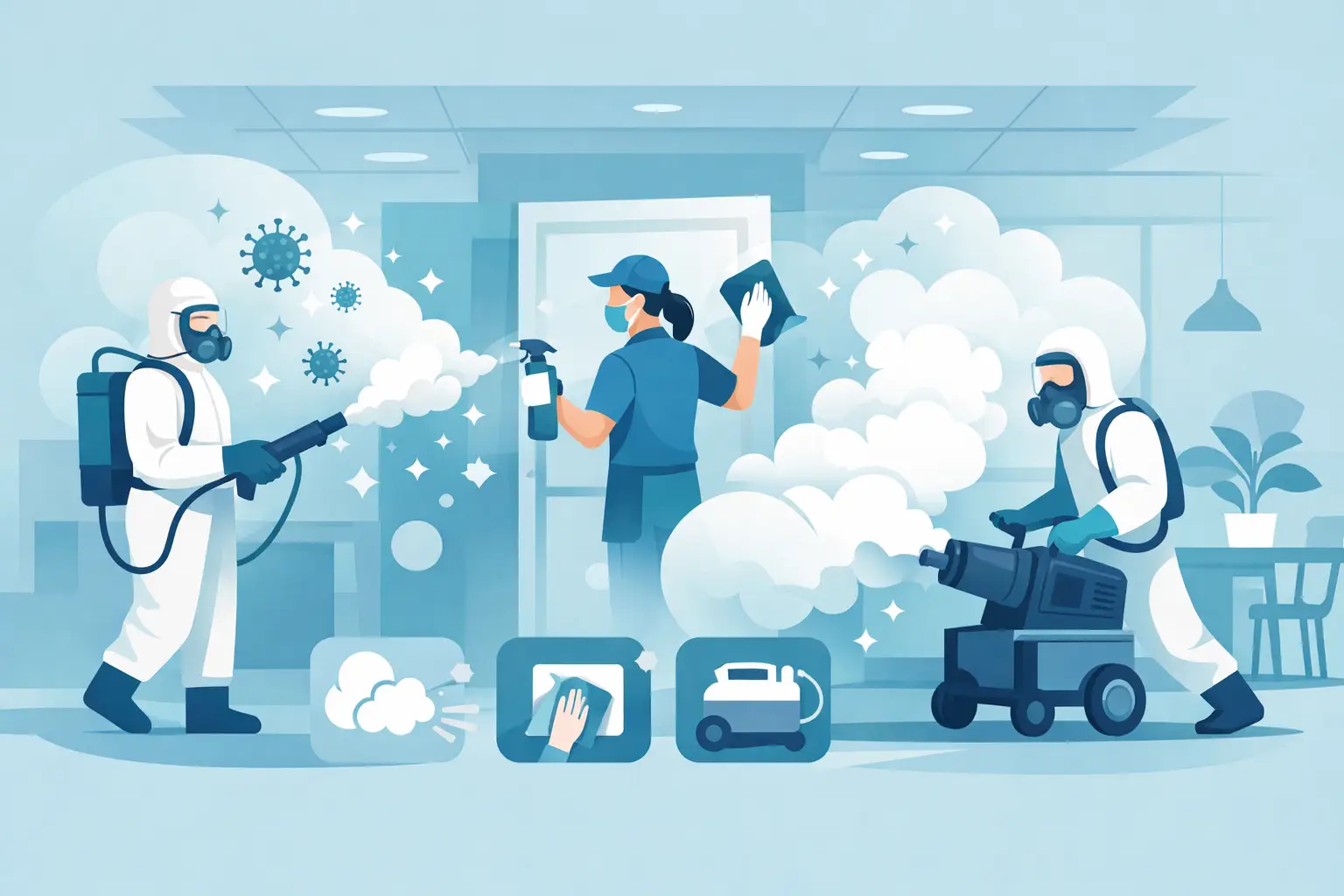
Electrostatic spraying
Electrostatic sprayers charge disinfectant droplets so they are attracted to surfaces, helping the product wrap around complex shapes and hard-to-reach areas. This can improve coverage on desks, chairs, lockers, equipment, restroom partitions, and similar fixtures.
Electrostatic spraying is useful after hours in larger facilities or during a response to an identified illness concern. It is not a substitute for cleaning visibly dirty surfaces, and it should not be treated as a quick solution for every area. Overspray, sensitive electronics, exposed food-contact surfaces, and poor ventilation can create problems if the process is not managed carefully.
The most effective use is as part of a planned program: clean first, protect or remove sensitive items, apply the approved product at the correct rate, maintain contact time, and allow surfaces to dry before the area returns to use. Occupant safety and product instructions should always determine whether a space needs to be vacant during application.
Fogging and misting
Fogging and misting systems disperse disinfectant into fine droplets to treat broad areas quickly. They can be helpful in large open spaces, warehouses, locker rooms, school common areas, and facilities requiring an enhanced disinfection response after normal cleaning has been completed.
However, broad distribution does not guarantee complete surface coverage. A fogger may not adequately reach shadowed areas, undersides of objects, or surfaces blocked by equipment. It also does not remove grime. For that reason, fogging should support a targeted cleaning and disinfection process rather than replace it.
Facilities should use fogging only with products and equipment approved for that application. Teams must account for ventilation, re-entry intervals, residue, electronics, inventory, and any occupants with sensitivities. A method that appears efficient can become disruptive if the facility has not planned for those operational details.
UV-C disinfection systems
UV-C systems use ultraviolet light to reduce microorganisms on exposed surfaces and in some air-treatment applications. They are often considered for healthcare settings, gyms, laboratories, public washrooms, and other higher-risk environments where an added layer of control is appropriate.
UV-C can be valuable, but it has clear limitations. Light works only where it reaches, so shadows, clutter, drawers, and the underside of furniture will not receive the same treatment. It also requires careful safety controls because direct exposure can harm skin and eyes. Depending on the system, trained operation, room vacancy, placement, run time, and maintenance are essential.
For most facilities, UV-C is best viewed as a supplemental technology. It can strengthen a well-run cleaning program, but it does not replace manual cleaning of high-touch points or approved chemical disinfection where required.
Steam disinfection for suitable surfaces
Commercial steam equipment can be useful on certain durable, nonporous surfaces and in areas where reducing chemical use is a priority. High-temperature steam may be appropriate for grout, restroom fixtures, hard flooring, and some equipment, provided the surface manufacturer permits it.
Steam is not right for every material. Moisture and heat can damage flooring, finishes, adhesives, electronics, laminated surfaces, and certain upholstery. It also requires correct temperature control and slow, consistent passes to be effective. Facilities should avoid assuming that steam alone meets specific disinfection requirements without confirming the intended use and documented procedure.
How to Choose a Method for Your Facility
A strong disinfection plan starts with a risk assessment rather than a standard checklist. Consider who uses the building, where contact happens most often, what surfaces are present, and whether there are regulatory or industry-specific standards to meet.
Medical spaces and daycares typically require frequent, highly targeted attention to high-touch areas, washrooms, waiting rooms, and shared equipment. Restaurants need procedures that protect food-contact areas and avoid inappropriate chemical residues. Warehouses and industrial sites may need a plan that accounts for shift changes, dust, machinery, large break areas, and worker access. Offices may benefit most from recurring touchpoint disinfection and enhanced service after meetings, events, or illness reports.
Scheduling is equally important. After-hours service can allow electrostatic application, floor care, restroom disinfection, and detailed touchpoint cleaning without interrupting staff or customers. During operating hours, a visible daytime attendant may be more suitable for restroom checks, spill response, reception areas, and frequently used shared spaces.
Build Consistency Into the Process
The method matters, but execution determines the outcome. Commercial disinfection should be documented through clear scope definitions, area-specific procedures, trained staff, quality checks, and communication with the facility contact.
A practical program identifies high-touch surfaces by zone, assigns cleaning frequencies, specifies approved products, and defines what happens when there is a spill, illness concern, or increased traffic period. Staff should understand dilution control, dwell time, safe storage, cross-contamination prevention, and when to escalate a concern.
Quality assurance should include more than a quick visual inspection. Supervisors can review restrooms, shared kitchens, touchpoints, waste areas, floors, and supply levels against the agreed scope. For sensitive environments, facilities may also need service logs, product records, and verification procedures that support internal policies or compliance expectations.
The best choice is rarely the most dramatic technology. It is the method that fits your facility, is safe for your people and surfaces, and is performed correctly every time. A customized commercial cleaning program gives disinfection the structure it needs to protect the spaces people rely on each day.
0 Comments