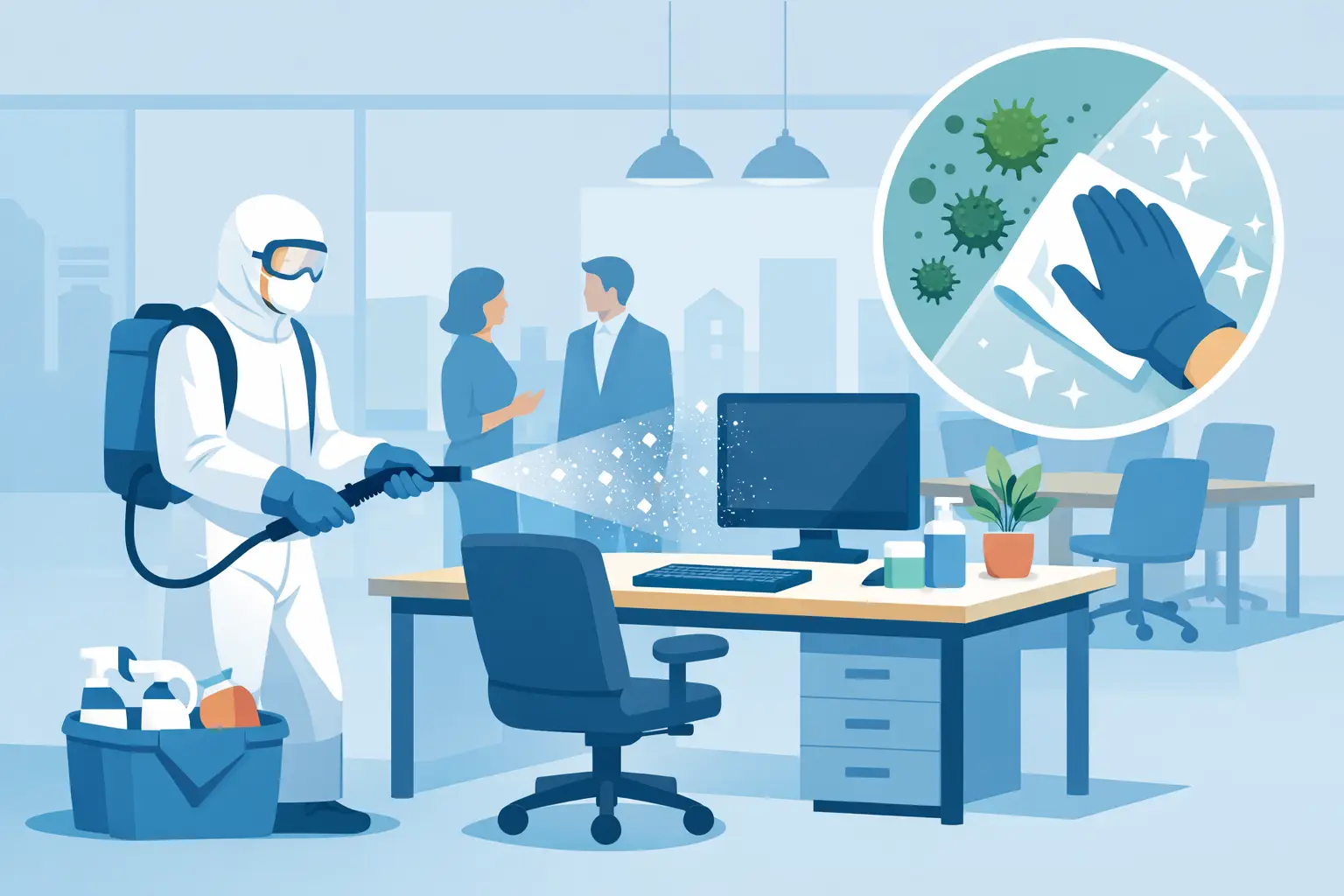

A receptionist disinfects the front counter at 5 p.m., but the same counter sees visitors, deliveries, and staff again the next morning. That is why the answer to how often should offices be disinfected is rarely a simple weekly or monthly number. A useful schedule reflects how people actually use the space, which surfaces they share, and what level of hygiene the business needs to maintain.
For most professional offices, routine cleaning should happen daily, while disinfection should focus on high-touch surfaces at a frequency matched to traffic and risk. In a low-traffic office, once-daily disinfection of shared touchpoints may be sufficient. In a busy workplace with visitors, shared equipment, or an active illness concern, those same surfaces may need attention several times throughout the day.
Cleaning and Disinfection Are Not the Same Task
A reliable office hygiene program starts by separating cleaning from disinfection. Cleaning removes visible soil, dust, crumbs, and residue from a surface. Disinfection uses an appropriate product and contact time to reduce germs on a previously cleaned surface.
If a shared conference table has coffee spills or food residue, applying disinfectant immediately may not deliver the intended result. The surface should be cleaned first, then disinfected according to the product label. This distinction matters for both appearance and hygiene, especially in workplaces where clients, tenants, or employees expect consistently professional conditions.
Daily cleaning also supports disinfection by keeping dust and buildup from accumulating on desks, floors, restrooms, kitchen areas, and common spaces. The goal is not to apply disinfectant to every square inch of an office every day. It is to direct the right level of service to the surfaces and areas that present the most meaningful exposure risk.
How Often Should Offices Be Disinfected by Area?
High-touch surfaces are the priority. In most offices, these include door handles, elevator buttons, reception counters, light switches, shared printers, copier controls, refrigerator handles, microwave buttons, faucet handles, restroom fixtures, and common-area tables.
For a typical office with regular weekday occupancy, disinfect these touchpoints at least once each business day. Workplaces with steady client traffic, hot-desking, shared workstations, or frequent meetings should consider two or more service intervals daily. A morning service, mid-day touchpoint wipe-down, and after-hours cleaning can be appropriate where usage is continuous.
Individual desks are different. If employees have assigned workstations and do not share devices, daily disinfection of every desk may not be necessary. Routine cleaning and periodic disinfection are often enough, with employees encouraged to wipe their own keyboards, phones, and desktops as needed. When desks are shared between shifts or staff members, disinfecting the workstation between users is the more practical standard.
Restrooms and break rooms generally need the closest attention because they combine high-touch surfaces with moisture, food handling, and frequent use. A small office may require daily cleaning and disinfection, while a larger office or multi-tenant facility may need service several times per day. Supplies should also be monitored so hand soap, paper products, and waste receptacles do not become operational problems between scheduled visits.
The Factors That Change the Right Frequency
There is no single disinfection schedule that fits every business. Facility managers should consider the following operating conditions before setting a routine:
- Occupancy and traffic: More employees, visitors, tenants, and deliveries create more touchpoints and a higher need for frequent service.
- Shared surfaces and equipment: Hot desks, shared phones, meeting rooms, kitchen appliances, and collaborative work areas require more attention than mostly private offices.
- Building layout: Compact spaces with shared entrances, elevators, restrooms, and lunchrooms concentrate use in fewer areas.
- Health sensitivity: Medical offices, clinics, daycares, schools, and workplaces serving vulnerable populations often need more stringent protocols.
- Current illness activity: When employees report contagious illness or absenteeism increases, increasing disinfection frequency is a sensible temporary measure.
- Client-facing expectations: Reception areas, showrooms, sales offices, and meeting spaces should remain visibly clean and properly maintained throughout the day.
These conditions can change over time. A company may move from a hybrid schedule to full-time occupancy, add a second shift, begin hosting more clients, or reconfigure its workspace. A cleaning plan should be reviewed when operations change rather than treated as a fixed contract detail.
A Practical Office Disinfection Schedule
For many standard offices, an effective baseline is after-hours cleaning five days per week, with daily disinfection of high-touch points, restrooms, kitchen areas, and shared meeting spaces. This supports a clean start each morning without interrupting staff or customers.
A busy corporate office, property management office, call center, or shared workspace may benefit from daytime porter service or a scheduled mid-day disinfection of common touchpoints. This is especially useful in lobbies, washrooms, break rooms, and conference areas that cannot reasonably stay clean until the evening.
For lower-occupancy offices where employees are on-site only a few days per week, the schedule can be adjusted around actual usage. Disinfecting high-touch areas on occupied days, completing deeper cleaning on a set weekly schedule, and providing targeted service after meetings or events can control costs without lowering standards.
Health-sensitive facilities need a more detailed program. Medical clinics, dental offices, daycares, and similar environments may require disinfection between patients, groups, shifts, or use periods. Their procedures should account for applicable industry requirements, surface types, approved products, and safe dwell times. A general office routine is not an appropriate substitute for a facility-specific sanitation protocol.
When to Increase Disinfection Immediately
Certain situations call for a temporary increase in service, even when a building normally follows a stable schedule. This includes a known illness outbreak, a heavily attended event, a spill involving bodily fluids, construction dust affecting occupied areas, or an influx of visitors during a busy season.
In these cases, focus first on the affected spaces and high-touch routes rather than treating the entire building the same way. For example, after a large board meeting, the conference room, adjacent restrooms, lobby, elevator buttons, and kitchen area may need prompt cleaning and disinfection. Targeted work is faster, less disruptive, and more effective than indiscriminate spraying.
Businesses should also avoid relying on fogging or electrostatic application as a replacement for routine surface cleaning. These methods may be useful in specific circumstances when performed correctly, but they do not remove dirt, do not solve poor daily cleaning habits, and may not be appropriate for every surface or occupied space.
Choose Products and Procedures That Protect the Workplace
Frequency is only one part of the equation. The disinfectant must be suitable for the surface, used according to its label, and allowed to remain wet for the required contact time. Rushing the process can reduce effectiveness, while using the wrong product can damage finishes, electronics, or specialty materials.
Trained cleaning staff should understand cross-contamination control as well. Using separate tools for restrooms and kitchen areas, changing cloths regularly, handling waste properly, and working from cleaner areas toward dirtier areas are basic practices that make a meaningful difference. In facilities with secure areas or sensitive information, staff should also follow access rules and protect client privacy.
A professional provider can build these details into the scope of work: which rooms are serviced, which touchpoints are disinfected, how often daytime attention is required, and what response is expected when an issue arises. That clarity helps office managers verify performance and prevents assumptions about what “disinfected” includes.
Build the Schedule Around Your Actual Operations
The best answer to how often offices should be disinfected is: as often as the building’s traffic, shared use, and health requirements demand. For many offices, daily high-touch disinfection paired with recurring after-hours cleaning is the right foundation. Higher-traffic and health-sensitive facilities may need multiple daily intervals or between-use disinfection in specific areas.
A schedule should protect employees and visitors while fitting the way the office runs. When service is tailored to occupancy, building layout, and business hours, cleanliness becomes a dependable part of operations rather than a recurring disruption.

0 Comments