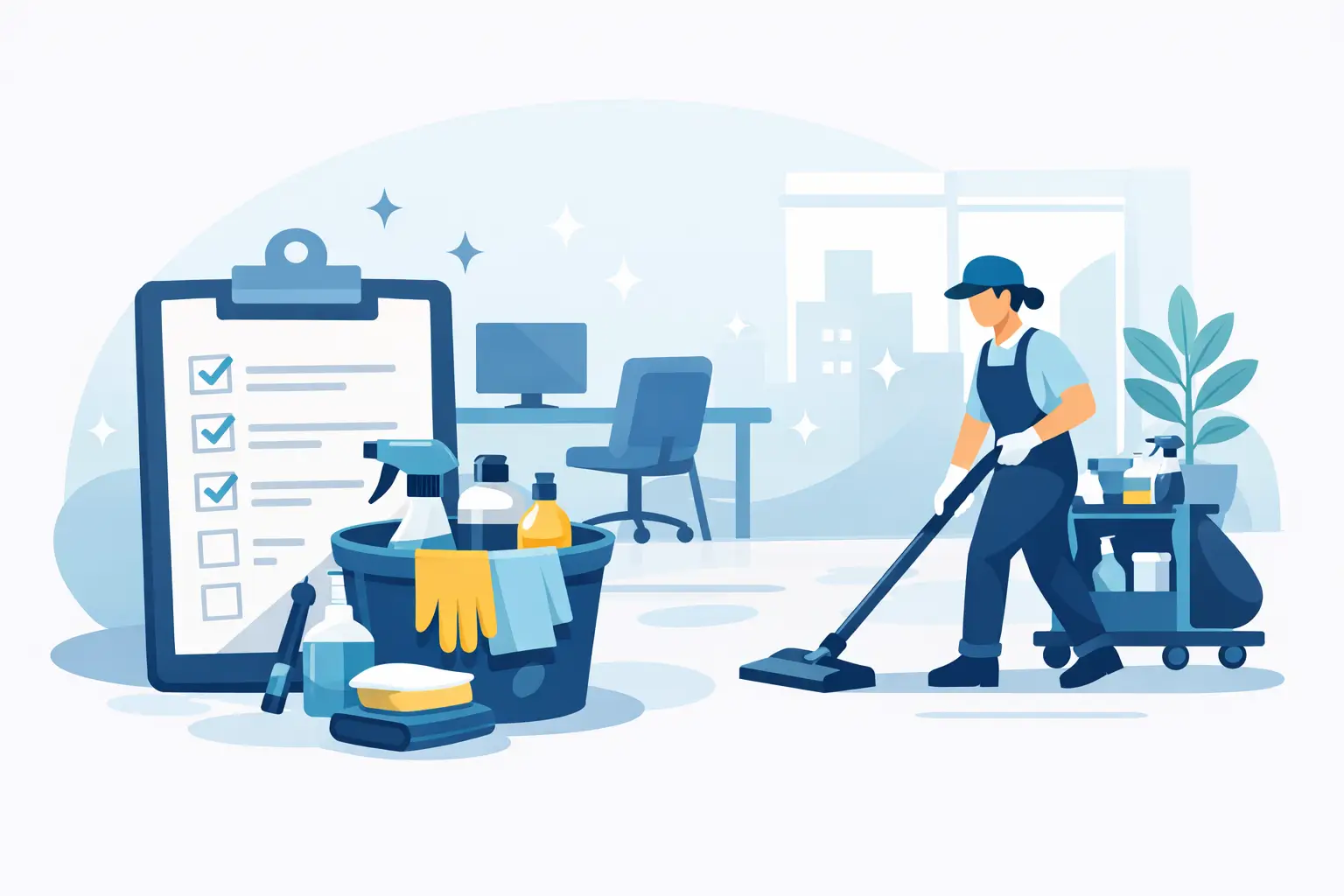

A missed trash pull in the break room or fingerprints left on the front entry glass can change how an office feels by 9 a.m. That is why the best office cleaning checklist is not just a housekeeping document. It is an operational tool that protects appearance, supports hygiene, and helps your workplace run without small cleaning issues turning into larger problems.
For office managers, property teams, and business owners, the challenge is rarely deciding whether cleaning matters. The real issue is consistency. A checklist creates a repeatable standard for daily touchpoints, weekly detailing, and periodic deep cleaning, while making it easier to assign responsibility and verify that nothing critical is being skipped.
What the best office cleaning checklist should actually do
A useful checklist should reflect how your office is used, not what looks good on paper. A small professional office with limited visitors will need a different cleaning rhythm than a busy corporate floor with shared kitchens, conference rooms, and high restroom traffic. The best office cleaning checklist sets clear expectations by area, frequency, and outcome.
It should also separate visible cleaning from hygiene-focused cleaning. Dusting a reception desk improves presentation. Disinfecting door handles, faucet handles, break room counters, and shared equipment supports health and sanitation. Both matter, but they are not the same task and should not be treated as interchangeable.
Another point many workplaces miss is timing. Some tasks are best handled during business hours, such as touch-up cleaning in a lobby or restocking restroom supplies. Others are better completed after hours, including vacuuming, mopping, waste removal, and more disruptive detail work. The strongest checklists account for operations, not just cleaning preferences.
Daily office cleaning checklist essentials
Daily cleaning is the foundation of any office program because it addresses the spaces employees and visitors notice first. If daily tasks are inconsistent, even a well-maintained building starts to feel unmanaged.
Reception and entry areas should be checked for glass smudges, dust on surfaces, litter, and floor debris. These spaces shape first impressions, so they usually need attention every business day. In higher-traffic offices, spot cleaning throughout the day may also be appropriate.
Work areas need routine care, but the exact scope depends on whether staff clear their desks and whether the office uses assigned or shared workstations. Common daily tasks include emptying trash and recycling, replacing liners where needed, vacuuming or spot cleaning floors, and sanitizing high-touch points such as phones, chair arms, shared keyboards, and door handles. In some offices, desk surface cleaning should only happen on clear-desk areas to avoid interfering with papers or equipment.
Break rooms and kitchens need close attention because they can create odor, pest, and sanitation issues quickly. Countertops, sinks, appliance handles, tables, and cabinet pulls should be cleaned daily. Floors should be swept and spot mopped, and trash should be removed before food waste builds up. If the office has a larger staff or frequent catered meetings, this area may need multiple checks during the day.
Restrooms require the most disciplined daily process. Toilets and urinals should be cleaned and disinfected, sinks and counters wiped down, mirrors cleaned, touchpoints sanitized, and floors mopped with attention to corners and around fixtures. Restroom dispensers should also be checked and restocked consistently. A restroom that runs out of soap or paper products becomes a service failure immediately.
Conference rooms are another area where frequency depends on usage. In many offices, they need daily resetting rather than full cleaning alone. Tables should be wiped, chairs straightened, trash removed, glass cleaned as needed, and shared controls or touchscreens sanitized. If rooms host outside visitors, standards should be closer to reception-level presentation.
Weekly tasks that keep standards from slipping
Daily cleaning handles appearance and routine sanitation, but weekly work prevents gradual decline. This is where many offices either protect their standards or start accumulating dust, stains, and neglected details.
A weekly checklist should include more thorough vacuuming along edges and under accessible furniture, damp wiping of low-reach ledges, interior glass cleaning beyond spot treatment, and more detailed attention to partitions, doors, and baseboards. Upholstered seating in waiting areas or meeting spaces may also need vacuuming to remove dust and debris that daily cleaning does not fully address.
Break rooms should receive a deeper weekly clean, including the exterior of small appliances, chairs, table legs, and areas behind or under movable items. Restrooms should also get detailed attention around stall partitions, grout lines, vents, and less obvious buildup points that can affect odor and cleanliness over time.
In offices with shared equipment rooms, print stations, or mail areas, weekly cleaning is especially useful. These are often heavily used zones that fall outside the main focus of front-of-house cleaning but still affect employee experience and sanitation.
Monthly and periodic cleaning items
Even the best daily and weekly routine will not cover everything. Some tasks belong on a monthly, quarterly, or seasonal schedule because they require more time, special equipment, or lower-traffic access windows.
These tasks often include high dusting, air vent cleaning, interior window detailing, hard floor machine scrubbing, carpet spot treatment or extraction, deep cleaning of upholstered furniture, and detailed cleaning of walls, doors, and light switches. Depending on the office environment, periodic disinfection may also be scheduled during flu season, after an illness event, or in response to elevated hygiene expectations.
This is where a checklist should become a maintenance plan rather than a static document. If your office has heavy winter slush, for example, floor care may need more frequent periodic treatment. If your workspace hosts clients daily, glass and lobby detailing may need to move from weekly to several times per week. The right frequency always depends on traffic, building design, and business use.
Best office cleaning checklist by area
The most effective way to organize the checklist is by space instead of by general task category. That makes it easier for in-house teams or commercial cleaners to work methodically and verify completion.
Reception and lobby
This area should cover entry glass, door handles, front desks, seating, tables, flooring, and visible dust on ledges or décor surfaces. If clients or tenants come through regularly, this zone deserves priority because cleanliness is tied directly to professionalism.
Workstations and office areas
Focus on trash removal, floor care, touchpoint cleaning, dusting of reachable surfaces, and sanitation of shared tools and equipment. In open offices, partition tops, chair backs, and collaborative surfaces should not be overlooked.
Break room and kitchen
Include counters, tables, sinks, faucet handles, appliance exteriors, cabinet fronts, trash, recycling, and floor cleaning. If food prep happens on site, the checklist should be tighter and more frequent than in a simple coffee station setup.
Restrooms
Cover full fixture cleaning and disinfection, mirror cleaning, partition wipe-downs, touchpoint sanitation, restocking, waste removal, and floor mopping. Restrooms often shape employee complaints more than any other area, so this part of the checklist needs zero ambiguity.
Conference rooms and shared spaces
This should include table cleaning, chair straightening, trash removal, floor care, and disinfecting shared controls, remotes, and presentation equipment. If rooms turn over often, a quick-reset version of the checklist is useful between meetings.
Common mistakes when building an office cleaning checklist
One common mistake is making the checklist too generic. If it says clean floors, that can mean anything from a quick vacuum to edge detailing and spot removal. Clear instructions reduce inconsistency and make service easier to inspect.
Another issue is assigning the same frequency to every task. Not everything needs daily attention, and not everything can wait until Friday. Overcleaning low-risk areas can waste budget, while undercleaning restrooms, kitchens, and touchpoints creates obvious problems.
Many businesses also fail to account for occupancy patterns. A five-day office with staggered hybrid attendance will need a different plan than a customer-facing office with constant daily traffic. Cleaning should match actual use, not assumptions from an old schedule.
When a checklist should be customized
A standard office list is a good starting point, but it stops being enough when the workspace has specialized needs. Medical-adjacent offices, high-density call centers, training centers, and buildings with public-facing traffic often require stricter disinfection protocols, more frequent touchpoint cleaning, or after-hours service to avoid disruption.
This is where a customized program becomes more valuable than a one-size-fits-all checklist. A provider such as Pristine Maintenance and Services would typically adjust cleaning scope based on traffic patterns, building layout, sanitation priorities, and the timing that works best for operations. That matters because a checklist only works when the people completing it can follow it reliably in the real environment.
A clean office should never depend on memory or whoever happens to notice a problem first. The right checklist gives structure to daily execution, helps protect health standards, and keeps your workplace consistently ready for staff, visitors, and tenants. If your current routine feels reactive, that is usually the signal to tighten the checklist before standards slip any further.

0 Comments