
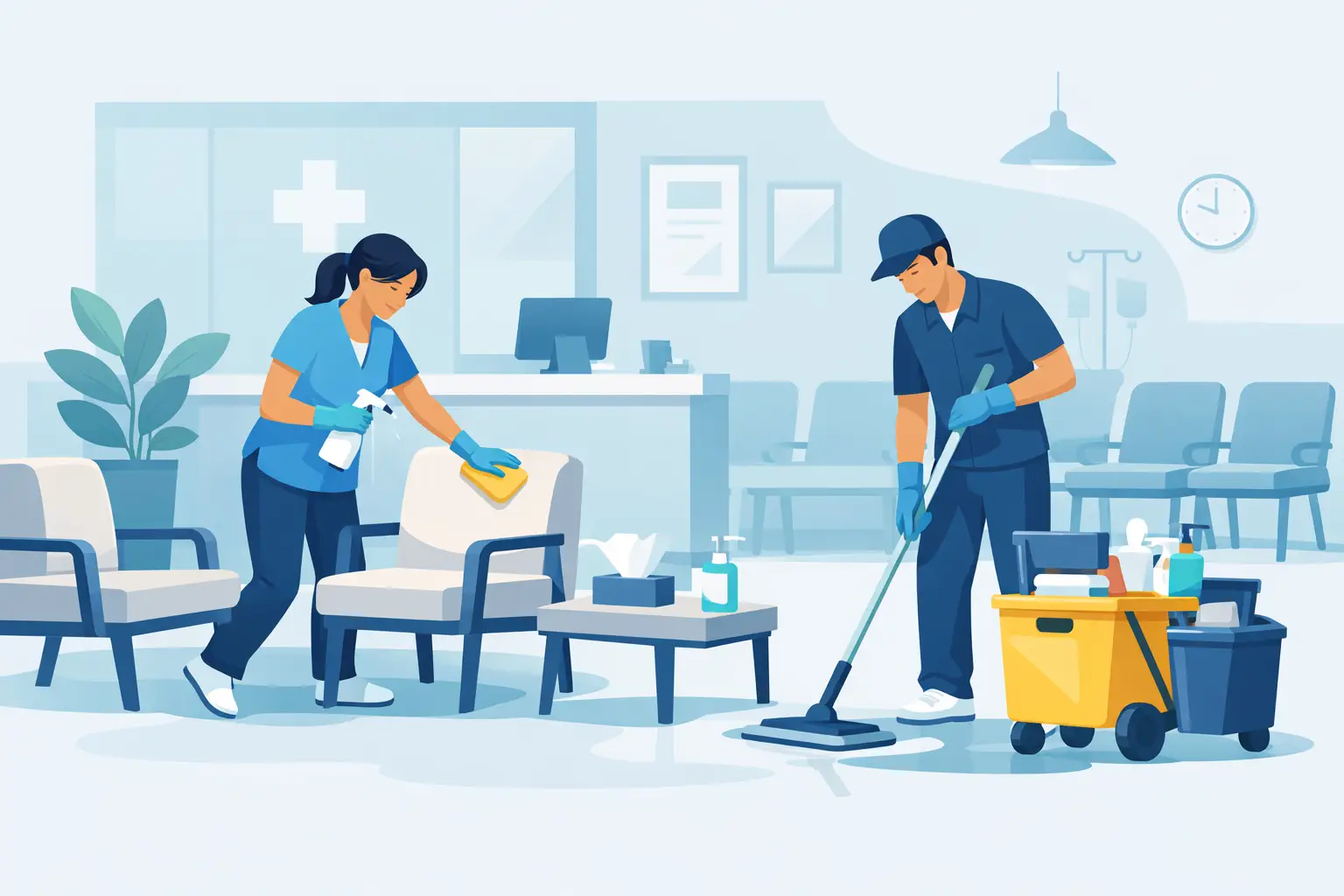

The first five minutes in a medical waiting area shape how patients judge the entire facility. Before they meet a provider, they notice the check-in desk, the chairs, the floors, the restroom nearby, and whether the space feels controlled or neglected. That is why knowing how to clean medical waiting rooms is not just a housekeeping question. It is part of infection control, patient confidence, and daily operations.
A waiting room has a different risk profile than an exam room, but it still carries constant traffic, shared surfaces, and unpredictable messes. Patients touch armrests, clipboards, door handles, counters, pens, payment devices, and restroom fixtures. Some arrive with coughs, fever, or visible symptoms. Others bring children, food, or mobility equipment. Cleaning has to account for all of that without disrupting front-desk flow.
How to clean medical waiting rooms with the right routine
The most effective approach is structured, repeatable, and based on use patterns. A medical waiting room should not be cleaned like a standard office lobby. It needs a defined sequence, the right products for healthcare-adjacent spaces, and enough frequency to keep up with patient volume.
Start with a pre-check of the room. Staff should identify occupied zones, spills, visible soil, full trash, and any urgent sanitation issues before beginning. This matters because the order of work affects both efficiency and hygiene. If trash is overflowing or a child has spilled juice near a walkway, those issues should be handled before routine dusting or floor care.
Clean from cleaner areas to dirtier ones and from high surfaces to low surfaces. That reduces the chance of recontaminating areas that were just addressed. In practice, that usually means starting with reception counters, ledges, check-in stations, and furniture surfaces before moving to waste bins, spot cleaning, and finally the floors.
Product choice matters. Disinfectants should be appropriate for medical settings and used according to label directions, especially contact time. That is one of the most common gaps in waiting room cleaning. A surface may look wiped down, but if the disinfectant is removed too quickly, the sanitation step is incomplete. On the other hand, overusing harsh products on the wrong upholstery, touchscreens, or finishes can create damage that makes the space look worn and harder to keep clean.
Focus on high-touch points first
If time is limited, high-touch surfaces deserve priority because they carry the most frequent hand contact throughout the day. The reception counter is usually first on that list, followed by door hardware, light switches, payment terminals, pens, sign-in devices, chair arms, side tables, and shared display surfaces.
These areas need more than a once-a-day pass in a busy clinic. In higher-volume practices, periodic day porter support or scheduled touchpoint disinfection during business hours can make a measurable difference. A pediatric clinic, urgent care setting, or walk-in practice may need several rounds per day, while a specialist office with lower patient turnover may be able to rely on a lighter daytime schedule and a more thorough after-hours service.
The trade-off is simple. More frequent cleaning improves control, but it also requires coordination so patients and front-desk staff are not constantly interrupted. That is why many facilities use after-hours cleaning for detailed work and reserve daytime activity for visible touchpoints, spills, and restroom support.
Seating needs special attention
Chairs collect more than dust. They hold skin oils, respiratory droplets, crumbs, and sometimes bodily fluid contamination. Hard-surface seating is easier to disinfect consistently, but many waiting rooms still use upholstered chairs for comfort and noise control. Each material changes the cleaning method.
Vinyl, plastic, and coated metal seating can be cleaned and disinfected more directly, provided the product is compatible with the finish. Upholstered seating is more complicated. It may need routine vacuuming, targeted spot treatment, and periodic deep cleaning rather than aggressive wet disinfection on every pass. If upholstery is heavily used, stained, or difficult to sanitize effectively, replacement with healthcare-friendly materials may be a better long-term operational decision.
Furniture should also be checked underneath and between seats. Dust buildup, dropped tissues, snack debris, and hidden waste are common in these zones and easy to miss during a rushed shift.
Floors, entryways, and visible cleanliness
Patients notice floors immediately, even if they do not say so. In a medical waiting room, clean floors signal order and attention to detail. Dirty floors suggest that other cleaning standards may also be slipping.
Entry mats should be maintained carefully because they trap moisture and soil before it spreads across the room. During wet weather, this becomes even more important. If mats are saturated or undersized, tracking increases and slip risk rises. Hard floors should be dust mopped or vacuumed before wet mopping so debris is removed instead of pushed around. Corners, edges, and baseboards deserve attention because dust accumulation in these areas makes the room look neglected fast.
Carpeted waiting areas need vacuuming with equipment suited for commercial use and healthcare traffic. Spot treatment should happen quickly. A small stain left in place for days becomes part of the patient experience, not just a maintenance issue.
Restrooms affect the waiting room experience
Even when the restroom is technically separate from the seating area, patients connect the two. A clean waiting room next to a poorly maintained restroom still creates a weak impression of the facility overall.
That means restroom checks should be tied into the waiting room cleaning routine. Fixtures, counters, dispensers, partitions, handles, and floors need reliable attention. Supplies should be refilled before they run low, not after complaints. In healthcare environments, this is as much about trust as appearance.
Waste handling and unexpected incidents
Medical waiting rooms generate routine waste, but they also produce occasional higher-risk situations. Used tissues, masks, food containers, and packaging build up quickly in open bins. If those bins are too small or not emptied often enough, overflow becomes a hygiene and appearance problem.
Waste should be removed on a schedule that matches traffic, with liners replaced and bin interiors cleaned as needed. If there is blood, vomit, or another bodily fluid incident, the response has to shift from standard cleaning to spill protocol. That includes containment, appropriate personal protective equipment, disinfection, and disposal procedures consistent with facility policy.
This is where training matters most. A waiting room may seem simple compared with treatment areas, but front-of-house spaces still require staff who know when a situation is routine and when it needs elevated precautions.
Staffing, scheduling, and consistency
The best cleaning plan is the one a facility can execute consistently. Some medical offices need a full after-hours clean five or six days a week. Others benefit from a hybrid schedule with evening service plus daytime touchpoint support. There is no universal template because patient volume, specialty, hours, and layout all affect the workload.
A dermatology office with limited seating and short visits will not need the same plan as a family practice with continuous turnover. A clinic with self-check-in kiosks has different touchpoints than one built around a staffed reception desk. This is why customized cleaning programs tend to perform better than generic janitorial checklists.
Consistency also depends on documentation. Clear scope, assigned frequencies, and inspection standards help prevent the drift that happens when cleaning is treated as informal back-of-house work. Facility managers should know what gets cleaned daily, what gets disinfected multiple times, what is handled weekly, and what triggers an immediate response.
How to clean medical waiting rooms without disrupting patients
Timing matters almost as much as technique. In patient-facing spaces, cleaning should support operations, not compete with them. Loud equipment during intake periods, wet floors during peak traffic, or carts parked across circulation paths create frustration and risk.
That is why many healthcare facilities prefer after-hours or low-traffic scheduling for detailed cleaning. It allows more thorough work on floors, seating, glass, and restrooms while reducing disruption. Daytime support should stay targeted and discreet, focused on touchpoints, visible debris, supply checks, and incident response.
A professional cleaning provider should be able to adjust to these operational realities. For medical offices, reliability is not just arriving on schedule. It is understanding patient flow, protecting the front-of-house experience, and maintaining sanitation standards without creating new problems.
For facilities that want dependable results, the waiting room is a good place to measure whether a cleaning program is truly working. If the chairs stay presentable, the floors stay controlled, the touchpoints stay sanitized, and the space still feels calm during business hours, the process is doing its job. That level of consistency does not happen by accident. It comes from a cleaning plan built for the way the facility actually operates.
When a waiting room stays clean, patients may not comment on every detail, but they notice the overall effect. The space feels safer, more organized, and better managed, which is exactly the standard a medical facility should project from the moment someone walks in.

0 Comments