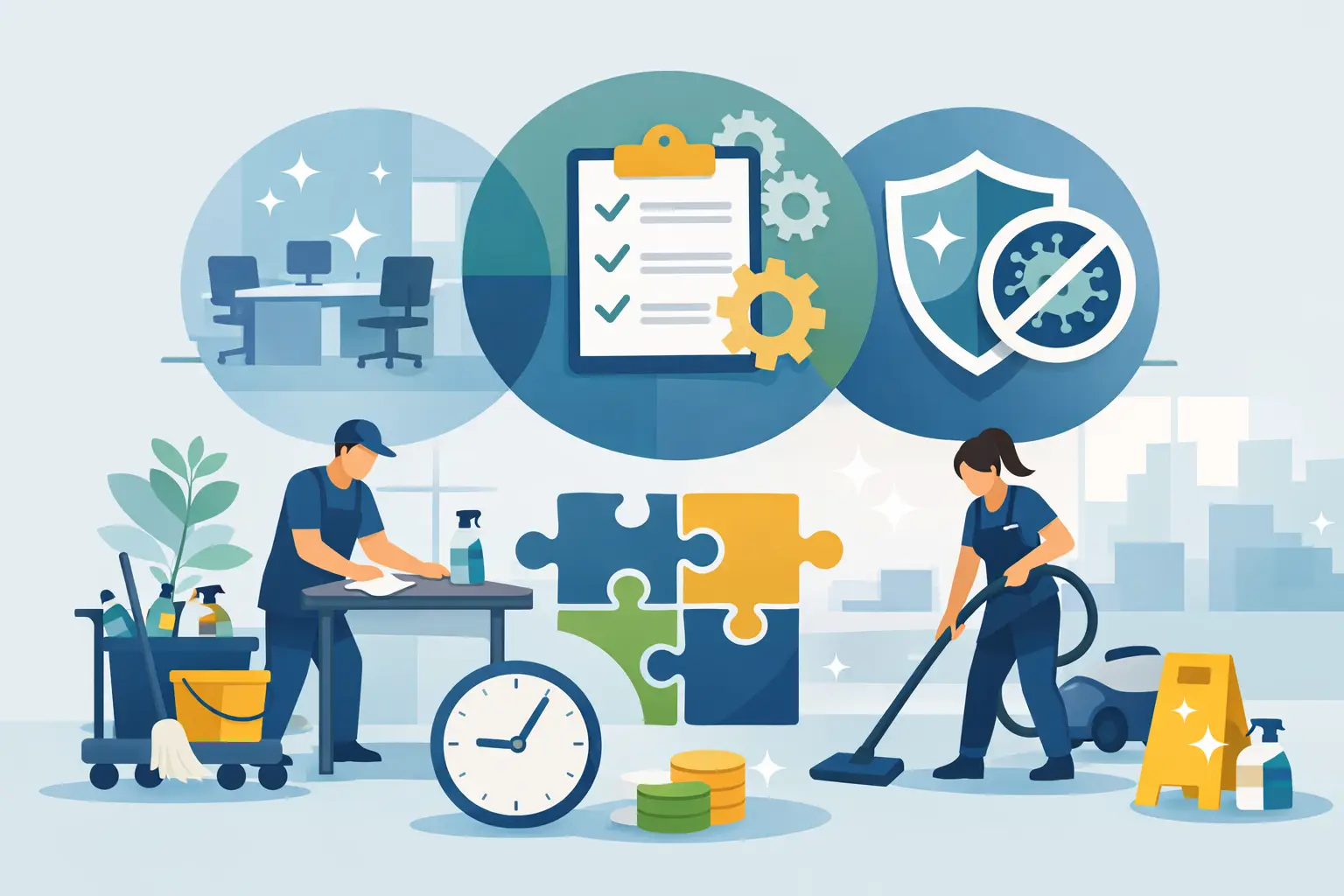

A lobby can look spotless at 8 a.m. and still be the wrong place to judge whether your facility is actually being cleaned well. For most businesses, the real test of a custom commercial cleaning plan is not whether a space looks tidy for an hour. It is whether restrooms stay stocked and sanitary through the day, touchpoints are consistently addressed, floors hold up under traffic, and cleaning happens without disrupting staff, tenants, patients, or customers.
That is why generic cleaning packages often create problems instead of preventing them. A medical office does not need the same service pattern as a warehouse. A daycare has different sanitation priorities than a corporate office. A condo common area has a different traffic rhythm than a restaurant. When cleaning is built around a flat checklist instead of actual operating conditions, the result is usually missed expectations, wasted labor, or both.
Why a custom commercial cleaning plan matters
A custom commercial cleaning plan starts with the reality of your facility. That includes the type of building, the number of occupants, hours of operation, public traffic, regulatory concerns, and the areas that create the most complaints or risk. The goal is straightforward: put the right level of service in the right places at the right frequency.
For business owners and facility leaders, that matters because cleaning is tied directly to operations. If service is too light, standards slip and complaints increase. If service is too aggressive in low-use areas, you end up paying for work that does not meaningfully improve hygiene or appearance. A tailored plan creates balance. It focuses labor where it protects health, supports presentation, and reduces wear on the space.
This approach is especially valuable in facilities that cannot afford inconsistency. Medical clinics, schools, daycares, gyms, food-service environments, and high-traffic office buildings all have spaces where poor cleaning performance becomes visible quickly. In some cases, it is more than visible – it affects compliance, safety, and customer confidence.
What goes into a custom commercial cleaning plan
A serious cleaning program is built from observation, not assumptions. Before a plan is set, the cleaning scope should reflect how your building is actually used. That usually starts with a site assessment and a clear understanding of pain points.
Facility type and usage patterns
Every property has a different cleaning profile. Offices may need careful attention to workstations, conference rooms, kitchens, and restrooms, but often after business hours to avoid interruption. Warehouses and industrial spaces may prioritize breakrooms, washrooms, entryways, floor care, dust control, and safe service around equipment or production schedules. Retail spaces may need more frequent touchpoint cleaning and front-of-house presentation support, especially during peak periods.
Usage patterns matter as much as building type. A small office with frequent client traffic may need more daytime upkeep than a larger office with fewer visitors. A gym may need repeated attention to locker rooms and touch surfaces, while a school may require targeted sanitation around classrooms, shared equipment, and washrooms.
Frequency by area, not by building
One of the clearest signs of a poor plan is when every area gets the same frequency. That sounds efficient on paper, but it rarely works in practice. Restrooms, entrances, and shared kitchens usually need far more attention than storage areas or private offices. High-touch surfaces may require daily or multiple-pass service, while less active zones can be maintained on a lighter schedule.
This is where customization protects both quality and budget. Instead of over-servicing quiet areas or under-servicing busy ones, the cleaning schedule follows actual demand. That improves consistency and helps avoid the cycle of constant call-backs for the same problem spots.
Scope, supplies, and safety requirements
A complete plan should also define what is being cleaned, how it is being cleaned, and which products or tools are appropriate for the environment. That matters in spaces with sensitive occupants, food handling, medical use, specialized flooring, or shared tenant access.
Not every facility needs the same chemicals, equipment, or disinfection protocol. In some environments, low-odor products and careful handling are essential. In others, floor machines, degreasers, or more intensive sanitation procedures may be needed. A custom plan should account for these details up front rather than treating them as exceptions later.
Where generic plans fall short
Many cleaning issues come from plans that look complete but are too broad to be useful. They may promise standard tasks, standard frequencies, and standard hours, but leave too much room for mismatch once service begins.
A common example is after-hours cleaning in a mixed-use building. If the provider has not accounted for tenant access rules, security procedures, elevator use, or garbage staging, even routine cleaning can create friction. The same is true in medical and educational settings, where service needs to align with room usage, sanitation expectations, and occupancy schedules.
Another issue is visibility. Generic plans often focus on tasks that are easy to list but not always the ones that matter most to occupants. You may get a polished-looking checklist while recurring complaints continue about restroom condition, odors, fingerprints on glass, or dust in customer-facing areas. A custom program should address the issues that people actually notice and the standards your building is expected to maintain.
How to evaluate the right cleaning plan for your facility
If you are reviewing proposals or reconsidering your current vendor, the most useful question is not simply what is included. It is whether the plan reflects your building as it operates day to day.
Start by looking for specificity. A strong provider should ask about square footage, occupancy, shift timing, traffic patterns, sensitive zones, access limitations, and problem areas. They should also be able to explain why certain tasks are scheduled daily, weekly, or periodically. If every facility gets nearly the same scope with only minor price changes, that is usually a sign the service is not truly tailored.
It also helps to look at adaptability. Buildings change. Staffing changes. Tenancy changes. Seasonal weather changes floor care demands and entrance maintenance. A workable plan should not be so rigid that it becomes outdated after one operational shift. At the same time, flexibility should not mean vagueness. You want a defined scope with room for adjustment when conditions change.
Communication matters here as well. Facility managers and property teams need to know who is accountable, how issues are reported, and how service changes are handled. The best cleaning plans are not only customized at the start. They are managed consistently over time.
A custom commercial cleaning plan by facility type
The value of customization becomes clearer when you compare building needs directly. In an office, appearance, touchpoint hygiene, and low-disruption after-hours cleaning may be the priority. In a medical clinic, sanitation procedures, exam room turnover support, and strict restroom standards may carry more weight. In a warehouse, floor debris, dust control, employee common areas, and safe movement around operations may define the program.
Schools and daycares often require more detailed sanitation planning because surfaces are shared often and expectations from staff and families are high. Gyms face a different challenge, with moisture, odors, and repeated contact on equipment and locker room surfaces. Restaurants and food-related businesses need cleaning that supports hygiene expectations without interfering with service flow.
That is why a custom commercial cleaning plan should not be treated as a premium add-on. For many facilities, it is the minimum standard required to run the building properly.
What decision-makers should expect from a provider
A dependable cleaning partner should be able to do more than quote a price and hand over a task list. They should understand how cleaning supports operations, tenant satisfaction, employee experience, and risk control. That includes trained and insured staff, safe cleaning practices, clear scheduling, and a service structure that works around your business rather than through it.
For organizations across Toronto and the GTA, that is often the difference between a contractor who simply shows up and one who actually supports the facility. Pristine Maintenance and Services is built around that facility-specific approach because no two buildings carry the same traffic, sanitation pressure, or operational demands.
The right plan should make your facility easier to manage. It should reduce complaints, support hygiene standards, and fit your schedule without constant correction. If your current service requires too much follow-up or feels built for someone else’s building, that is usually the clearest sign it is time for a plan designed around your own.

0 Comments