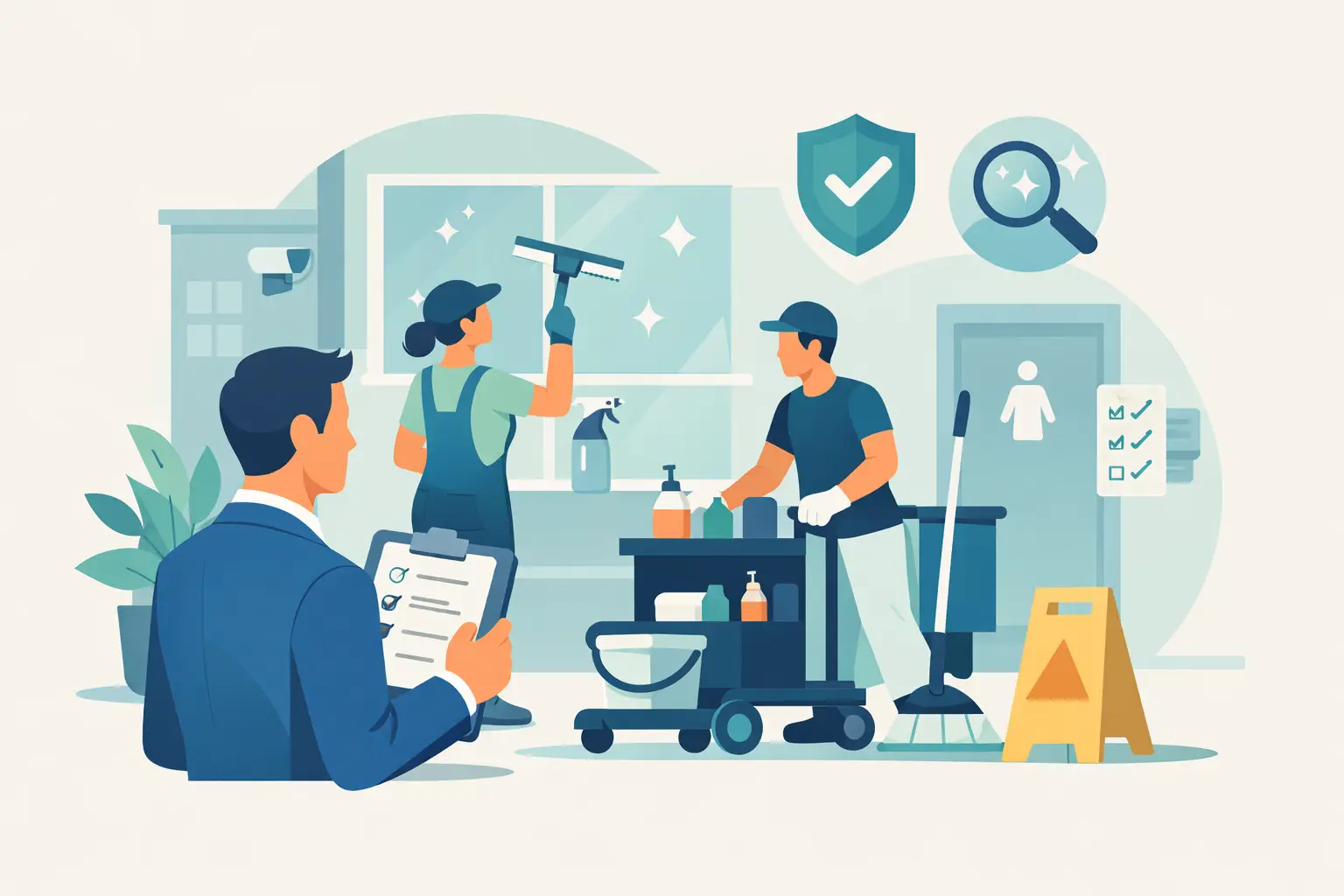

A failed inspection rarely begins on inspection day. It usually starts weeks earlier with an unclear task list, missed high-touch areas, incomplete records, or a cleaning team that was never given the site-specific instructions it needed. This facility cleaning compliance guide helps managers turn cleaning from a basic maintenance function into a documented, repeatable part of safe facility operations.
Compliance requirements differ by facility type, jurisdiction, occupancy, and the services performed on site. A medical clinic, daycare, food-service area, warehouse, and office may all require different controls. The practical objective is the same: maintain a clean, sanitary environment, reduce avoidable risks, and be able to show how the work is managed.
Start With the Standards That Apply to Your Site
Cleaning compliance is not one universal checklist. Facility managers should first identify the standards that affect their building and operations. These can include public health requirements, workplace safety rules, fire and building requirements, infection-control protocols, food-safety procedures, lease obligations, and internal corporate policies.
A general office may focus on safe chemical use, washroom sanitation, slip prevention, waste handling, and indoor appearance. A clinic may require more frequent disinfection of patient-facing surfaces, controlled handling of potentially contaminated materials, and stronger documentation. In a warehouse or manufacturing setting, cleaning programs may need to account for dust control, machinery access, loading areas, chemical storage, and pedestrian safety.
The right question is not, “What does a standard cleaning service include?” It is, “What conditions must this facility maintain to operate safely and meet its obligations?” That distinction prevents a generic cleaning scope from leaving critical gaps.
Build a Facility Risk Profile
Before setting frequencies, walk the property and identify where cleanliness affects health, safety, product quality, or public perception. Consider traffic levels, vulnerable occupants, moisture-prone areas, food preparation, washrooms, shared equipment, waste streams, and after-hours use.
A lobby may need several touchpoint cleanings each day because of visitor traffic, while a low-use meeting room may only need routine service. A locker room needs attention to moisture, odors, floors, and disinfectable touchpoints. A loading dock may require debris control and spill response procedures rather than the same approach used in administrative offices.
This assessment should include input from operations, health and safety, property management, and department leads. The people who use the space often know where conditions change between scheduled cleanings.
Create a Written Cleaning Scope That Can Be Audited
A compliance-ready scope of work is specific enough that a supervisor, cleaner, or inspector can understand what is expected without guessing. “Clean washrooms daily” is too broad. It does not establish which fixtures, surfaces, supplies, or quality checks are required.
A stronger scope defines each area, task, frequency, method, responsible party, and expected result. For example, washroom service may include cleaning and disinfecting toilets, sinks, faucets, door handles, dispensers, and floors; replenishing supplies; removing waste; and reporting leaks, vandalism, or low stock.
For high-risk environments, specify the products and procedures used. If disinfecting is required, staff need instructions on the approved product, required contact time, dilution requirements, surface compatibility, and personal protective equipment. Applying a disinfectant and wiping it away immediately may look productive, but it may not meet the product label instructions.
Separate Cleaning From Disinfection
These terms are often used interchangeably, but they are not the same task. Cleaning removes visible soil and debris. Disinfection uses an appropriate product to reduce microorganisms on a surface when used according to its label directions. Many high-touch areas require both steps, particularly when soil is present.
The frequency of disinfection depends on the environment. A busy reception counter, shared gym equipment, clinic waiting area, or daycare surface may need a more frequent schedule than a private office. Overusing chemicals can also create problems, including surface damage, odors, and unnecessary exposure. The program should match risk, not rely on excessive chemical use as a substitute for process control.
Train Staff for the Actual Facility, Not Just the Job Title
A trained cleaning professional still needs site orientation. Every facility has different access rules, emergency contacts, restricted areas, waste procedures, alarm protocols, and occupant expectations. Staff should know how to work safely around employees, tenants, patients, students, visitors, and equipment without interrupting operations.
Training should cover safe chemical handling, labeling, storage, Safety Data Sheet access, dilution procedures, equipment use, personal protective equipment, and incident reporting. It should also address cross-contamination prevention. The same cloth, mop head, or gloves should not move from a washroom to a break room or desk area without proper controls.
Color-coded tools, designated equipment, and clear workflow patterns are useful when applied consistently. For instance, teams can move from cleaner areas to dirtier areas and complete high-touch disinfection after general cleaning. What matters is that the procedure is understood, supervised, and practical for the shift.
For outsourced cleaning, managers should confirm that staff are trained, insured, and familiar with the site before working independently. A dependable provider will also assign supervision and establish a clear process for reporting deficiencies or urgent issues.
Document the Work Without Creating Paperwork for Its Own Sake
Documentation is what turns a cleaning claim into an operational record. It helps facility teams demonstrate that scheduled work was completed, find recurring failures, and respond more confidently when a complaint or inspection occurs.
Use logs that fit the risk level of the space. Routine office cleaning may require supervisor checklists and periodic quality inspections. A health-sensitive or high-traffic site may need shift records for washrooms, touchpoint disinfection, waste removal, spills, and supply replenishment.
Useful records include cleaning schedules, completed task logs, inspection forms, corrective-action notes, staff training records, product inventories, Safety Data Sheets, equipment maintenance records, and incident reports. Digital logs can make review easier, but paper logs are still effective when they are legible, completed consistently, and checked by a supervisor.
Avoid a common mistake: treating completed checkboxes as proof of quality. A log confirms that a task was reported as complete. It does not confirm that the result met the required standard. Quality inspections should verify conditions in the facility, not just the existence of paperwork.
Inspect Outcomes and Correct Problems Quickly
Regular inspections are the control point that keeps standards from drifting. They should focus on the areas most likely to create risk or complaints: washrooms, entrances, floors, waste areas, shared touchpoints, break rooms, elevator panels, and any facility-specific high-risk zones.
Set a clear path for corrective action. If an inspection identifies a missed task, the response should identify the issue, assign responsibility, set a completion time, and confirm that the correction was made. Repeated issues may point to an unrealistic frequency, unclear instructions, poor staffing coverage, insufficient supplies, or a training gap.
Facility managers should also plan for events that fall outside routine service. Spills, bodily fluid incidents, water damage, pest activity, construction dust, outbreak response, and severe weather can all require escalation. The cleaning plan should state who is contacted, what immediate controls are used, and when specialized service is needed.
Manage Chemicals, Waste, and Equipment Safely
Compliance can fail in back-of-house spaces just as easily as in public areas. Chemical bottles should be labeled, stored securely, and kept away from incompatible materials. Decanted products must not be placed in food or beverage containers. Equipment rooms should be orderly enough that staff can access supplies safely and identify leaks, damage, or depleted stock.
Waste procedures should reflect what the facility produces. Standard office trash, recycling, food waste, sharps, sanitary waste, and regulated materials cannot always be handled the same way. Where specialized disposal rules apply, staff need explicit instructions and the correct containers.
Equipment maintenance matters as well. Damaged cords, leaking machines, worn mop heads, and poorly maintained floor equipment can create safety hazards or reduce cleaning quality. A clean facility depends on clean, functioning tools.
Review the Program When Operations Change
A compliance program should not remain static after it is written. Reassess the cleaning scope when occupancy increases, a tenant changes, new equipment is installed, construction occurs, seasonal conditions change, or the facility begins offering new services.
This is particularly relevant for multi-tenant properties and growing organizations. A cleaning plan designed for a small office may no longer suit a busier workplace with shared kitchens, more visitors, extended hours, and hybrid scheduling. The same applies when a space adds a clinic, fitness area, food service, or child-care function.
Pristine Maintenance and Services approaches commercial cleaning as a facility-specific program because the details matter: the hours when work can be performed, the surfaces in use, the people in the building, and the standards the operation must maintain.
The most useful compliance plan is one your staff and cleaning team can actually follow at 6 a.m., after closing, or during an unexpected incident. Make expectations visible, keep records credible, and treat recurring cleaning issues as operational signals worth fixing before they become inspection findings.
0 Comments