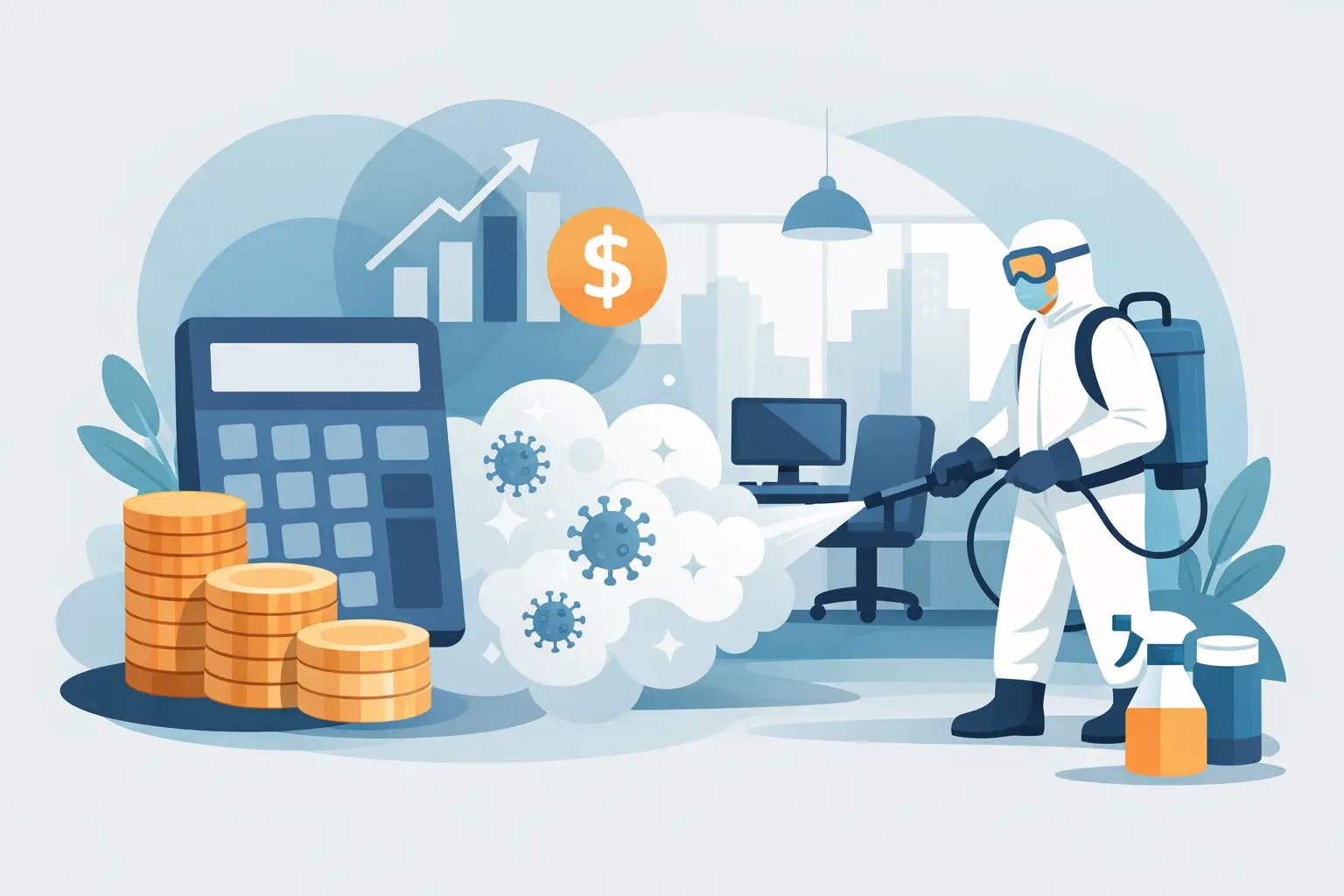

A quote for a 5,000-square-foot office can vary significantly from one provider to another, even when both proposals simply say “disinfection.” That is because the real work is not defined by square footage alone. If you are asking how much does office disinfection cost, the useful answer is a price range paired with a clear understanding of what your facility needs, how often it needs it, and how the work will be performed.
For Toronto and GTA businesses, office disinfection is commonly priced as a one-time project, an add-on to recurring janitorial service, or a scheduled program for higher-touch environments. A professional provider should assess the space before treating disinfection as a standard, fixed-price commodity.
Typical Office Disinfection Cost Ranges
For a routine office environment, one-time commercial disinfection may be priced by square foot, by labor hour, or as a minimum project charge. Small offices often fall under a service minimum because setup, travel, equipment, trained labor, and documentation are required regardless of building size.
As a general planning range, businesses may see one-time office disinfection priced from approximately $0.08 to $0.30 or more per square foot. A small office may have a minimum charge in the range of a few hundred dollars, while a larger multi-floor office can run into the thousands depending on occupancy, access, scope, and frequency.
These figures are planning estimates, not a substitute for a site-specific quote. A lightly occupied administrative office with open workstations is very different from a client-facing workplace with shared kitchens, multiple washrooms, meeting rooms, reception traffic, and hot-desking. The square footage may be the same, but the cleaning time and exposure points are not.
When disinfection is incorporated into an ongoing cleaning agreement, the incremental cost per visit is often more efficient than arranging separate emergency or one-time service. Recurring teams already understand the building, access procedures, material requirements, and priority areas. That reduces mobilization time while helping the facility maintain a consistent hygiene standard.
What Determines How Much Office Disinfection Costs?
A responsible estimate begins with the scope of work. The provider needs to know what must be disinfected, what level of service is expected, and when the work can take place without interfering with business operations.
Facility Size and Layout
Square footage matters, but usable space matters more. An open office of 10,000 square feet can sometimes be serviced more efficiently than a 6,000-square-foot office divided into private rooms, storage areas, corridors, washrooms, and enclosed meeting spaces.
Complex layouts increase touchpoints and labor time. Elevators, stairwells, reception desks, glass doors, shared equipment rooms, and break areas all require detailed attention. Multiple floors may also require more setup time and additional staff to complete the work within an after-hours window.
Touchpoints and Occupancy
Disinfection focuses on surfaces where contact and shared use create a higher sanitation need. Common examples include door handles, light switches, elevator buttons, desk surfaces, conference tables, appliance handles, faucets, toilet fixtures, and shared keyboards or equipment.
A mostly remote office with staggered attendance may require a different program than a fully occupied workplace operating five or six days a week. The number of employees, visitors, tenants, and shared workstations affects both frequency and cost. Businesses with active reception areas, training rooms, or frequent client meetings should expect those zones to receive more attention than low-traffic storage or archive rooms.
Frequency of Service
One-time disinfection is usually the most expensive format on a per-visit basis. It may be appropriate after a confirmed illness concern, before reopening a space, following construction work, or when a business needs a thorough reset after an event.
For most offices, scheduled disinfection is more practical. It can be performed nightly, several times per week, weekly, or as part of a broader janitorial plan. The right frequency depends on traffic, workplace policies, the presence of shared amenities, and the expectations of employees and visitors.
More frequent service increases the overall monthly spend, but it can lower the unit cost of each visit and prevent sanitation gaps. It also allows the cleaning team to focus effort where it is needed rather than repeating a full-facility response every time.
Cleaning Method and Materials
Disinfection is not simply spraying a product around a room. Effective service requires a suitable disinfectant, appropriate dwell time, and application methods that fit the surfaces being treated. In many cases, cleaning soil and residue from a high-touch surface is necessary before a disinfectant can work as intended.
Electrostatic application, fogging, or misting may be requested for certain facilities, but these methods are not automatically the best option for every office. They can add equipment, preparation, ventilation, and labor considerations. They also do not replace manual attention to heavily used surfaces.
The cost may rise if the facility needs products suitable for sensitive environments, specific material compatibility, fragrance-free options, or documented product standards. A quality provider should explain the method rather than selling technology as a shortcut.
After-Hours Access and Scheduling
Most commercial clients prefer disinfection after business hours to avoid disrupting staff, customers, tenants, or visitors. Evening and overnight schedules can be highly efficient, but cost may change when the work requires restricted access procedures, security clearance, keys or escorts, loading dock coordination, or a short completion window.
Urgent same-day requests, weekend projects, and emergency response work may carry a premium. That is often reasonable when a provider must rearrange staffing, mobilize equipment quickly, and complete a detailed service on short notice.
What Should Be Included in a Professional Quote?
A clear quote should identify the areas covered, service frequency, work timing, and whether the price includes regular cleaning before disinfection. It should also clarify which high-touch points are included and whether washrooms, kitchens, meeting rooms, reception areas, and shared equipment are part of the scope.
Ask whether the price is based on a one-time visit or a recurring schedule. A quote that appears lower may exclude labor-intensive areas, exclude pre-cleaning, or assume that surfaces are already free of dirt and clutter. Comparing only the final number can lead to gaps in service.
For managed facilities, the proposal should also address operational basics: trained and insured staff, supervision, access protocols, service verification, and a process for reporting issues. Medical offices, schools, daycares, gyms, and high-traffic commercial properties may have more detailed expectations than a standard corporate office. Their disinfection program should reflect that reality.
How to Control Cost Without Reducing Hygiene Standards
The least expensive approach is not always the most economical. Paying for an occasional broad treatment while high-touch areas receive little routine attention can create inconsistent results. A better approach is to match the service level to the risk and traffic profile of each part of the office.
Start by dividing the facility into priority zones. Reception, washrooms, break rooms, shared meeting spaces, and common equipment areas usually need more frequent attention than executive offices, low-use storage, or closed filing rooms. This allows the provider to allocate labor where it has the greatest practical value.
Bundling disinfection with recurring janitorial maintenance can also reduce avoidable cost. Regular cleaning keeps surfaces in better condition, supports effective disinfection, and helps a team maintain familiarity with the facility. It is generally more predictable than calling for separate services whenever concerns arise.
Finally, provide accurate information before requesting a proposal. Building size, number of washrooms, workstations, occupancy levels, business hours, special surfaces, and access constraints all help a provider build a realistic plan. An incomplete scope often produces a low initial quote followed by change requests once the actual workload becomes clear.
When a Higher Price Is Worth It
A higher quote may be justified when it reflects greater detail, safer practices, or stronger operational controls. This is especially true for health-sensitive spaces, properties with heavy public traffic, offices with shared amenities, and buildings where work must be completed overnight without disrupting occupants.
For example, an office that needs only targeted high-touch disinfection may not require a full-site specialty treatment. On the other hand, a workplace with an illness-related concern may need a more intensive response, documented procedures, and careful coordination with management. The appropriate price follows the required outcome, not a generic package.
Pristine Maintenance and Services approaches office disinfection as part of a facility-specific cleaning program, with scheduling and scope built around how the workplace actually operates. That is the standard to look for from any commercial cleaning partner: a quote that explains the work, protects the facility, and supports daily operations.
The most useful next step is a walkthrough or detailed consultation. A provider that asks informed questions before naming a price is more likely to deliver a disinfection plan that is practical, measurable, and suited to your office long after the first visit.


0 Comments