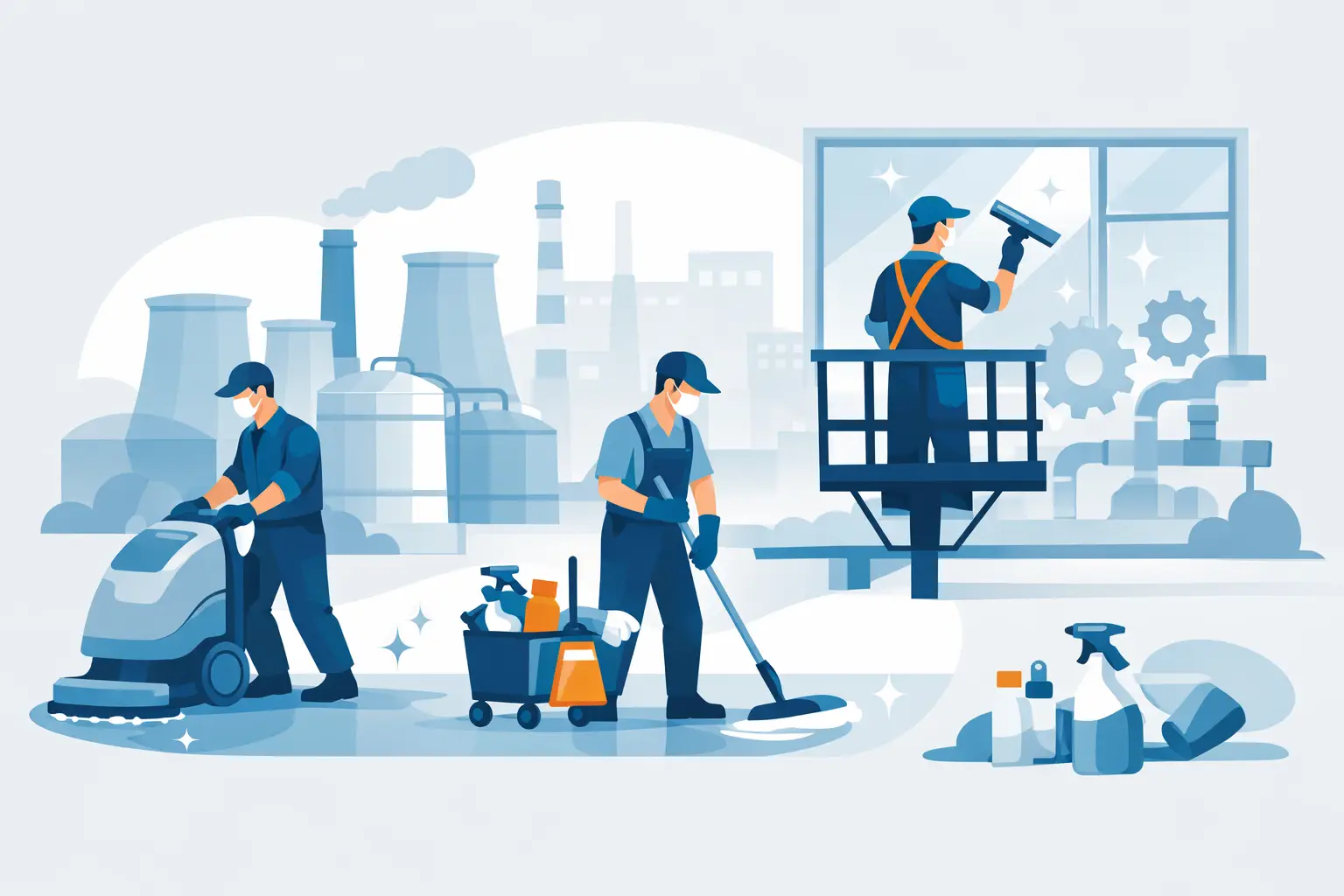

A warehouse floor that looks clean can still be unsafe. Fine dust on racking, oil near production lines, residue in break areas, and neglected touchpoints all create problems that affect safety, compliance, equipment life, and daily operations. That is why industrial facility cleaning protocols need to do more than assign a few routine tasks. They need to reflect how the building actually works.
For facility managers and operations leaders, cleaning in an industrial setting is never just about appearance. It is tied to worker safety, contamination control, traffic patterns, maintenance planning, and production uptime. A generic janitorial checklist may cover restrooms and trash removal, but it will not address forklift lanes, loading docks, machine-adjacent debris, or high-level dust in a manufacturing space. Effective protocols are built around risk, frequency, and the specific demands of the site.
What industrial facility cleaning protocols should cover
At a practical level, industrial facility cleaning protocols define what gets cleaned, how it gets cleaned, when it happens, and who is responsible. The strongest protocols also spell out escalation procedures, approved chemicals, safety precautions, and documentation standards.
That level of detail matters because industrial environments vary widely. A light manufacturing plant, a food-adjacent warehouse, a packaging facility, and a distribution center may all fall under the same broad category, but they do not have the same cleaning risks. Dust control may be the top issue in one facility, while grease, moisture, or pallet debris may drive the program somewhere else.
A usable protocol usually starts by dividing the building into zones. Production areas, warehouse aisles, receiving, shipping, employee areas, offices, washrooms, and common spaces should not be treated as one cleaning environment. Each zone has different surfaces, contamination risks, traffic levels, and scheduling constraints. Once zones are defined, frequencies can be assigned based on real use rather than assumption.
Why one-size-fits-all cleaning fails in industrial spaces
Industrial operations are hard on buildings. Foot traffic is heavier, equipment creates residue, shipping activity brings in dirt and moisture, and many surfaces are exposed to repeated wear. The result is a setting where mess is generated quickly and often in ways that are not visible from a lobby walk-through.
This is where many service plans fall short. A standard nightly cleaning model may keep front offices presentable but still leave warehouse corners, mezzanines, dock plates, and machine perimeters under-serviced. Over time, that gap shows up in slip hazards, poor indoor cleanliness, pest pressure, clogged drains, and a general decline in working conditions.
There is also a scheduling issue. Some industrial spaces run multiple shifts, while others need cleaning completed after hours or during narrow production breaks. If protocols do not match operational timing, cleaning either disrupts workflow or gets skipped when the building is busiest. Neither option is acceptable for facilities that depend on consistency.
Building a protocol around risk and workflow
The best cleaning programs begin with a site assessment, not a price sheet. That assessment should review floor types, equipment layout, traffic flow, contamination sources, spill history, washroom use, breakroom demand, and any regulated or restricted areas. It should also consider how cleaning staff will access the space safely without interfering with operations.
From there, tasks can be prioritized by risk. For example, entryways and loading zones may require frequent debris removal and floor attention because they affect safety immediately. Restrooms and break areas need strict sanitation because they affect hygiene and employee experience. High dusting in rafters, vents, and overhead structures may happen less often, but if ignored too long it can become a safety and air-quality concern.
It also helps to separate routine cleaning from periodic specialty work. Daily or several-times-weekly tasks keep the building functional. Periodic services such as machine-area detailing, high-level dust removal, floor scrubbing, wall washing, and deep sanitation reset conditions before buildup becomes a larger issue. When those two levels are blended into one vague scope, important work often gets deferred.
High-touch and high-risk areas need different standards
Not every surface deserves the same level of attention. Control panels, door hardware, railings, breakroom tables, locker rooms, and restrooms are high-touch areas that need frequent disinfection or sanitation, depending on the environment and the facility’s health standards. Floors in forklift routes or around production zones may need more attention for debris and spill control than for cosmetic appearance.
This is where protocols should be specific. Saying clean as needed is rarely enough. A stronger standard defines triggers and frequency, such as once per shift, nightly, weekly, or after a spill event. Clear expectations reduce missed tasks and make quality control easier for both the client and the cleaning provider.
The role of safety in industrial facility cleaning protocols
Cleaning in industrial buildings involves more than mops and vacuums. Staff may be working around powered equipment, exposed edges, loading activity, chemicals, moisture, and restricted operational zones. Protocols need to account for lockout and access rules, personal protective equipment, wet floor controls, chemical handling, and proper storage of supplies.
There is a trade-off here. Faster cleaning is not always better cleaning if it creates risk. Using the wrong method in an active aisle, applying chemicals too broadly, or servicing a space without coordinating with site personnel can create hazards rather than remove them. A dependable program balances thoroughness with control.
Training also matters. Industrial sites should not be staffed like small office buildings. Teams need to understand surface compatibility, dilution requirements, spill response expectations, and what should be reported immediately. In many cases, the cleaning team is among the few groups that sees the entire facility regularly. That means they can spot recurring issues early, but only if the protocol includes a clear reporting process.
Documentation and accountability matter more than most facilities expect
A cleaning program is only as strong as its follow-through. In industrial environments, that means documented schedules, task checklists, inspection routines, and communication between the service provider and site leadership. Without that structure, even a well-written scope can break down over time.
Documentation does not need to be complicated. It needs to be useful. Supervisory inspections, completed-task logs, periodic quality reviews, and notes on spills, supply issues, or access problems all create accountability. They also help explain changes in service frequency when operations scale up, staffing shifts, or seasonal conditions bring new cleaning demands.
This is especially important for multi-use facilities. A site may include office space, warehouse space, employee amenities, and sensitive operational zones under one roof. Each area has different service expectations, so reporting should reflect those differences rather than treating the building as one block of square footage.
When to update your cleaning protocols
Many facilities keep the same cleaning plan for years, even after the operation has changed. That is a common reason protocols stop working. New equipment, added shifts, changes in product handling, higher headcount, or seasonal shipping peaks all affect cleaning needs.
A protocol should be reviewed whenever the facility changes how it operates. It should also be reviewed when there are recurring complaints, rising safety incidents, visible buildup, or signs that the current frequency is no longer enough. Sometimes the fix is not more cleaning across the board. It may be better zoning, different equipment, or moving certain tasks to off-hours.
For many organizations, the right partner is one that can adapt the program instead of forcing the building into a standard package. That is where a provider like Pristine Maintenance and Services can add real value, especially for facilities that need after-hours service and a cleaning plan tied to actual operating conditions.
Choosing a provider that understands industrial cleaning
Industrial cleaning should be evaluated differently than general janitorial service. Decision-makers should look for a provider that asks operational questions, identifies risk areas, explains methods clearly, and can build a site-specific scope. Insurance, staff training, supervision, and scheduling flexibility all matter, but so does the ability to work within the realities of an active facility.
The right protocol is not the one with the longest checklist. It is the one that fits the building, supports safety, and holds up under real production demands. When cleaning is aligned with workflow, the facility stays healthier, more presentable, and easier to manage day after day.
A clean industrial site should not depend on constant follow-up from your team. It should run on clear standards, consistent execution, and a service plan built for the way your facility actually operates.
0 Comments