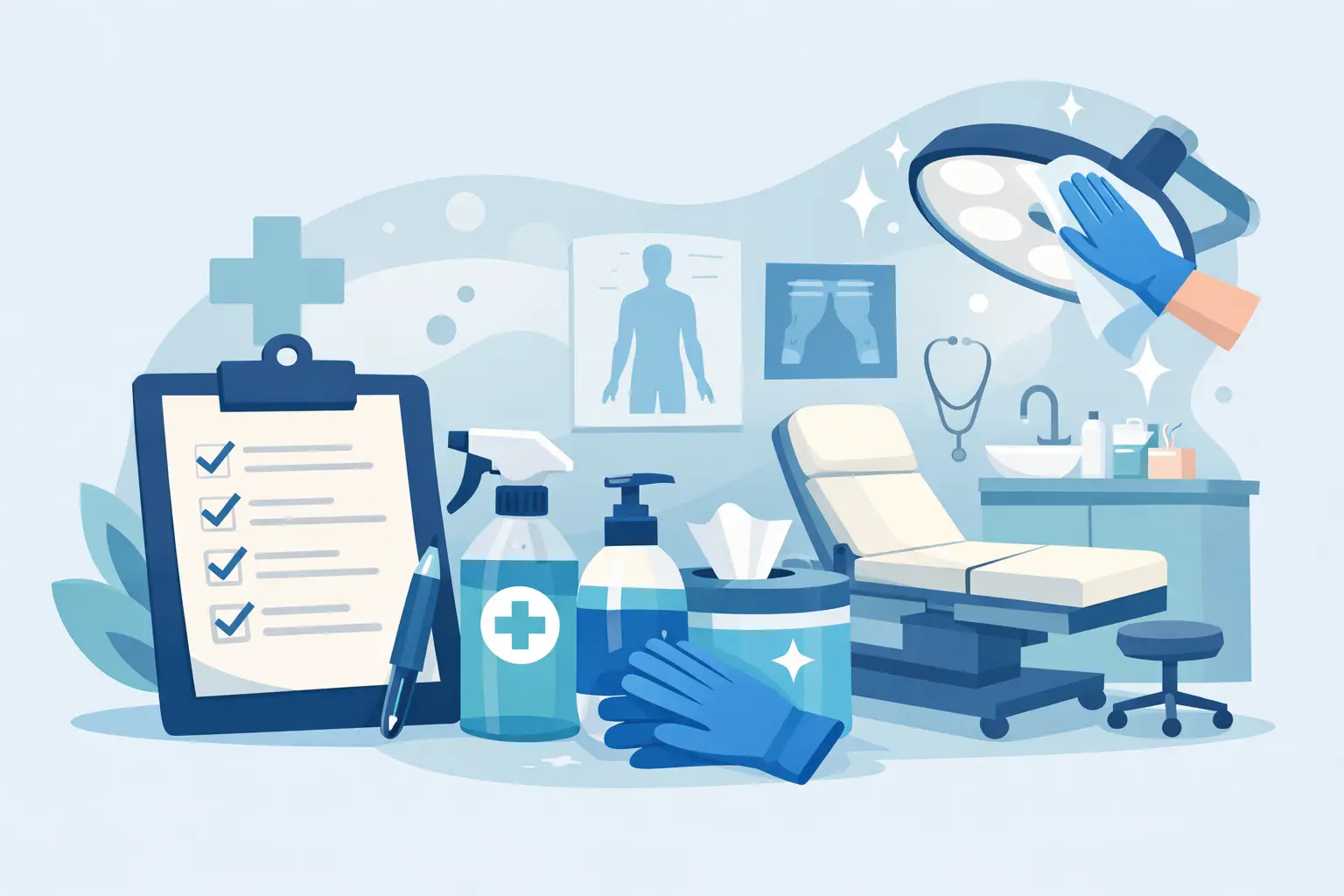

The first impression of a medical office begins before a patient reaches the reception desk. A clean entry, orderly waiting area, and visibly maintained restroom signal that the facility takes patient safety seriously. But appearances alone are not enough. A medical office sanitation checklist gives staff and cleaning providers a consistent way to address high-touch surfaces, clinical spaces, waste handling, and scheduled deep cleaning without leaving critical tasks to memory.
For office managers and practice owners, the goal is not simply to make the space look clean at the end of the day. It is to maintain a safe, professional environment throughout patient hours while supporting infection prevention policies, staff productivity, and the specific needs of the practice.
Why a Medical Office Sanitation Checklist Matters
Medical offices experience a different type of traffic than conventional workplaces. Patients may arrive with contagious illnesses, caregivers move between rooms, and shared surfaces are touched repeatedly throughout the day. Reception counters, door handles, pens, chairs, payment terminals, exam tables, and restroom fixtures all require regular attention.
A written checklist creates accountability. It establishes which areas are cleaned, when they are serviced, what product or process is required, and who confirms completion. That consistency is especially useful when several staff members share responsibility or when an outside janitorial team works after hours.
The appropriate level of cleaning depends on the setting. A small administrative medical office will not follow the same routine as a family practice, dental clinic, urgent care center, or specialty clinic that performs procedures. Facility leadership should align the cleaning plan with internal infection-control procedures, manufacturer instructions, applicable regulations, and the volume of patients moving through the space.
Daily Cleaning Tasks for Patient-Facing Areas
Patient-facing spaces need attention throughout the day, not only after closing. High-traffic areas can quickly collect fingerprints, debris, spills, and visible dust that affect both hygiene and patient confidence.
Entrance, reception, and waiting room
At opening and during scheduled service intervals, clean entry glass, door hardware, reception counters, check-in kiosks, card terminals, phones, clipboards, and commonly used pens. Wipe seating arms and tables, remove litter, vacuum or mop floors as appropriate, and ensure hand sanitizer stations are filled and functional.
In a busy practice, staff may need to disinfect selected touchpoints several times during operating hours. A contracted cleaning team can handle detailed after-hours work, but front-office employees still need a simple process for immediate spills, visibly soiled surfaces, and high-touch areas during peak periods.
Restrooms and staff break areas
Restrooms require a documented cleaning routine that covers toilets, urinals, sinks, faucet handles, dispensers, door handles, mirrors, partitions, and floors. Refill soap, paper towels, tissue, and hand sanitizer before they run low. Empty waste receptacles, replace liners, and address odors at the source rather than masking them with fragrance.
Break rooms and staff kitchens should receive the same practical attention. Clean tables, appliance handles, sinks, counters, and shared equipment such as coffee machines and refrigerators. Food-related messes can attract pests and undermine sanitation standards even when clinical areas are well maintained.
Exam Rooms and Clinical Areas
Exam rooms need a clear turnover process between patients, with responsibilities assigned to the appropriate clinical staff. Environmental service providers should work from the practice’s protocols and avoid disrupting sterile supplies, patient records, medications, or clinical equipment.
Between patients, staff should address surfaces that may have been touched or contaminated during care, following the practice’s approved products and contact times. This may include exam tables, chairs, counter surfaces, door handles, light switches, and equipment touchpoints. Linens and disposable items should be handled according to the office’s established procedures.
After hours, the cleaning team can complete broader room cleaning: dusting accessible surfaces, vacuuming or mopping floors, cleaning glass, removing general waste, and disinfecting approved high-touch areas. Specialty equipment should only be cleaned by trained personnel using manufacturer-approved methods. More product is not always better. Using an incompatible chemical or applying a disinfectant incorrectly can damage equipment or leave a surface inadequately treated.
A Practical Daily Checklist
The following tasks form a useful baseline for most outpatient medical offices. Adjust frequency and responsibilities based on patient volume, clinical services, and internal protocols.
- Clean and disinfect approved high-touch points, including doors, handles, switches, reception surfaces, phones, keyboards, shared pens, chairs, and payment equipment.
- Remove trash and replace liners in reception, offices, staff areas, restrooms, and non-regulated waste containers.
- Clean and restock restrooms, including soap, towels, tissue, hand sanitizer, and feminine hygiene supplies where provided.
- Vacuum carpeted areas and damp mop hard floors, giving particular attention to entrances, waiting rooms, corridors, and restrooms.
- Wipe visible dust, smudges, spills, and fingerprints from counters, interior glass, partitions, and accessible furniture.
- Check entrances, waiting areas, and hallways for trip hazards, wet floors, overflowing bins, or damaged dispensers that require prompt attention.
A checklist should state whether each task is completed daily, multiple times per day, weekly, or only as needed. It should also identify the approved product, the required dwell time for disinfectants, and the staff member or vendor responsible for sign-off.
Weekly and Monthly Sanitation Work
Daily routines keep the facility presentable and sanitary, but periodic work protects the condition of the building and reaches areas missed by routine service. Weekly tasks may include detailed dusting of vents and ledges, cleaning chair bases and casters, wiping baseboards, polishing interior glass, and cleaning behind movable furniture.
Monthly or scheduled specialty services may involve high and low dusting, machine scrubbing hard floors, carpet extraction, upholstery cleaning, wall spot cleaning, and deep cleaning of staff kitchens. The proper schedule depends on the materials in the facility and the amount of daily use. For example, a clinic with heavy winter foot traffic may need more frequent floor care to control moisture, salt, and grit.
Keep these services separate from clinical disinfection requirements. A polished floor is valuable, but it does not replace disinfection of high-touch surfaces. Likewise, a disinfected counter does not eliminate the need for regular dust control and detailed cleaning.
Waste, Spills, and Escalation Procedures
Not every item in a medical office waste bin can be handled as ordinary trash. Sharps, biohazardous materials, pharmaceuticals, and materials contaminated with blood or other potentially infectious substances must follow the practice’s designated disposal procedures. Janitorial staff should know which containers are off-limits and who to contact when a concern is identified.
The sanitation checklist should include an escalation process for bodily-fluid spills, damaged sharps containers, pest activity, water leaks, mold concerns, or supply shortages. These issues should not be treated as routine cleaning requests. Quick reporting protects patients, staff, and the facility from a small problem becoming an operational disruption.
Make the Checklist Work in Real Operations
A checklist only helps if it reflects how the office actually operates. Avoid assigning a long list of midday tasks to a small front-desk team during peak appointment hours. Instead, separate immediate-response tasks from scheduled cleaning and after-hours janitorial work.
Use area-specific checklists rather than one generic form for the entire facility. Reception, restrooms, staff spaces, exam rooms, and administrative offices have different risks and cleaning requirements. Supervisors should review completed checklists, inspect the facility periodically, and update the plan when services, traffic patterns, or infection-control policies change.
For practices that outsource cleaning, the scope of work should be equally specific. Pristine Maintenance and Services builds facility-specific cleaning programs that can support after-hours service, documented routines, and the needs of high-traffic medical environments.
A well-run medical office does not leave sanitation to chance. When the right tasks are assigned at the right frequency, the facility remains ready for patients, prepared for staff, and easier to manage every day.


0 Comments