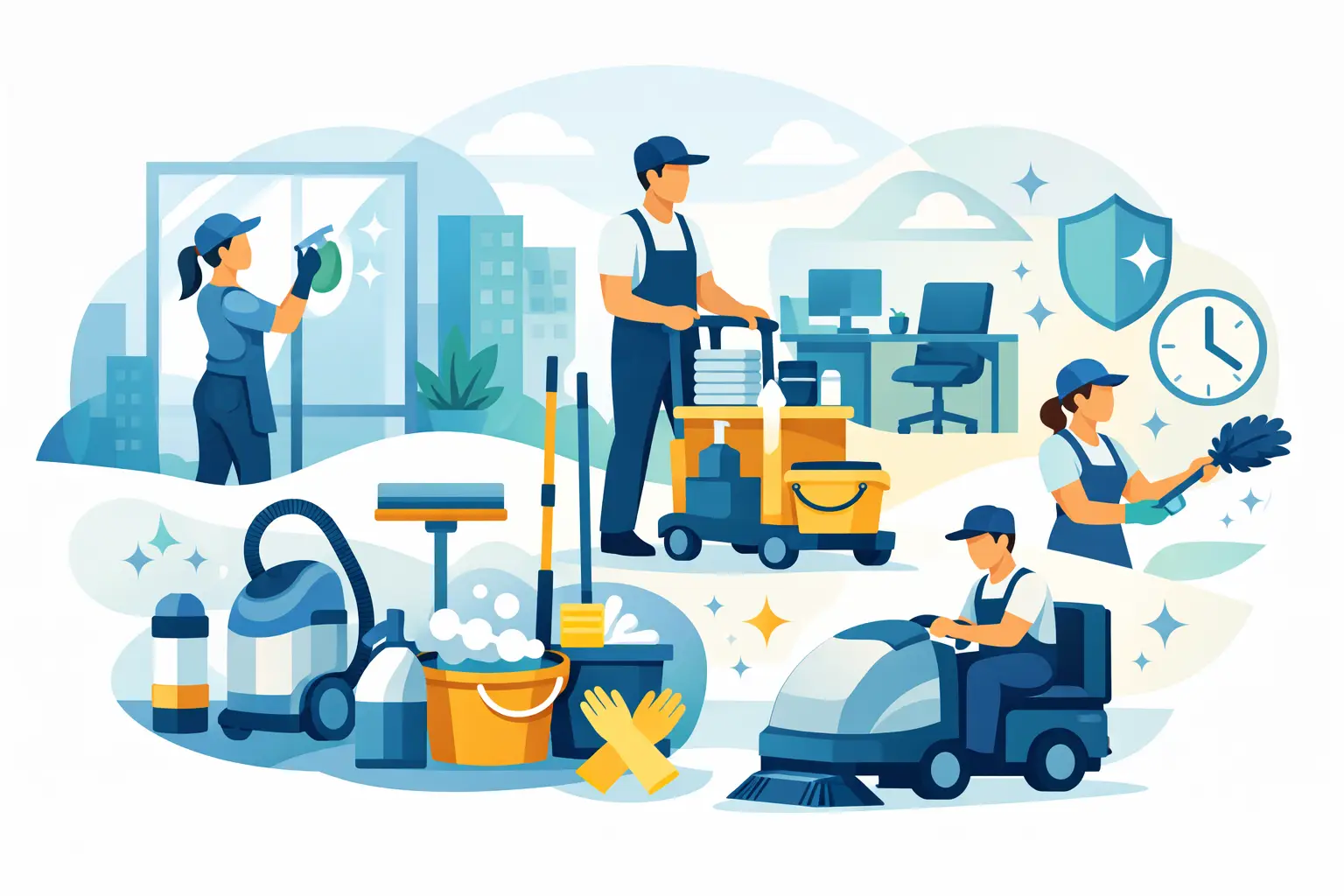

A facility can look presentable at 9 a.m. and still fall short of cleaning standards by mid-afternoon. Restrooms see repeated use, touchpoints accumulate soil, waste builds up, and entrance floors carry in moisture, salt, and debris. That is why asking what is included in facility cleaning should lead to a detailed discussion of your building, traffic patterns, operating hours, and hygiene requirements – not a generic checklist.
Facility cleaning is the ongoing professional care of a commercial, institutional, or managed property. It combines routine janitorial work with scheduled deep cleaning, sanitation support, and specialty services where needed. The exact scope should be tailored to the environment, whether that is an office, clinic, warehouse, school, restaurant, gym, retail store, or condominium property.
What Is Included in Facility Cleaning?
Most facility cleaning programs begin with recurring tasks that keep common areas clean, safe, and ready for employees, visitors, tenants, or customers. These services are usually scheduled daily, several times per week, weekly, or around a building’s operating needs.
A standard program often covers the following core areas:
- Cleaning and disinfecting restrooms, including toilets, sinks, mirrors, partitions, dispensers, and floors
- Emptying waste and recycling containers, replacing liners, and moving waste to designated collection areas
- Vacuuming carpets and rugs; sweeping, mopping, or auto-scrubbing hard surface floors
- Dusting and wiping desks, counters, ledges, furniture, fixtures, and accessible horizontal surfaces
- Cleaning entranceways, lobbies, elevators, hallways, break rooms, kitchens, and other shared spaces
- Wiping high-touch points such as door handles, switches, railings, elevator buttons, shared equipment, and reception surfaces
These are the foundation of janitorial maintenance, but they are not the full story. A reliable cleaning scope defines what is cleaned, how often it is cleaned, what standard applies, and which areas require additional attention.
Restroom cleaning and supply checks
Restrooms are often the clearest indicator of how a facility is managed. Routine service typically includes cleaning and disinfecting fixtures, wiping touchpoints, removing waste, cleaning mirrors, and mopping floors. It can also include checking soap, toilet tissue, hand towels, and other consumables when supply management is part of the agreement.
Frequency depends on occupancy. A small office may need service once each evening, while a busy retail store, school, gym, or public-facing facility may require daytime checks and multiple cleanings per day. In high-traffic settings, a restroom that is cleaned only after hours may not meet operational expectations.
Floor care for the building’s surfaces
Floor cleaning is more than running a vacuum or mop through the space. A proper plan accounts for surface type, soil level, slip risk, and the building’s public image. Entryways may need frequent attention during wet weather, while warehouse aisles may require machine scrubbing to address dust, tire marks, and tracked-in debris.
Routine floor care may include vacuuming, sweeping, damp mopping, spot cleaning, and auto-scrubbing. Periodic services can include carpet extraction, floor stripping and waxing, burnishing, grout cleaning, or pressure washing in suitable exterior areas. These services are commonly scheduled separately because they take more time, equipment, and drying time than daily maintenance.
Common areas, workspaces, and break rooms
In offices and managed properties, common areas set the tone for the entire facility. Cleaning may cover reception desks, seating areas, elevator interiors, stairwells, meeting rooms, corridors, and shared workstations. In a break room or staff kitchen, service generally includes wiping tables and counters, cleaning sinks, exterior appliance surfaces, microwaves, and cabinet fronts, plus removing waste and cleaning floors.
Individual desk cleaning should be clearly defined. Some organizations want desks left untouched for privacy or security reasons, while others require desk surfaces wiped as part of nightly cleaning. The best approach is to establish access rules, clear-desk expectations, and any sensitive areas before service begins.
Disinfection Is Not the Same as General Cleaning
General cleaning removes visible soil, dust, crumbs, and residue. Disinfection uses appropriate products and contact times to reduce germs on targeted surfaces. Both matter, but they serve different purposes.
High-touch disinfection may be included in a recurring cleaning schedule, especially in medical offices, schools, daycares, gyms, and shared office environments. The focus is usually on surfaces people contact repeatedly: handles, faucet levers, railings, light switches, shared keyboards, phones, tables, and equipment controls.
The level of disinfection should match the facility’s risk profile. A medical clinic may require more detailed procedures and attention to treatment rooms than a conventional office. A warehouse may place greater emphasis on washrooms, lunchrooms, time clocks, shared machinery controls, and locker areas. Effective programs avoid treating every building as if it has identical needs.
Specialty Services That May Be Added to a Cleaning Plan
Some cleaning requirements are periodic, seasonal, or specific to the type of facility. They may not be included in a base janitorial contract unless they are requested and scheduled.
Window cleaning, carpet shampooing or extraction, upholstery cleaning, deep kitchen cleaning, post-construction cleanup, pressure washing, high dusting, and hard-floor restoration are common examples. Exterior glass, loading docks, warehouse racking, ceiling vents, and high ledges may require specialized equipment and trained personnel.
For restaurants and food-service locations, cleaning plans can include front-of-house floors, dining areas, restrooms, and non-food-preparation surfaces. Back-of-house cleaning, hood systems, grease-related work, and food-contact areas may require separate procedures or specialized providers. The scope should always distinguish routine cleaning from regulated or technical services.
Industry-specific requirements matter
A cleaning plan for a daycare should account for child-safe products, frequent touchpoint cleaning, and careful attention to washrooms and activity areas. A fitness center needs regular attention to locker rooms, equipment surfaces, mirrors, and high-traffic flooring. Industrial and manufacturing sites may need dust control, debris removal, safety-conscious cleaning around equipment, and schedules that work around production.
Condominium and multi-tenant properties need consistent cleaning in lobbies, elevators, hallways, garbage rooms, amenity spaces, and shared restrooms. In each case, the goal is not simply to clean more. It is to place the right service in the right area at the right frequency.
What a Clear Facility Cleaning Scope Should Define
Before selecting a provider, facility managers should ask for a written scope of work rather than relying on broad terms such as “full-service cleaning.” A detailed scope prevents missed expectations and makes quality inspections more straightforward.
It should identify the service areas, individual tasks, frequency, cleaning schedule, and responsibilities for supplies. It should also state whether cleaning occurs during business hours or after hours, how the crew accesses the building, and whom to contact when priorities change.
Quality control is equally important. Regular inspections, issue reporting, trained and insured staff, and a clear process for service requests help maintain consistency over time. A low price may look attractive at the start, but a vague scope can lead to recurring gaps, complaints from occupants, and unexpected add-on charges.
How Often Should Facility Cleaning Be Scheduled?
There is no universal answer. Frequency should reflect occupancy, facility use, public access, seasonality, and the consequences of poor hygiene. A professional office with limited visitors may only need nightly cleaning several times per week. A medical clinic, school, gym, or busy retail environment may need daily service, daytime porter support, or both.
Toronto and GTA properties also face seasonal realities. Winter moisture, road salt, and slush can quickly damage floors and create slip hazards at entrances. During these months, more frequent mat maintenance, spot mopping, and entryway checks are often necessary.
A practical way to build a schedule is to separate tasks into daily, weekly, monthly, and periodic work. Daily tasks protect appearance and hygiene. Weekly work addresses areas that do not need constant attention. Periodic work preserves carpets, floors, windows, and hard-to-reach surfaces before their condition becomes a larger maintenance issue.
Choosing a Facility Cleaning Partner
The right provider should be able to explain what is included, what is optional, and why each recommendation fits your site. They should ask informed questions about occupancy, access, security, floor types, washroom volume, regulated spaces, and peak traffic periods.
For businesses that cannot tolerate disruption, after-hours cleaning is often the best fit. For properties with continual public traffic, a combination of after-hours service and daytime support may be more effective. Pristine Maintenance and Services builds facility-specific programs around these operational realities, rather than applying the same package to every location.
Start with a walkthrough of the building and identify the areas where cleanliness has the greatest effect on safety, compliance, tenant satisfaction, or customer perception. That conversation will produce a cleaning scope that is easier to manage, easier to inspect, and far more useful than a one-size-fits-all checklist.

0 Comments