
If you are comparing cleaning vendors, one of the first questions to answer is simple: what does janitorial service include? The short answer is routine cleaning, sanitation, restocking, and ongoing facility upkeep. The more useful answer is that janitorial service should match the way your building operates, the people who use it, and the standards your space needs to meet every day.
For a small office, that may mean keeping workstations, restrooms, and breakrooms consistently clean without interrupting staff. For a medical clinic, school, warehouse, or restaurant, the scope is usually broader and more precise. That is why serious commercial janitorial work is not just about cleaning what is visible. It is about maintaining a safe, usable, and professional environment on a reliable schedule.
What does janitorial service include in most commercial buildings?
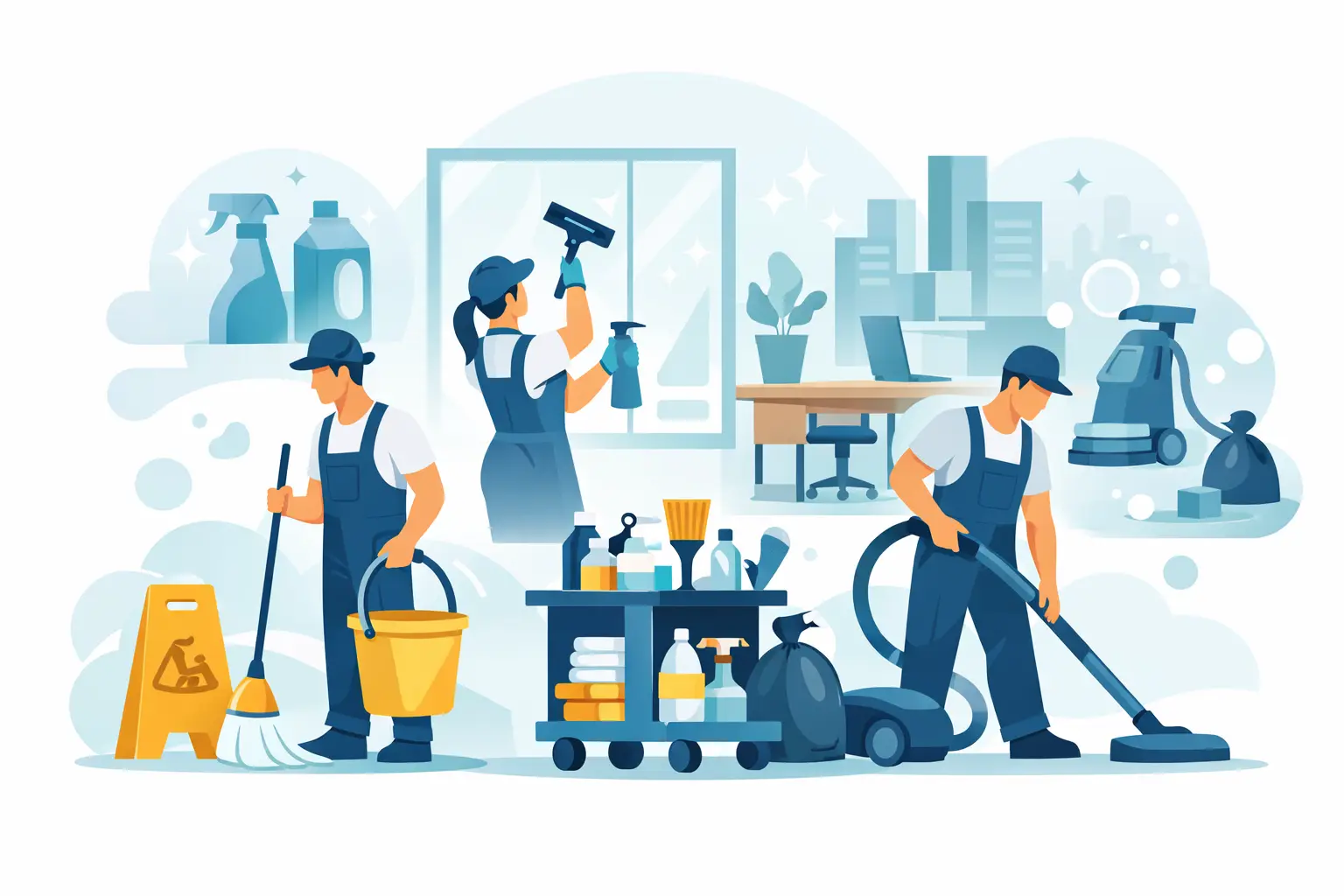
In most facilities, janitorial service includes the recurring tasks needed to keep the space clean, sanitary, and presentable between deep cleans or specialty projects. That usually starts with the basics: emptying trash, replacing liners, dusting surfaces, vacuuming carpets, sweeping and mopping hard floors, cleaning restrooms, and wiping down shared areas.
Restroom care is a major part of the scope. A proper janitorial program includes cleaning and disinfecting toilets, urinals, sinks, counters, mirrors, partitions, and touchpoints such as door handles and dispensers. It also often includes restocking toilet paper, paper towels, hand soap, and other consumables so the facility stays operational throughout the day.
Common areas are another priority. Lobbies, hallways, elevators, stairwells, reception spaces, and breakrooms take constant traffic and create first impressions for employees, tenants, customers, and visitors. Janitorial teams are usually responsible for keeping these areas orderly, clean, and free from visible dirt, dust, smudges, and trash buildup.
In office environments, janitorial service may also include spot cleaning glass, sanitizing shared desks or conference tables, cleaning kitchenettes, and maintaining floors in meeting rooms and open workspaces. In larger buildings, that work may happen after hours so daily operations are not disrupted.
Routine cleaning is only part of the job
A common misconception is that janitorial service is limited to light cleaning. In practice, a dependable provider handles ongoing facility maintenance tasks that support hygiene standards and day-to-day operations. That can include monitoring supply levels, addressing spills, managing touchpoint disinfection, and responding to high-use areas before they become a larger issue.
This matters because many buildings do not need the same service every night in every area. A professional janitorial plan should account for traffic patterns, occupancy, business hours, and risk level. A front lobby may need daily attention, while a private office suite may only need detailed service a few times per week. The right scope is not based on a generic checklist. It is based on actual use.
What janitorial service includes by area
The most accurate way to understand janitorial scope is to look at the building by zone.
Restrooms and washrooms
These areas require thorough cleaning and disinfection, not surface-level tidying. Janitorial staff typically sanitize fixtures, polish mirrors, clean partitions, refill dispensers, mop floors, and remove waste. In high-traffic facilities, restrooms may need multiple service visits per day.
Offices and work areas
This often includes trash removal, dusting accessible surfaces, vacuuming, floor care, and cleaning shared equipment areas. Some clients want detailed workstation cleaning, while others prefer limited service around employee desks for privacy or security reasons.
Breakrooms and kitchens
Janitorial work in food-prep-adjacent spaces usually covers countertops, sinks, appliance exteriors, tables, chairs, and floors. It may also include emptying food waste and sanitizing touchpoints such as refrigerator handles, microwaves, and cabinet pulls.
Entrances and common areas
These spaces collect dirt quickly and shape how people judge the property. Services often include floor cleaning, glass spot cleaning, dusting ledges, wiping doors, and keeping the area free of debris.
Floors throughout the facility
Floor care is a major part of janitorial service. Depending on the material, that can include vacuuming carpet, sweeping, damp mopping, burnishing, auto-scrubbing, or periodic stripping and refinishing. Floor needs vary widely by facility type, and they affect appearance as much as safety.
Janitorial services can also include disinfection
Not every cleaning visit is the same as a disinfection service, and buyers should understand the difference. Routine janitorial cleaning removes dust, dirt, and visible soil while reducing the spread of germs through standard cleaning and sanitizing practices. Disinfection is a more targeted process that applies approved disinfectants to surfaces based on dwell times and higher-risk use cases.
In settings such as clinics, schools, daycares, gyms, and high-density offices, disinfection may be built into the regular janitorial program for restrooms, touchpoints, and shared surfaces. In other environments, it may be scheduled separately during illness outbreaks, seasonal risk periods, or after specific incidents.
The right approach depends on the facility. Overpromising disinfection where it is not needed can waste budget. Under-serving a high-touch environment can create health and operational problems.
Facility type changes what janitorial service should include
This is where many vendors fall short. A warehouse, medical office, retail store, and condominium common area do not have the same cleaning priorities. If the scope looks identical across all of them, it is probably too generic.
Medical and dental facilities often require stricter attention to sanitation protocols, exam room turnover, waiting area cleanliness, and restroom disinfection. Schools and daycares need strong focus on touchpoints, classroom surfaces, washrooms, and common spaces where germs spread easily. Gyms need regular attention to equipment areas, locker rooms, mirrors, mats, and odor control.
Industrial sites and warehouses may need dust management, breakroom and restroom service, floor cleaning around traffic lanes, and safe work around equipment or loading areas. Restaurants and food-service environments may need support cleaning in dining areas, restrooms, entryways, and non-production spaces, often on schedules that avoid service hours.
For property managers and condominium boards, janitorial service often centers on lobbies, elevators, corridors, amenity spaces, and waste areas, with a strong emphasis on presentation and resident experience.
What is not always included
It is just as important to know what may fall outside a standard janitorial contract. Window cleaning, carpet extraction, floor stripping and waxing, post-construction cleanup, high dusting, pressure washing, and specialty disinfection are often priced separately or scheduled as periodic add-ons.
Day porter service may also be separate. That service provides on-site support during business hours for restocking, touch-up cleaning, spill response, and continuous upkeep. Some facilities need it daily. Others only need after-hours janitorial service.
The key is not whether a task is included by default. The key is whether the cleaning provider has clearly defined the scope, frequency, and service level before work begins.
How to evaluate a janitorial scope before signing
If you are reviewing proposals, ask for more than a price and a generic task list. You should be able to see which areas are covered, how often they are serviced, what supplies are included, and whether the plan reflects your building type.
A strong janitorial program should answer practical questions. Who handles consumable restocking? Are high-touch surfaces disinfected nightly or only on request? Are technicians trained for your type of environment? Can the team work after hours? What happens if occupancy changes or a problem area starts needing more frequent service?
For most organizations, the best vendor is not the one with the longest checklist. It is the one that understands where cleanliness affects operations, safety, compliance, and tenant or customer experience. That is especially true in active commercial spaces where cleaning needs shift over time.
At Pristine Maintenance and Services, that is why janitorial programs are built around the facility rather than forced into a fixed package. A school, clinic, office, and warehouse each require a different service rhythm, different priorities, and different quality controls.
What does janitorial service include when it is done well?
When it is done well, janitorial service includes more than cleaning tasks. It includes consistency, clear scope, trained staff, safe products and methods, dependable scheduling, and the flexibility to support the way a facility actually runs.
That means floors stay presentable, restrooms stay stocked, trash does not overflow, shared spaces remain sanitary, and your team does not have to chase the vendor to handle basic issues. It also means the service can scale up or adjust when seasons change, traffic increases, or a building takes on new demands.
If you are hiring for a commercial property, the better question is not just what does janitorial service include. It is whether the service plan is specific enough to protect your standards every day. A clean building should not depend on guesswork, and neither should the scope behind it.
0 Comments