
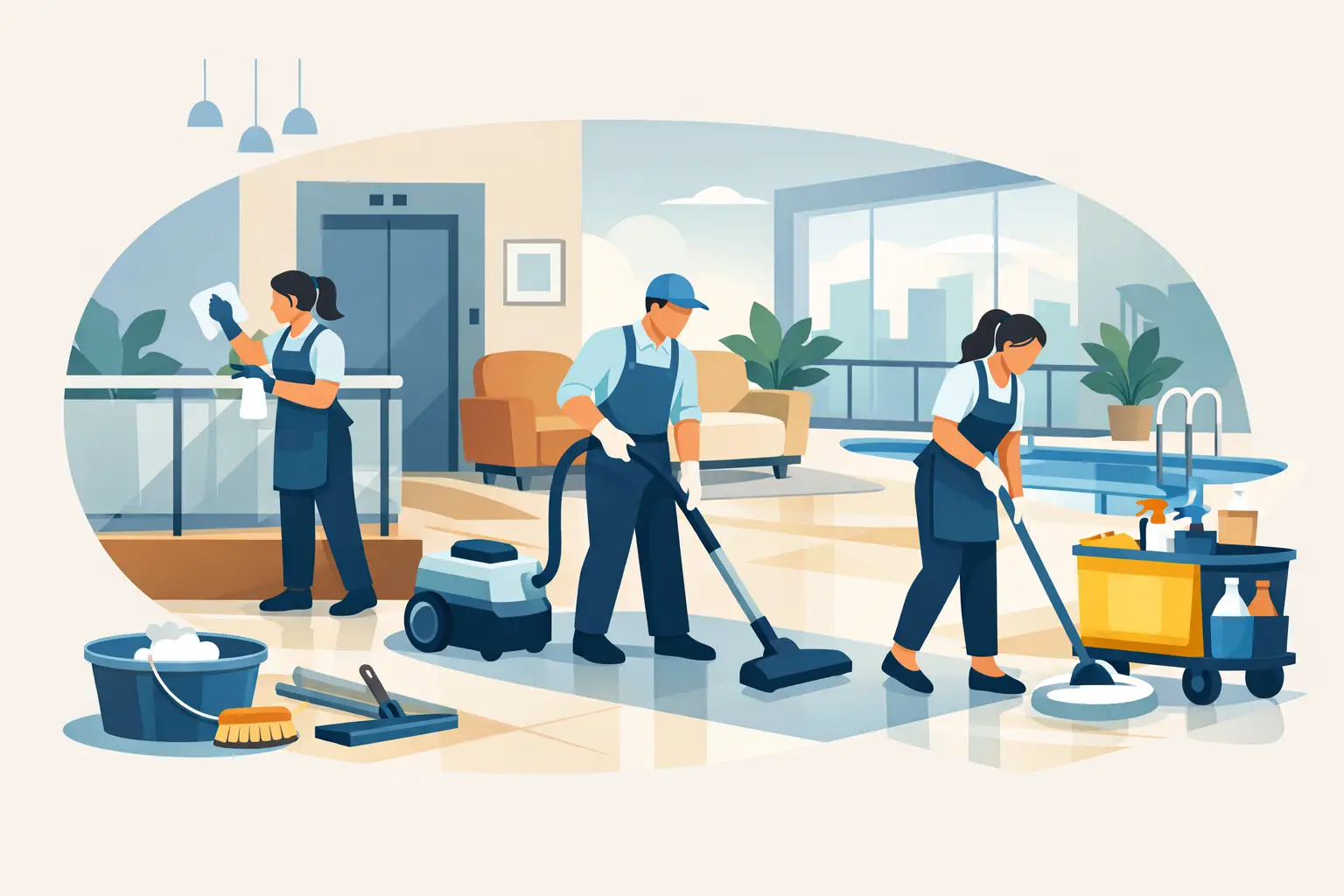

A scuffed lobby floor, fingerprints on elevator panels, overflowing trash near the mailroom – these details shape how residents, guests, and prospective buyers judge a building before anyone says a word. Condo common area cleaning is not just about appearance. It directly affects resident satisfaction, day-to-day safety, and the workload placed on property management.
In a condominium setting, shared spaces are under constant pressure. Foot traffic starts early, deliveries arrive throughout the day, weather gets tracked in, and high-touch surfaces rarely stay clean for long. A cleaning program that works in an office or retail space does not automatically work in a residential high-rise. Condo buildings need a more tailored approach, with attention to traffic patterns, resident expectations, and the practical limits of working around occupied spaces.
What condo common area cleaning actually includes
Condo common area cleaning usually covers the spaces every resident, guest, contractor, and staff member uses regularly. That often starts with lobbies, vestibules, corridors, stairwells, elevators, fitness rooms, party rooms, mail areas, and shared restrooms. In some buildings, it also includes underground garage touchpoints, management offices, amenity areas, and exterior entry zones.
The work itself needs to go beyond light tidying. Floors must be vacuumed, swept, mopped, or machine-cleaned based on the material and traffic level. Glass entry doors and mirrors need regular spot cleaning. Elevator interiors require close attention because stainless steel, buttons, and wall panels show soil quickly. Trash and recycling areas need frequent service to control odors and prevent buildup.
Disinfection also matters, but it should be applied with common sense. High-touch surfaces such as door handles, handrails, elevator buttons, intercoms, and shared seating benefit from scheduled disinfecting, especially during flu season or periods of increased illness concerns. At the same time, overusing the wrong products can damage finishes or create residue, so product selection and staff training matter.
Why condos need a different cleaning standard
Condo common area cleaning sits in a middle ground between hospitality expectations and commercial maintenance discipline. Residents expect a clean, well-kept environment because they live there, not just because they visit during business hours. That changes the standard.
A poorly maintained office may frustrate employees. A poorly maintained condo creates daily friction for every person coming home. Residents notice dusty baseboards, stained hallway carpets, smudged entrance glass, and neglected corners because they see them over and over again. These are not one-time impressions. They become part of the building’s reputation.
There is also a broader operational issue. When common areas are not cleaned consistently, small problems become expensive ones. Dirt embedded in flooring shortens surface life. Moisture near entry points raises slip risk. Trash room neglect invites odor complaints and pest concerns. Deferred cleaning rarely stays a cosmetic issue for long.
The highest-priority areas in a condo building
Not every shared space needs the same service frequency. That is one reason generic cleaning packages tend to underperform in condominium settings.
Lobbies and front entrances usually require the most visible upkeep. These areas collect outdoor debris, water, salt, and mud, especially during wet or winter conditions. They also set the tone for the rest of the property, so even minor neglect stands out.
Elevators are another high-priority zone. They are enclosed, frequently touched, and impossible for residents to ignore. Smudges, spills, and odors are noticed quickly. In many buildings, elevator cleaning has to happen more than once a day, at least in a light-maintenance capacity.
Hallways and stairwells need a different kind of consistency. These spaces may not draw attention when clean, but they generate complaints when dust accumulates, carpets stain, or corners are missed repeatedly. Mailrooms, parcel areas, and amenity spaces also deserve close review because usage has increased in many condo communities due to delivery volume and shared facilities.
Frequency depends on traffic, layout, and resident use
One of the most common mistakes in condo common area cleaning is assuming every building needs the same schedule. It depends.
A smaller low-rise with limited amenities may do well with a modest recurring schedule supported by periodic deep cleaning. A large high-rise with multiple elevators, fitness facilities, and constant package traffic may need daily porter service, evening cleaning, and more frequent floor care. Buildings with pets, children, short-term guest traffic, or extensive outdoor access points often need more attention than their square footage alone would suggest.
Seasonality matters too. Winter and rainy periods create heavier floor maintenance demands. Summer can increase use of outdoor-connected amenities and bring more dust indoors. Move-in and move-out periods often require temporary service adjustments because hallways, elevators, and entryways take more wear.
The right schedule comes from observing how the building actually functions, not from applying a flat checklist.
What property managers should expect from a cleaning provider
A qualified provider should understand that condo environments require both consistency and discretion. Cleaning has to support the building’s image without disrupting residents unnecessarily. That means planning service around peak movement times, building rules, elevator access limitations, and amenity schedules.
Staff reliability is non-negotiable. In condominium settings, cleaners work in occupied residential environments, often after hours or during quiet periods. Property managers need trained, insured personnel who can work professionally, follow site protocols, and maintain a visible standard of care without creating complaints of their own.
Communication also matters more than many managers expect. If an amenity room is booked, a spill requires urgent attention, or weather creates heavier-than-normal lobby traffic, the cleaning team should be responsive enough to adapt. Static service plans often fail because building conditions are never completely static.
For this reason, many property managers prefer customized programs over preset packages. A building with polished stone in the lobby, carpeted residential corridors, and tile in fitness and washroom areas needs different methods and equipment across each zone. One-size-fits-all service usually shows up in the results.
The difference between routine cleaning and deeper maintenance
Routine service keeps the building presentable day to day. It covers debris removal, dusting, restroom upkeep, trash handling, touchpoint cleaning, and floor care that addresses immediate soil and appearance.
Deeper maintenance protects the building over time. This may include machine scrubbing hard floors, burnishing, carpet extraction, detailed wall spot cleaning, elevator track cleaning, high dusting, and periodic treatment of entry mats or garage-adjacent flooring. In some condos, seasonal glass cleaning or pressure washing of selected exterior zones may also be appropriate.
Both levels matter. If a provider only handles surface-level tasks, the property may look acceptable for a while but steadily decline. If deep cleaning is done without strong daily maintenance, the building never holds its appearance between visits. The most effective programs balance both.
Safety, compliance, and resident experience
Cleaning quality is only part of the job. Safe execution matters just as much. Wet floor management, chemical handling, equipment storage, and signage all affect resident safety and liability exposure. This is particularly important in buildings with seniors, children, or high evening foot traffic.
Residents also notice the softer operational details. Strong chemical odors, loud equipment at the wrong time, or cleaning carts left in narrow corridors can create unnecessary frustration. A professional team knows how to maintain standards while minimizing disruption.
For managers, this is where experienced commercial providers tend to stand apart from residential-style cleaners. Condo common area cleaning is operational work. It requires systems, accountability, and staff who understand shared building environments.
Building a cleaning plan that works long term
The most effective condo cleaning plans start with the building’s actual conditions. Traffic volume, finish types, amenity usage, staffing structure, complaint history, and service hours all need to be considered before setting scope and frequency.
It also helps to review expectations realistically. Some boards want hotel-level presentation on a limited maintenance budget. Others overspend on visible areas while neglecting less obvious spaces that affect cleanliness and safety just as much. A practical plan aligns resources with the areas residents use most and notice most often, while still protecting the property as a whole.
For property managers in active urban markets, consistency is usually the deciding factor. A vendor that shows up reliably, follows site procedures, adjusts when conditions change, and maintains quality over time will usually outperform a cheaper provider that looks fine on paper but cannot sustain execution. That is why companies such as Pristine Maintenance and Services focus on facility-specific programs rather than generic service bundles.
A clean condo does not happen by accident. It comes from a service plan built around the way the building lives and moves every day. When common areas are maintained with that level of attention, the building feels cared for the moment someone walks through the door.



0 Comments