
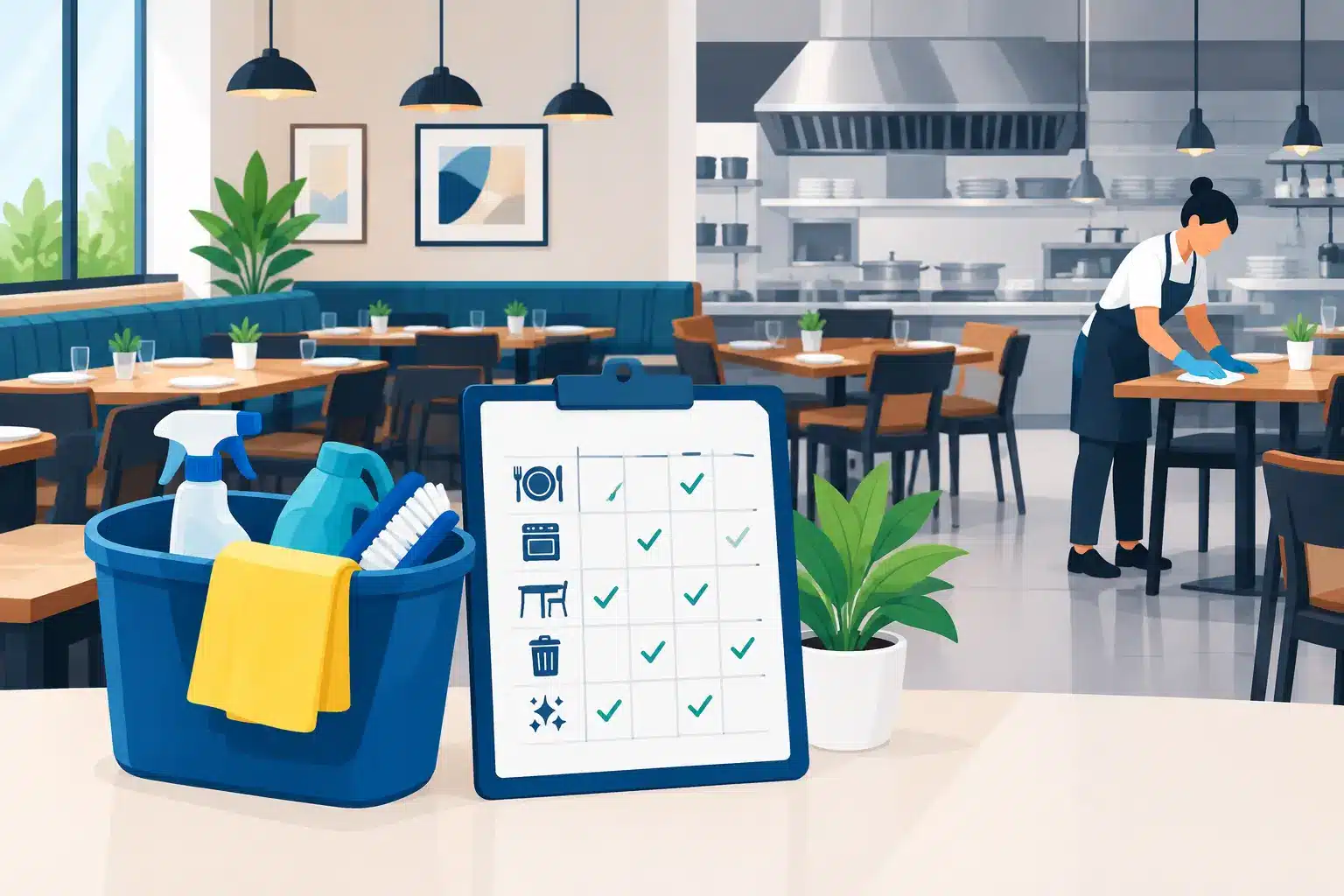

A dining room can look polished at opening time and still carry cleaning risks behind the scenes. Grease builds where staff cannot easily see it, high-touch surfaces change hands all day, and a missed prep-area task can become a food safety concern. The best cleaning schedule for restaurants turns those risks into clear, assigned routines instead of last-minute cleanup.
For restaurant owners and operators, the goal is not simply to clean more often. It is to clean the right areas at the right interval, with accountability built into every shift. A workable program protects guests, supports staff, reduces odors and pest pressure, and helps the operation present a professional standard from the entrance to the dish area.
Start With Zones, Not a Generic Checklist
Restaurants have different cleaning demands than offices or retail spaces because dirt, food residue, moisture, heat, and customer traffic overlap throughout the day. A single checklist for the entire building usually fails because it does not distinguish between a guest restroom, a cold-storage handle, a kitchen floor, and a front entry.
Divide the facility into operational zones: front of house, restrooms, kitchen and food-prep areas, dishwashing stations, storage, employee areas, and exterior entry points. Then set tasks by frequency and assign them to a role or shift. Managers should confirm completion, especially for food-contact surfaces, restrooms, floors, and waste areas.
The exact schedule depends on the service model. A quick-service location may need dining room touch-ups every 30 minutes during peak traffic. A fine-dining restaurant may require more detail work before service and after closing. A bar-heavy venue may need stronger attention to spills, glass handling, and restroom checks late in the evening.
Daily Restaurant Cleaning Tasks
Daily work should be organized around three moments: before opening, during service, and after closing. This prevents the common problem of asking closing staff to complete an unrealistic list after a demanding shift.
Before Opening
Opening cleaning prepares the restaurant for safe and professional service. Staff should inspect entrances, dining areas, host stands, restrooms, and visible glass for marks, debris, and odors. Tables, chairs, menus or menu holders, condiment stations, point-of-sale touchpoints, and door handles should be cleaned or disinfected according to the product instructions and your facility procedures.
In the kitchen, clean and sanitize food-contact surfaces before prep begins. Check sinks, prep tables, shelving, handles, and equipment exteriors. Replace liners as needed, confirm that cleaning supplies are stocked, and remove any waste left from the prior shift. Floors should be clear, dry, and free of trip hazards before staff begin moving product and equipment.
During Service
During service, use short, repeatable cleaning rounds. A manager or designated team member should inspect the dining room and restrooms at scheduled intervals rather than waiting for a guest complaint. Wipe spills immediately, clear debris from floors, sanitize tables between parties, restock restroom supplies, and empty waste before it overflows.
Kitchen staff should clean as they work. Food residue, grease, and standing water are easier to address immediately than at the end of a shift. Keep raw-food prep areas controlled, wash utensils as required, and maintain a clear separation between cleaning tools and food-handling equipment.
After Closing
Closing work is where consistency matters most. Every shift should leave the facility ready for the next day, not create a larger problem for the opening team. Use a signed task log for high-risk and high-visibility duties.
A complete close typically includes:
- Cleaning and sanitizing food-contact counters, prep sinks, cutting boards, and smallwares
- Degreasing cookline surfaces, splash areas, handles, and accessible equipment exteriors
- Washing floors in kitchen, dish, restroom, and dining areas with the appropriate solution
- Removing trash, cleaning waste receptacles as needed, and securing waste in the designated area
- Cleaning restrooms, refilling soap and paper products, and disinfecting high-touch fixtures
- Wiping dining-room surfaces, sweeping beneath furniture, and leaving chairs and tables orderly
Do not treat all disinfectants as interchangeable. Staff need to follow label directions, including required surface contact time. Applying a product and wiping it away immediately may not deliver the intended result.
Weekly Tasks That Prevent Buildup
Daily routines protect the restaurant in the moment. Weekly tasks deal with the buildup that daily cleaning cannot fully address during a busy service schedule.
Set a consistent day or slower service period for detailed work. Pull movable equipment away from walls where safe to do so. Clean behind and beneath coolers, cooking equipment, shelving, and storage racks. Detail baseboards, wall surfaces near prep and dish areas, vents that are accessible to staff, door frames, and corners where dust and food debris collect.
Weekly cleaning should also include a closer review of the dining room. Launder or clean fabric elements according to manufacturer guidance, wipe chair legs and table bases, clean light switches, remove fingerprints from glass, and address marks on walls. In restrooms, detail grout lines, partitions, dispensers, and drains. These tasks have a direct effect on guest perception because they are often the areas that receive attention only when conditions have noticeably declined.
Ice machines, beverage stations, coffee equipment, and condiment organizers deserve special attention. Their required cleaning frequency depends on the equipment, local requirements, and manufacturer instructions. Document the work rather than relying on memory, particularly when several managers or shifts share responsibility.
Monthly and Periodic Deep Cleaning
Some cleaning needs should be scheduled monthly, quarterly, or according to operational conditions. These are often the duties most likely to be delayed when staff are focused on service.
Monthly review items may include interior windows, high ledges, ceiling vents, wall washing, storage-room organization, refrigerator seals, and detailed cleaning of small appliances. Floors may need more intensive treatment in entryways, under cooking equipment, and in dish areas where grease and moisture can reduce traction.
Periodic work may require a professional provider or a qualified specialty contractor. Examples include hood and exhaust cleaning, carpet extraction, high-access dust removal, floor stripping and refinishing, pressure washing, and deep cleaning after renovations or pest activity. The interval should reflect equipment use, cooking volume, building conditions, and applicable local requirements. A high-volume kitchen will not have the same needs as a small café with limited cooking equipment.
Make the Schedule Easy to Manage
A cleaning schedule works only when staff can use it during a real shift. Keep the document specific: identify the task, frequency, responsible role, approved product or method, and manager verification point. Vague entries such as “clean kitchen” leave too much room for inconsistency.
Use separate checklists for opening, mid-shift, closing, weekly detail work, and periodic services. Place them where the work happens, but do not depend on paper alone. Supervisors should inspect completed work, coach gaps promptly, and revise the schedule when the menu, traffic pattern, staffing level, or facility layout changes.
Training matters as much as the checklist. Staff need to understand color-coded tools, chemical dilution, safe storage, cross-contamination controls, wet-floor procedures, and when to report a maintenance issue instead of trying to clean around it. A leaking cooler, damaged floor surface, or persistent drain odor is not only a housekeeping concern. It can affect safety, sanitation, and customer experience.
When Outsourced Cleaning Adds Value
Restaurant teams should own the tasks tied directly to food handling and real-time service. However, after-hours janitorial support can strengthen the program by handling recurring dining-room, restroom, floor, glass, and deep-cleaning work without pulling staff away from guests or closing duties.
This approach is especially useful for multi-unit operators, high-traffic restaurants, and locations with late hours. A facility-specific plan can set clear service windows, detail the areas that require professional attention, and provide dependable documentation. Pristine Maintenance and Services builds customized commercial cleaning programs around operational requirements so restaurants can maintain a clean, safe environment without disrupting service.
The best schedule is the one your team can complete, verify, and maintain every week. Start with the areas that create the greatest food safety, slip, odor, and guest-experience risks, then adjust the frequency based on what your operation actually sees. Consistent attention is what keeps a restaurant clean long after the opening shift.


0 Comments