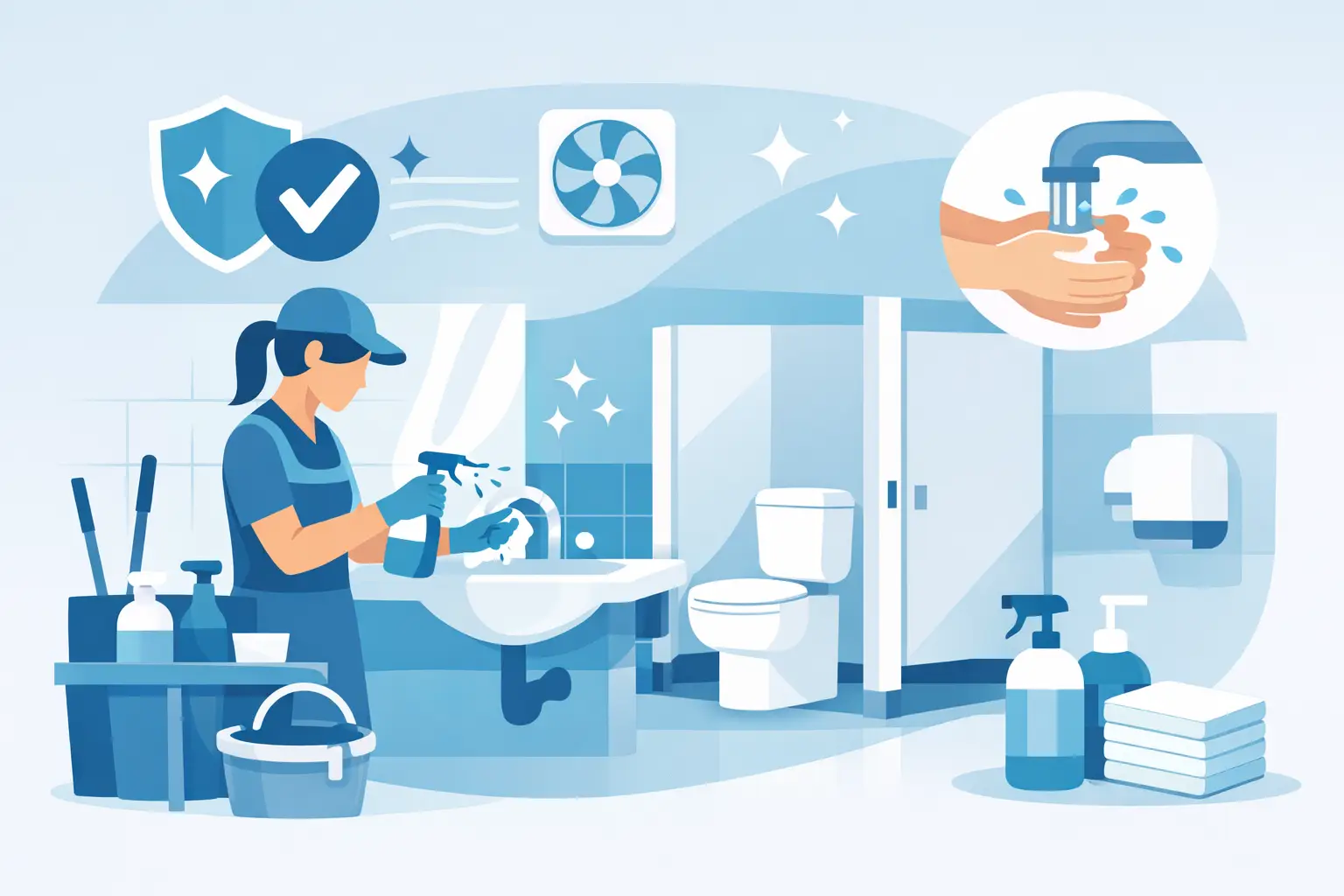

A restroom can change how employees, visitors, tenants, and customers judge an entire facility in a matter of seconds. A stocked dispenser, dry floor, clean fixture, and neutral odor signal that the building is being managed carefully. Missed details send the opposite message. The best practices for restroom sanitation combine reliable daily cleaning with a defined process for high-touch surfaces, supply replenishment, inspections, and response to unexpected conditions.
Start With a Facility-Specific Restroom Plan
Restroom sanitation should reflect how the space is actually used. A small office restroom may need a detailed service once each evening and a daytime supply check. A gym, school, restaurant, medical clinic, or high-traffic retail location may require multiple checks and cleanings during operating hours. Buildings with public restrooms also need a faster response plan for spills, vandalism, blocked fixtures, and supply shortages.
Begin by assessing traffic patterns, operating hours, the number of fixtures, user groups, and any compliance requirements. Restrooms near reception areas, cafeterias, locker rooms, or customer-facing spaces usually require more frequent attention than low-use staff restrooms. A practical scope of work should identify cleaning frequency, touchpoint disinfection, floor care, waste removal, consumable levels, and who is responsible for reporting maintenance problems.
The goal is not simply to schedule more cleaning. It is to place service at the points where it prevents complaints, contamination risks, and operational disruption.
Separate Cleaning From Disinfection
Cleaning removes visible soil, residue, and many germs from a surface. Disinfection is a separate step that uses an appropriate product to reduce microorganisms on a pre-cleaned surface. Treating the two as interchangeable is one of the most common weaknesses in restroom programs.
For fixtures and touchpoints with visible dirt, staff should first remove soil using the correct cleaner and clean cloth or tool. The disinfectant can then be applied according to the manufacturer’s directions, including the required contact time. Wiping a disinfectant off immediately may leave the surface looking clean without providing the intended sanitizing result.
Product selection also matters. Harsh chemicals can damage finishes, corrode fixtures, create strong odors, or pose safety concerns when used incorrectly. Facilities should use products appropriate for the surface, task, and setting, while ensuring staff are trained on labeling, dilution, personal protective equipment, and safe storage. In health-sensitive environments, the required protocol may be more stringent than in a standard office.
Focus on High-Touch Areas First
Toilet bowls receive attention, but users most often contact the surfaces around them. Door handles, stall locks, flush levers or buttons, faucet handles, soap dispensers, paper towel dispensers, hand dryers, grab bars, light switches, changing stations, and waste receptacle lids should be included in the routine.
A consistent workflow reduces the chance of spreading contamination from dirtier to cleaner areas. Start with higher, cleaner surfaces and work downward. Clean mirrors and dispensers before fixtures and floors. Use separate, clearly identified cloths, mop heads, and tools for toilets and urinals so they are never used on sinks, counters, or other surfaces.
Color coding is useful when teams service multiple restrooms or large facilities. The system only works, however, if it is supported by training and enough clean replacement materials. Reusing a soiled cloth across surfaces can undermine an otherwise thorough service.
Keep Floors Dry, Safe, and Odor-Free
Restroom floors collect moisture, hair, paper debris, tracked-in soil, and residue from cleaning products. They are also a major slip-and-fall risk. Spot clean spills as soon as they are reported or observed, place wet-floor signage during mopping, and allow adequate drying time before reopening the area where possible.
Daily floor cleaning should reach corners, behind toilets, around pedestals, and beneath hand dryers or dispensers. These areas often hold moisture and organic residue that contribute to persistent odor. Floor drains require regular attention as well. If odors remain after standard cleaning, the issue may involve a dry drain trap, plumbing condition, inadequate ventilation, or hidden buildup rather than a missed fragrance product.
Air fresheners can support user comfort, but they should not be used to mask an underlying sanitation or maintenance problem. Neutralizing odors starts with cleaning the source, removing waste promptly, and addressing drain or ventilation concerns.
Stock Supplies Before They Become Complaints
An unstocked restroom creates immediate frustration and can compromise hand hygiene. Soap, toilet paper, hand towels, sanitary disposal products, and hand sanitizer where provided should be checked according to use levels, not only at the end of a shift. A location that hosts meetings, events, school dismissal periods, or busy meal times may need checks before and after predictable traffic peaks.
Supply checks should also include dispenser function. A full soap cartridge does not help if the dispenser is jammed, leaking, or difficult to operate. Similarly, overfilled waste bins affect cleanliness, odor, and the impression of the room even when the fixtures have been cleaned well.
Maintain a reasonable backstock in a secure janitorial area and standardize consumables when possible. This makes replenishment more reliable and helps avoid last-minute substitutions that do not fit installed dispensers.
Use Inspection Logs That Lead to Action
Restroom logs are most valuable when they document meaningful work, not when they become a box-checking exercise. A simple inspection record can confirm the time of service, the staff member, supply status, touchpoint cleaning, floor condition, and any maintenance issue found. For public or high-traffic restrooms, these checks give facility managers a clear record of attention throughout the day.
The important follow-through is escalation. A cleaner may identify a leaking faucet, clogged toilet, loose grab bar, damaged tile, malfunctioning hand dryer, or recurring odor, but the sanitation program must include a clear way to notify the responsible maintenance contact. Cleaning teams should not be expected to solve plumbing or electrical issues outside their scope, but they should be equipped to identify and report them promptly.
Periodic supervisor inspections add another layer of quality control. They can identify recurring issues such as missed edges, poor chemical dilution, inconsistent stocking, or a cleaning schedule that no longer matches actual traffic.
Train for Consistency and Safety
Even a well-written restroom checklist will fail if the people carrying it out have not been trained. Staff need practical instruction on cleaning sequences, chemical safety, dwell times, cross-contamination prevention, equipment care, and what to do when they encounter biohazards or unsafe conditions.
Training should include the difference between a routine spill and an incident requiring additional precautions. Blood, vomit, or other bodily fluids require an established response procedure, appropriate protective equipment, and proper disposal practices. In schools, daycares, medical spaces, and other health-sensitive facilities, the response plan may need to align with specific organizational standards.
Scheduling affects quality, too. After-hours service can allow more thorough cleaning in offices and shared commercial buildings without interrupting occupants. During-day attendants may be the better choice for heavily used public restrooms. The right approach depends on traffic, risk, budget, and how quickly the facility needs issues corrected.
Best Practices for Restroom Sanitation Require Review
Restroom needs change when tenant occupancy rises, a business expands hours, seasonal illness increases, or a building hosts more visitors. Review service levels regularly instead of assuming the original schedule will remain adequate. Complaint trends, supply use, inspection findings, and maintenance tickets can all show where adjustments are needed.
For facility managers, the most dependable restroom program is one that makes expectations visible and performance repeatable. When cleaning staff, maintenance teams, and building leadership share a clear process, restrooms stay safer, more presentable, and easier to manage – even on the busiest days.

0 Comments