
A reception counter can be cleaned at 6:00 p.m. and heavily touched again before 9:00 a.m. The same is true of elevator buttons, shared printers, break room handles, and meeting room tables. An effective office disinfection guide accounts for how people actually move through a workplace, not just what looks clean at the end of a shift.
For office managers and facility teams, disinfection is most useful when it is part of a defined hygiene program. The goal is to reduce contamination on relevant surfaces while keeping the workplace orderly, available, and professional. That requires clear priorities, the right products and procedures, and a schedule that fits the building’s occupancy and workflow.
Start With Cleaning, Then Disinfect
Cleaning and disinfection perform different jobs. Cleaning removes visible soil, dust, food residue, and oils from surfaces. Disinfection uses an appropriate product to reduce microorganisms on a hard, nonporous surface according to the product label.
Skipping the cleaning step can weaken results. Dirt and residue can interfere with a disinfectant’s contact with the surface, particularly in break rooms, washrooms, and high-use reception areas. A desk with a few fingerprints may only need routine cleaning, while a shared table used for meals, meetings, and visitor check-in may require cleaning followed by disinfection.
The appropriate frequency depends on the space. A lightly occupied private office does not need the same attention as a customer-facing lobby or a shared workstation used across shifts. Facility managers should avoid treating every room as identical. A targeted program is usually more effective and more efficient than applying the same process everywhere.
Assess Your Office Before Setting a Schedule
Walk the office as occupants use it. Observe entry and exit routes, shared equipment, visitor areas, food preparation spaces, washrooms, and enclosed meeting rooms. This review identifies where hands repeatedly contact the same surfaces and where many people gather during the day.
Consider the number of employees, visitors, desk-sharing practices, shift changes, and any work areas with higher hygiene expectations. A professional services office with assigned desks may need a different plan than a call center, clinic administration area, coworking floor, or warehouse office attached to an active loading area.
It also helps to distinguish between routine service and response service. Routine service supports normal daily operations. Response service may be appropriate after a known illness concern, an unusually busy event, construction dust, food spills, or a period of increased absenteeism. A response plan should be available before it is needed, including who authorizes extra work and which areas receive priority.
Map High-Touch Surfaces
High-touch points deserve the most consistent attention because many people contact them throughout the day. In a typical office, the priority list often includes:
- Exterior and interior door handles, push plates, locks, and access card readers
- Elevator buttons, stair railings, reception counters, and visitor sign-in devices
- Light switches, thermostats, shared keyboards, mice, phones, and printer controls
- Break room appliance handles, cabinet pulls, faucet handles, tables, and chair backs
- Washroom fixtures, stall locks, dispensers, flush handles, and changing station surfaces
This list should be customized by location. For example, a shared boardroom may need attention between high-volume meetings, while a private executive office may only require routine after-hours service. Overlooking less obvious touch points, such as water cooler buttons and vending machine keypads, is a common gap.
Select Products and Procedures Carefully
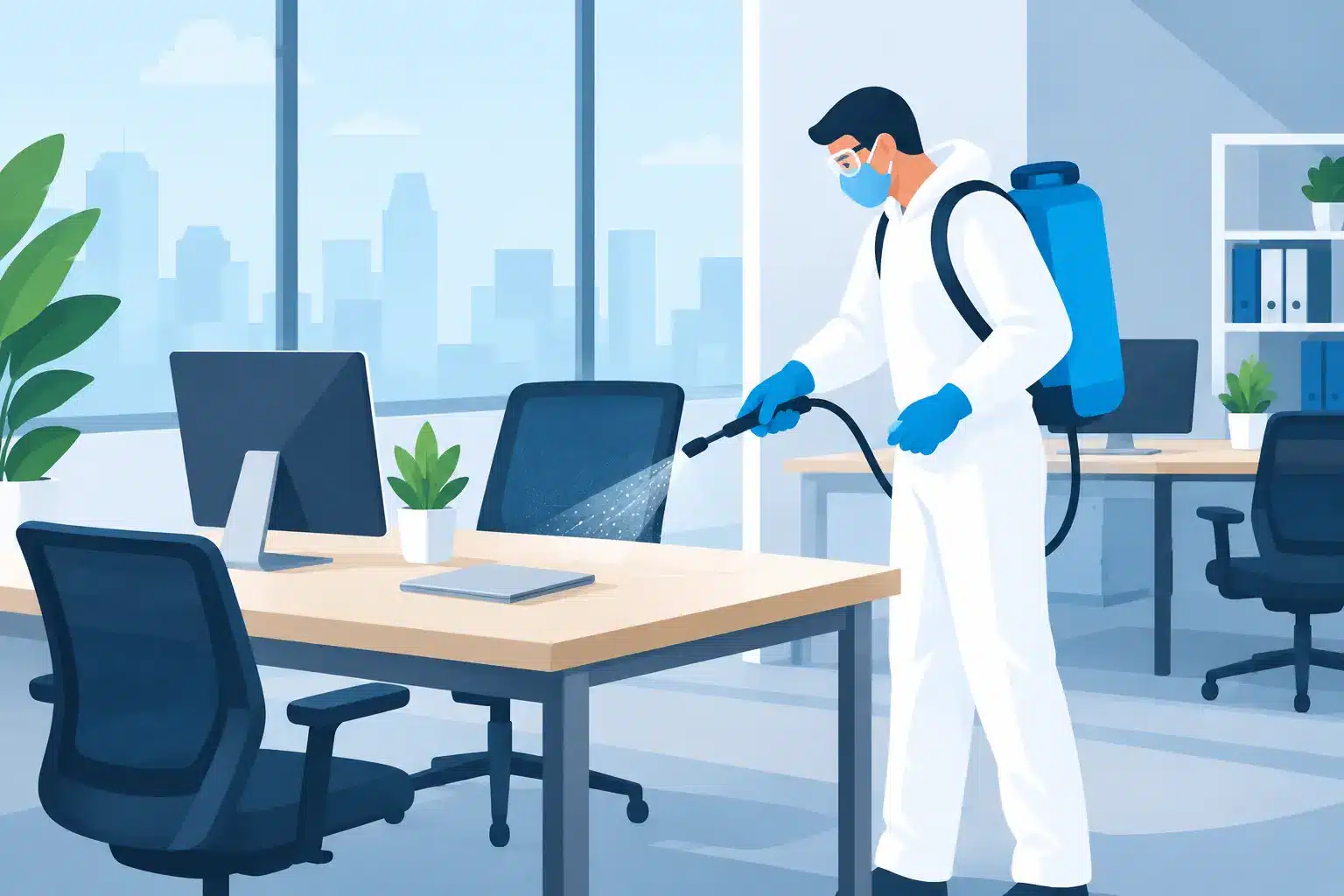
Use disinfectants that are suitable for the intended surface and task, and follow the product label exactly. The label provides instructions for dilution, application method, required contact time, ventilation, personal protective equipment, and compatible surfaces. More product is not automatically better, and wiping a surface dry too quickly may prevent the disinfectant from performing as intended.
Compatibility matters. Some products can damage electronics, natural stone, unsealed wood, specialty finishes, or certain plastics. For electronic equipment, follow the manufacturer’s care instructions and avoid spraying liquid directly onto keyboards, screens, and control panels. Apply products to a cloth when appropriate, while ensuring the required surface wetness and contact time can still be achieved.
Staff should be trained on chemical handling, labeling, storage, and cross-contamination prevention. Color-coded cloths and mops can help keep washroom tools separate from break room or office-area tools. Reusing a soiled cloth across multiple areas can spread contaminants rather than remove them.
Build a Schedule Around Occupancy
Most offices benefit from after-hours cleaning and disinfection because it gives service teams access to desks, washrooms, common areas, and meeting rooms without interrupting employees. It also allows products to remain on surfaces for the required contact time and lets floors or work areas dry before the next business day.
That said, after-hours service is not the only option. High-traffic areas may require daytime attention. A lobby during a client event, a break room after lunch, or a shared conference room between sessions may need a quick, focused service. The right model is often a combination of thorough nightly work and limited daytime touchpoint support.
A practical office schedule may include daily cleaning and disinfection of washrooms, kitchens, entry points, and common touch surfaces; scheduled attention for meeting rooms and shared equipment; and periodic detail work for lower-touch areas. During respiratory illness seasons or when office occupancy rises, frequency can be adjusted without redesigning the entire program.
Make Shared Workspaces Easier to Maintain
A cleaning provider can manage planned service, but employees also affect the condition of shared spaces between visits. Clear workplace expectations can reduce clutter and help cleaning teams reach the surfaces that need attention.
Encourage staff to clear food, documents, and personal items from common tables at the end of the day. Provide accessible waste and recycling containers. Make hand hygiene supplies available near washrooms, break rooms, and entry areas. For hot-desking environments, establish a simple reset process between users so workstations are ready for both the next employee and the cleaning team.
These expectations should be practical, not punitive. Employees should not be expected to replace trained cleaning personnel or handle unfamiliar chemicals. Their role is to keep shared areas usable and report spills, damaged dispensers, or supply shortages promptly.
Verify the Work Without Creating More Administration
Disinfection work should be visible in its consistency, even when it is not visually obvious. Facility managers can verify service through walkthroughs, communication logs, supply checks, and periodic quality inspections. Look for missed touch points, residue left on surfaces, depleted soap or paper products, and areas where clutter prevents proper service.
A site-specific scope of work is essential. It should identify service frequencies, priority areas, access procedures, special materials, supply responsibilities, and escalation contacts. This gives both the client and cleaning provider a shared operational standard. If a floor, department, or tenant has different hours, that detail should be included rather than assumed.
When concerns arise, address them with specific observations. “The office was not disinfected” is difficult to action. “The break room refrigerator handle and third-floor printer controls were missed after Tuesday’s service” gives a provider a clear path to correct the issue and update the process if needed.
Know When to Adjust the Plan
An office disinfection program should not remain fixed simply because it was effective last year. Changes in headcount, hybrid work schedules, tenant turnover, seasonal illness patterns, renovations, or a new shared amenity can all change the risk profile of a building.
Review the plan when occupancy changes significantly or when recurring complaints point to a process gap. For health-sensitive organizations, such as medical administration offices, daycares, or offices connected to industrial operations, additional protocols may be necessary. Those requirements should be built into the cleaning scope from the start, not added informally after service begins.
A dependable cleaning partner will ask practical questions about traffic, access, materials, timing, and facility expectations before recommending service. Pristine Maintenance and Services builds facility-specific cleaning programs because an effective routine has to work within the reality of the workplace.
The best disinfection plan is not the one with the longest checklist. It is the one your team can sustain: targeted to real touch points, completed with proper procedures, documented clearly, and adjusted as your office changes.
0 Comments