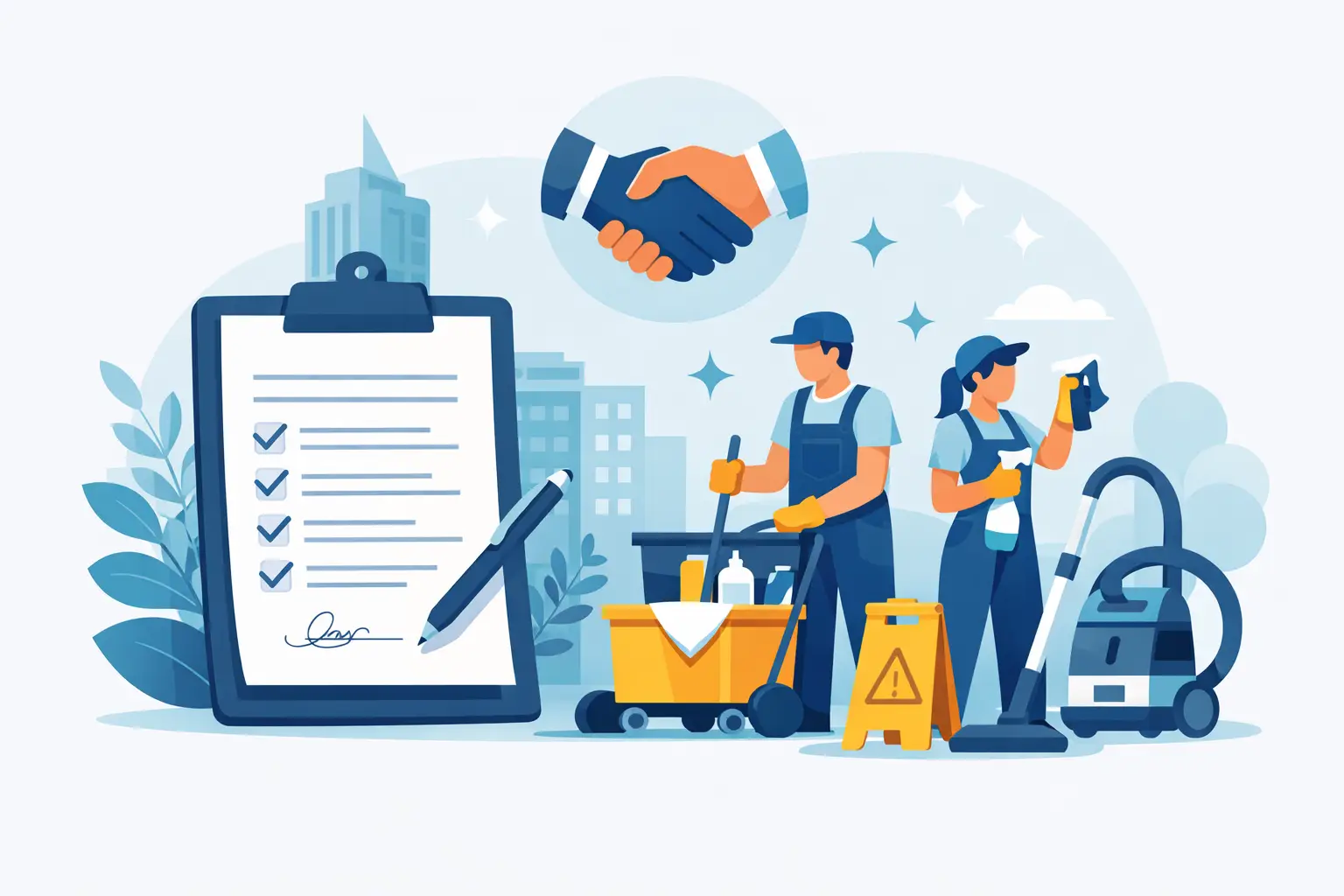

A missed trash pickup in an office is annoying. A missed disinfecting step in a clinic, daycare, or high-traffic shared facility is a bigger operational problem. That is why a commercial cleaning contract guide matters before any service starts. The contract is not just paperwork – it defines what gets cleaned, how often it happens, who is accountable, and what happens when your facility needs change.
For business owners, property managers, and facility teams, the real issue is not whether a cleaning provider can mop floors or sanitize touchpoints. The issue is whether the agreement reflects the reality of your building. A corporate office, fitness center, warehouse, medical space, and condominium common area all need different service levels, staffing approaches, and quality controls. A vague contract usually leads to vague results.
What a commercial cleaning contract should actually do
A good cleaning contract sets operational expectations in plain terms. It should protect both sides, but from the client’s perspective, its main job is to remove assumptions. If the provider says restrooms will be serviced nightly, the contract should clarify what that means. Does it include restocking paper products, spot cleaning partitions, sanitizing touchpoints, and mopping floors, or only emptying trash and wiping counters?
This is where many service agreements fall short. They mention general janitorial service but do not define the scope clearly enough to support accountability. When issues come up, the client believes a task was included and the vendor believes it was outside scope. The contract should prevent that kind of mismatch.
It should also account for your operating environment. A retail store with customer traffic all day may need different timing and appearance standards than a warehouse focused on dust control and floor care. A school or daycare may need stronger attention to sanitation protocols, product safety, and high-touch cleaning frequency. The document should reflect those realities rather than rely on generic language.
The core sections in a commercial cleaning contract guide
The most useful agreements are specific without becoming difficult to manage. A contract does not need legal complexity to be effective, but it does need operational clarity.
Scope of work
This is the heart of the agreement. It should identify the areas covered, the tasks included, and any exclusions. If breakrooms, washrooms, lobbies, stairwells, exam rooms, locker areas, or production-adjacent spaces are part of the service plan, they should be named directly.
The scope should also define service frequency. Daily, three times per week, weekly, and periodic services create very different expectations. If floor stripping, carpet extraction, window cleaning, or deep disinfection are separate add-ons rather than routine tasks, that needs to be written clearly.
Schedule and service hours
For many commercial facilities, cleaning quality is only part of the equation. Timing matters just as much. Service may need to happen after hours, before opening, or in carefully defined windows to avoid staff, residents, students, patients, or customers.
The contract should state when crews are expected on site, what flexibility exists for holiday schedules or special events, and how schedule changes are handled. If access is limited by alarms, keycards, loading dock rules, or site supervisors, those details should be aligned before service begins.
Supplies and equipment
Some contracts include all labor, chemicals, and consumables. Others separate janitorial labor from restroom supplies, liners, soap, paper products, or specialty products for regulated spaces. Neither model is automatically better, but the contract should be clear about who provides what.
This is especially important in medical facilities, schools, food-adjacent environments, and buildings with sustainability standards. If specific products, disinfectants, or low-odor chemicals are required, they should be listed or referenced in the agreement.
Quality control and issue resolution
A dependable provider should have a process for inspections, service follow-up, and complaint resolution. The contract should explain how service concerns are reported, who receives them, and what response window you can expect.
That section matters because even strong cleaning programs need occasional correction. Staff turnover, weather, occupancy swings, and seasonal conditions can affect service demand. A contract that outlines communication procedures gives facility managers a practical path to resolution instead of forcing every issue into an informal back-and-forth.
Insurance, safety, and staffing standards
Commercial cleaning vendors operate in active business environments, and that creates risk if standards are not documented. At a minimum, the contract should address insurance coverage, worker training, and safe handling practices.
Depending on your facility type, you may also need background checks, site-specific onboarding, confidentiality expectations, or protocols for working around sensitive equipment and restricted areas. A serious service provider should be ready for those conversations.
Where buyers often make the wrong assumption
The most common mistake is choosing based on price alone without testing how the contract handles daily operations. A lower monthly number can look attractive until you realize the service plan excludes key areas, limits visit times, or does not include periodic work needed to maintain the building properly.
Another common issue is assuming all square footage carries the same cleaning demand. It does not. Ten thousand square feet of lightly used office space is very different from ten thousand square feet of gym floor, daycare classrooms, or industrial support space. A contract should reflect use patterns, not just building size.
There is also a tendency to overfocus on the task list and underfocus on responsiveness. A provider may offer a long scope of work, but if there is no clear service contact, no escalation path, and no inspection process, execution can become inconsistent. For property managers and operations teams, responsiveness is part of the service, not a bonus.
How to review a contract before you sign
Start by comparing the proposed scope against how your building actually operates during a normal week. Look at traffic levels, occupancy patterns, washroom usage, waste volume, shared spaces, and any areas that create compliance or image concerns. If the contract does not match those pressure points, it will need revision.
Next, test the wording for ambiguity. Terms like clean as needed, sanitize common areas, or maintain appearance can sound acceptable, but they leave too much open to interpretation. Ask what those phrases mean in practice. How often? Which areas? Using what standard?
It also helps to review the contract through exception scenarios. What happens if your business adds staff, expands into another suite, hosts a major event, or needs emergency cleanup after a spill or weather issue? The agreement does not need to predict every situation, but it should show how extra work is approved and billed.
Pay attention to renewal and termination terms as well. Long-term contracts are not necessarily a problem if the service model is strong, but the agreement should still provide a reasonable path for adjustment if the relationship is not working. Flexibility matters, especially for growing organizations and multi-tenant properties.
Why customization matters more than a standard template
A standard contract can provide a starting point, but commercial facilities rarely perform well under one-size-fits-all service plans. Cleaning requirements shift based on occupancy, risk, layout, business hours, and public visibility.
An office may prioritize restroom presentation, reception areas, and touchpoint disinfection. A medical clinic may focus more heavily on treatment rooms, waiting areas, and documented sanitation procedures. A warehouse may need attention on dust control, breakrooms, and floor safety around operational zones. A school or daycare may require product sensitivity, frequent surface cleaning, and dependable after-hours service.
That is why facility-specific planning matters. Companies such as Pristine Maintenance and Services build cleaning programs around the actual use of the building, which tends to produce better long-term results than a generic package with broad promises. The contract should be the written version of that operational plan.
The best contract is clear enough to manage
A commercial cleaning agreement should not read like sales material. It should read like a working document that helps your team manage service, hold standards, and avoid preventable misunderstandings. Clear scope, defined frequencies, response expectations, safety requirements, and pricing structure all support that goal.
If a contract feels too vague to measure, it is probably too vague to manage. And if it does not reflect how your facility actually runs, it will eventually create friction for tenants, staff, customers, or internal operations.
The right agreement gives you more than scheduled cleaning. It gives you a service framework that supports health standards, appearance, and day-to-day continuity – which is exactly what a business environment needs from its cleaning partner.



0 Comments