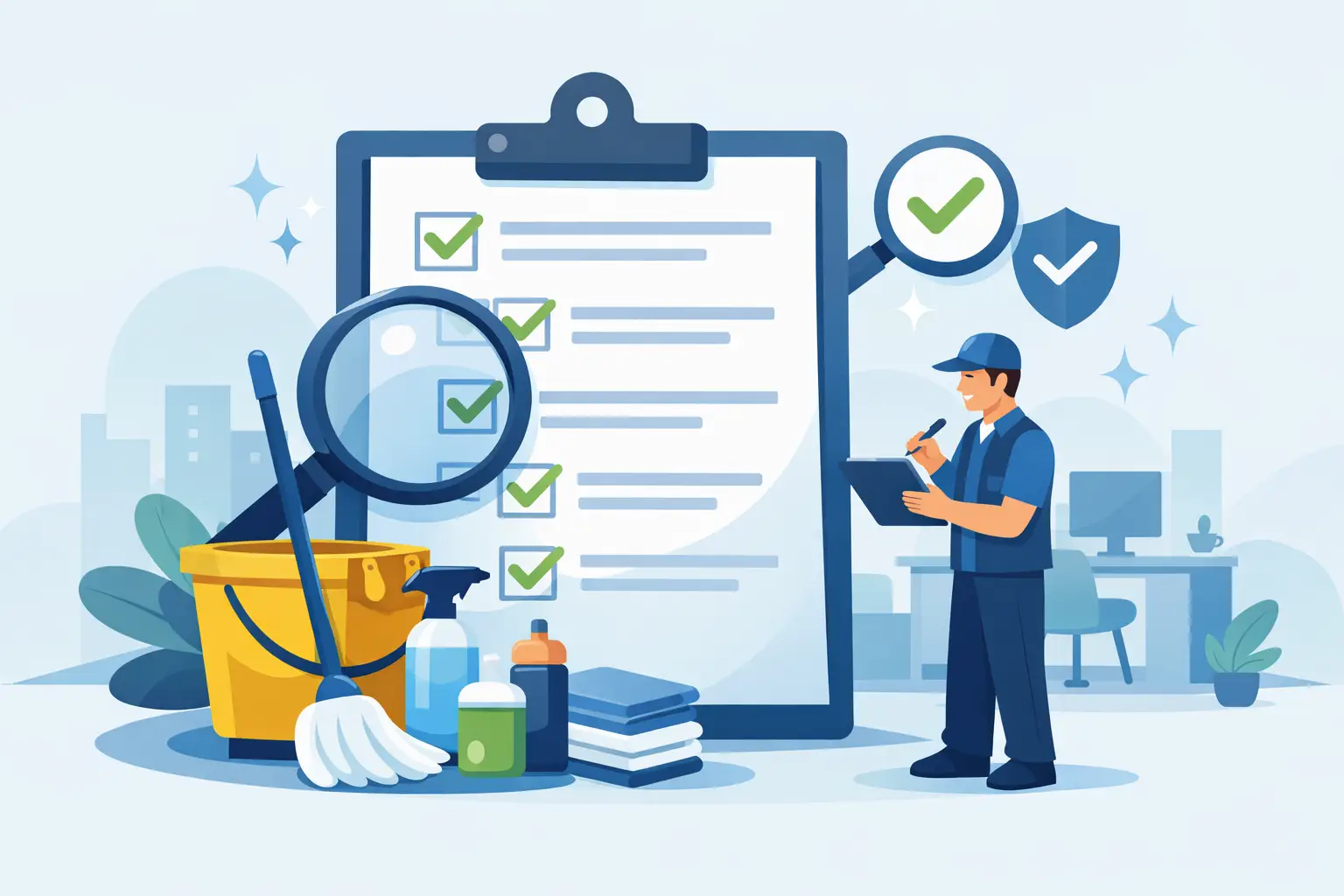

Missed touchpoints rarely show up on a cleaning invoice, but they show up fast in complaints, failed audits, and first impressions. A facility cleaning inspection checklist gives managers a practical way to verify standards, document issues, and keep cleaning quality consistent across shifts, teams, and building zones.
For commercial properties, consistency matters more than good intentions. A lobby may look clean at 8 a.m. and still fail by noon if washrooms are understocked, trash overflows in break areas, or entry glass is covered in fingerprints. Inspection is what closes the gap between work completed and work verified.
Why a facility cleaning inspection checklist matters
Most cleaning problems are not caused by a complete lack of service. They come from drift. Standards slip over time, high-traffic areas wear down faster than expected, or one part of the building gets attention while another is overlooked. A facility cleaning inspection checklist creates a repeatable standard so supervisors, property managers, and cleaning teams are measuring the same thing.
This is especially important in multi-use or sensitive environments. An office may prioritize presentation and touchpoint disinfection, while a medical clinic needs closer attention to sanitation protocols, exam room readiness, and waste handling. A warehouse may care less about cosmetic perfection on every wall panel and more about floor safety, dust control, and clean employee areas. The checklist has to reflect the operation, not a generic idea of cleanliness.
A good inspection process also protects the business side of the relationship. If a facility manager is reviewing service levels with an outsourced vendor, it helps to have written observations instead of vague concerns. Clear inspection records support accountability, trend tracking, and service adjustments before problems become recurring disruptions.
What to include in a facility cleaning inspection checklist
The strongest checklists are structured by area, frequency, and standard. That sounds simple, but it changes how inspections work. Instead of asking whether a building is clean in general, the checklist asks whether specific conditions were met in specific places.
Common area categories
Most commercial facilities need inspection criteria for entrances, lobbies, reception areas, hallways, elevators, restrooms, breakrooms, offices, meeting rooms, and trash collection points. Depending on the property, you may also need building-specific sections for locker rooms, production floors, classrooms, fitness areas, loading docks, stairwells, or common condo amenities.
Within each area, the inspection should cover visible cleanliness, touchpoint condition, supply levels, odors, floor condition, glass appearance, and waste removal. In some settings, it should also include sanitation expectations, cross-contamination controls, and whether approved products and procedures were used.
Task-level inspection points
A useful checklist does not stop at “restroom clean” or “kitchen cleaned.” Those phrases are too broad to inspect consistently. Break the review into task-level observations such as whether sinks are free of residue, dispensers are stocked, mirrors are streak-free, toilets are sanitized, floors are dry, and trash liners were replaced.
The same applies in offices and public areas. Rather than noting that “dusting was done,” inspect whether horizontal surfaces are dust-free, high-touch surfaces were wiped, spot-cleaning was completed on glass, and corners or edges were free of debris. The more specific the checkpoint, the easier it is to spot patterns and correct them.
Scoring and comment fields
Most facilities benefit from a simple pass-fail system or a small numeric scale. A 1-to-5 score can work well when different buildings or vendors are being compared over time, but only if the scoring definitions are clear. If one supervisor gives a 5 for “acceptable” and another reserves a 5 for “excellent,” the reporting loses value.
Comment fields matter just as much as scores. They give context to exceptions, recurring deficiencies, and conditions outside the cleaner’s control, such as weather-related entrance tracking or unusual event traffic. Photos can also help if your team needs documentation for follow-up.
How to make the checklist fit the facility
A checklist that works in a corporate office may fail in a daycare, restaurant, or industrial site. The point is not to create a longer form. The point is to create a relevant one.
In office settings, presentation and occupant comfort usually drive inspections. That means attention to deskside trash, conference rooms, restroom appearance, reception areas, and fingerprint-free glass. In schools and daycares, the checklist should place greater emphasis on sanitizing high-touch surfaces, classroom readiness, restroom stocking, and safe product use. In medical environments, inspection standards often need to align with stricter hygiene protocols and room turnover expectations. In warehouses and manufacturing settings, floor safety, dust accumulation, restroom maintenance, and break area sanitation often matter more than cosmetic perfection in low-visibility zones.
That is why customized cleaning programs usually perform better than generic service packages. The inspection process should reflect what the facility actually needs to function safely and present well.
Who should use the checklist
The answer depends on how the cleaning program is managed. In some buildings, an onsite supervisor completes daily inspections and escalates issues immediately. In others, a property manager or office administrator may do periodic walkthroughs to confirm service quality. Outsourced cleaning providers may also use internal quality control inspections before the client ever raises a concern.
The best approach is usually layered. Cleaning staff complete the assigned work, a supervisor performs routine inspections, and the client side conducts periodic review at a management level. That structure reduces blind spots. It also helps distinguish between one-time misses and larger process problems such as rushed routes, unclear scope, or inadequate frequency.
If multiple people are inspecting, standardization matters. They should use the same checklist, the same scoring criteria, and the same escalation process. Otherwise, one person flags issues another person ignores, and consistency breaks down.
How often inspections should happen
Inspection frequency should match traffic, risk, and operational sensitivity. High-use restrooms, public entrances, and customer-facing areas may need daily or multiple daily checks. Standard office zones may only need formal inspection several times a week if cleaning is performed nightly and the environment is stable. Medical, food-related, educational, and high-volume public facilities often require more frequent review.
There is a balance here. If inspections are too rare, quality problems build up before anyone catches them. If they are too frequent and too detailed, staff can start treating the checklist as paperwork rather than quality control. A practical schedule focuses close attention where the risk is highest and uses trend data to adjust the level of oversight.
Common mistakes that weaken inspections
One common mistake is making the checklist too vague. If the criteria are open to interpretation, the results will be inconsistent. Another is making it too long. When every minor item carries equal weight, inspectors rush through the process or skip meaningful comments.
A separate issue is failing to connect inspections to action. If the same restroom, entrance, or tenant area keeps failing and no one changes staffing, frequency, or task sequencing, the checklist becomes a record of frustration rather than a management tool.
It also helps to avoid inspecting only after complaints. Reactive review has its place, but routine inspections are what prevent recurring issues. A strong cleaning program is maintained through verification, not just correction.
Turning inspection results into better service
Inspection data should lead somewhere. If you are seeing repeated failures in one zone, ask whether the standard is realistic, the staffing level is adequate, the service frequency is right, or the team needs clearer procedures. In many cases, recurring issues are not about effort. They are about fit.
For example, if a lobby looks poor by mid-afternoon even though it passes a morning inspection, the issue may be daytime porter support rather than nightly cleaning quality. If restroom scores drop every Monday, weekend traffic may be outpacing the current schedule. If dust continues to build in a warehouse office near production space, the cleaning method may need to change.
This is where an experienced commercial cleaning partner adds value. A provider like Pristine Maintenance and Services should not just accept checklist results. They should be able to interpret them, adjust the service plan, and align cleaning execution with the way the facility actually operates.
A simple standard is better than a perfect form
The best facility cleaning inspection checklist is not the one with the most boxes. It is the one your team will actually use, understand, and act on. It should be specific enough to measure performance, flexible enough to reflect the building, and practical enough to support routine inspections without slowing operations down.
If your facility depends on clean restrooms, safe floors, presentable common areas, and reliable sanitation standards, inspection cannot be an afterthought. It is the control point that keeps the cleaning program honest. Start with the areas that affect occupants most, define what acceptable looks like, and build from there. A clear checklist does more than document cleanliness. It helps protect the standard your building runs on.
0 Comments