
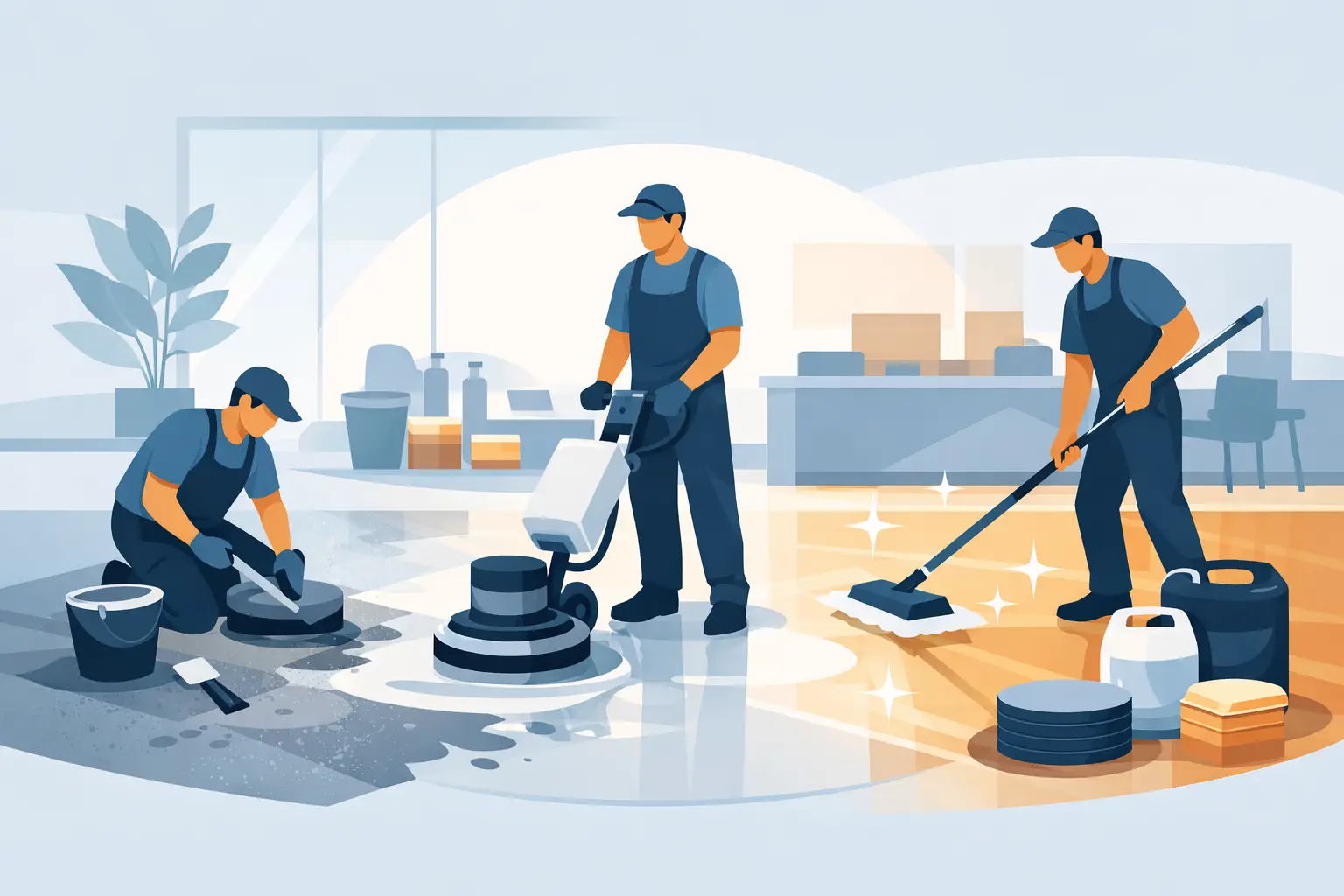

A floor can look clean at opening time and still make the wrong impression. Dull traffic lanes, black heel marks near entrances, embedded grime around checkout areas, and an uneven finish tell visitors and staff that a facility is not being maintained to the standard they expect. For resilient commercial floors, floor stripping and waxing services address the problem below the surface of routine mopping.
This work is not simply about making floors shiny. A properly planned restoration program removes worn finish, releases trapped soil, and applies protective coats that help the flooring stand up to daily traffic. For property managers, facility teams, and business owners, the value is a cleaner appearance, easier ongoing maintenance, and a floor care schedule that supports operations instead of interrupting them.
What Floor Stripping and Waxing Services Do
Waxed floors are protected by layers of floor finish, often called wax in everyday facility language. Those layers take the damage that would otherwise reach the flooring itself. Over time, foot traffic, carts, salt, moisture, cleaning chemicals, and improper maintenance wear down that protective surface.
Stripping removes the old, damaged finish along with accumulated residue and embedded soil. The floor is then thoroughly rinsed, allowed to dry, and coated with new finish. Depending on the floor type, traffic level, and desired appearance, several coats may be applied. Once cured, the new finish provides a more uniform, professional look and a protective barrier for the substrate below.
The process is most commonly used on vinyl composition tile, vinyl flooring, linoleum, and certain other resilient floor systems. It is not a universal solution. Natural stone, hardwood, carpet, polished concrete, and some luxury vinyl products require different procedures. Applying an incompatible stripper, finish, or pad can damage the material or create a maintenance problem that costs more to correct.
Signs Your Facility May Need Floor Restoration
Routine cleaning should remove day-to-day dirt and spills, but it cannot rebuild a finish that has been worn away. A floor may need stripping and refinishing when it remains dull after cleaning, shows permanent-looking traffic lanes, or has yellowed, peeling, or patchy finish.
Other signs include scuffing that returns quickly after buffing, dirt collecting in seams and textured areas, or floors that look different from one section of the building to another. Entryways, hallways, elevator lobbies, break rooms, classrooms, retail aisles, and patient waiting areas often show wear first because they receive more traffic and more moisture.
In winter conditions, salt and de-icing residue can be especially hard on commercial floors. Without effective entry matting and regular neutral cleaning, abrasive debris can scratch the finish and accelerate dulling. A restoration service can correct existing wear, but the right daily and periodic maintenance plan helps preserve the new finish longer.
Why Timing Matters in Commercial Facilities
Stripping and waxing is detailed work. Furniture may need to be moved, the work area must be isolated, and each stage requires adequate drying and curing time. For that reason, scheduling matters as much as the application itself.
Many offices, clinics, schools, retail locations, and condominium common areas are best serviced after hours, overnight, or during a planned low-traffic period. A warehouse or manufacturing facility may require work to be divided into sections so that loading, production, or staff movement can continue. Restaurants and fitness facilities often need a schedule that accounts for opening hours, equipment placement, and safety requirements.
A dependable provider begins by assessing the space rather than promising a one-size-fits-all turnaround. The condition of the floor, ventilation, humidity, existing finish, square footage, and facility access all influence the work plan. A smaller suite may be completed in one service window, while a large campus or multi-floor property may need phased work over several nights.
The goal is to return the area to service with a finish that has had appropriate time to cure. Rushing that process can leave floors vulnerable to marks, uneven wear, or finish failure shortly after service.
The Right Level of Service Depends on Floor Condition
Full stripping is effective, but it is not always necessary. If the existing finish is still intact and the issue is mostly surface wear, a scrub and recoat may be the better choice. This process removes top-layer soil and lightly abrades the existing finish before new coats are applied. It can restore appearance with less disruption and lower cost than a complete strip.
Burnishing may also help in settings where a high-gloss finish is appropriate and the floor is receiving consistent daily care. However, burnishing cannot fix deep scratches, discoloration beneath the finish, peeling layers, or heavy buildup. Repeatedly polishing a failing floor can make the problem less obvious for a short time while allowing it to worsen underneath.
The practical question is not whether a floor should look glossy. Some facilities need a lower-sheen finish to suit their environment, lighting, or safety preferences. The question is whether the protective finish is uniform, cleanable, and appropriate for the use of the space.
Safety and Appearance Are Closely Connected
A clean floor supports a professional environment, but appearance is only part of the decision. Proper floor maintenance can also improve cleanliness and safety. A worn, porous, or damaged finish holds soil more easily and requires more effort during daily cleaning. Restoring the protective layer makes it easier to remove routine dirt and respond to spills.
Slip resistance needs to be considered carefully. More shine does not automatically mean a safer floor, and the products used should be suitable for the flooring and facility conditions. Areas exposed to water, snow, food service spills, or frequent public traffic require a thoughtful approach to finish selection, entry matting, signage, and regular cleaning procedures.
For medical offices, daycares, schools, and other health-sensitive spaces, the work should also be coordinated around hygiene expectations and occupancy. Equipment, chemicals, ventilation, and access controls should be managed by trained staff following safe work practices. The floor care plan should fit the site’s broader cleaning and sanitation program rather than operate separately from it.
Protecting the Investment After Refinishing
A newly finished floor will not stay that way without consistent maintenance. The fastest way to shorten its life is to use harsh cleaners, dirty mop water, abrasive tools, or excessive water. These practices can dull the finish, leave residue, and push moisture into seams or edges.
Daily dust mopping and prompt spill response reduce abrasive grit. Neutral floor cleaner, properly diluted and changed as needed, helps preserve the finish without leaving a film behind. High-traffic entrances benefit from adequate matting that captures moisture and debris before it reaches the flooring.
A maintenance schedule should reflect real traffic rather than an arbitrary calendar date. A quiet professional office may need a different recoating cycle than a busy retail store, school hallway, gym, or condominium lobby. Seasonal weather, visitor volume, and how the space is used all affect the condition of the finish.
Choosing a Commercial Floor Care Provider
Floor restoration is a specialty service where process control matters. Before scheduling work, facility decision-makers should confirm that the provider can identify the floor material, assess whether stripping is actually needed, and recommend a service plan that aligns with building use.
Experience in occupied commercial environments also matters. The provider should be able to coordinate access, protect adjacent surfaces, manage wet-floor safety, communicate service windows clearly, and work around operational requirements. Insurance coverage, trained staff, safe product handling, and quality checks are practical indicators of a service partner that understands commercial standards.
Pristine Maintenance and Services approaches specialty floor care as part of a facility-specific cleaning program. For businesses and managed properties, that means planning floor stripping and waxing around traffic patterns, occupancy, and after-hours access while supporting the daily maintenance needed to protect the result.
A restored floor should not become another operational concern for your team. When the service scope, timing, and maintenance plan are matched to the facility, the result is a cleaner surface that continues to perform long after the work is complete.


0 Comments