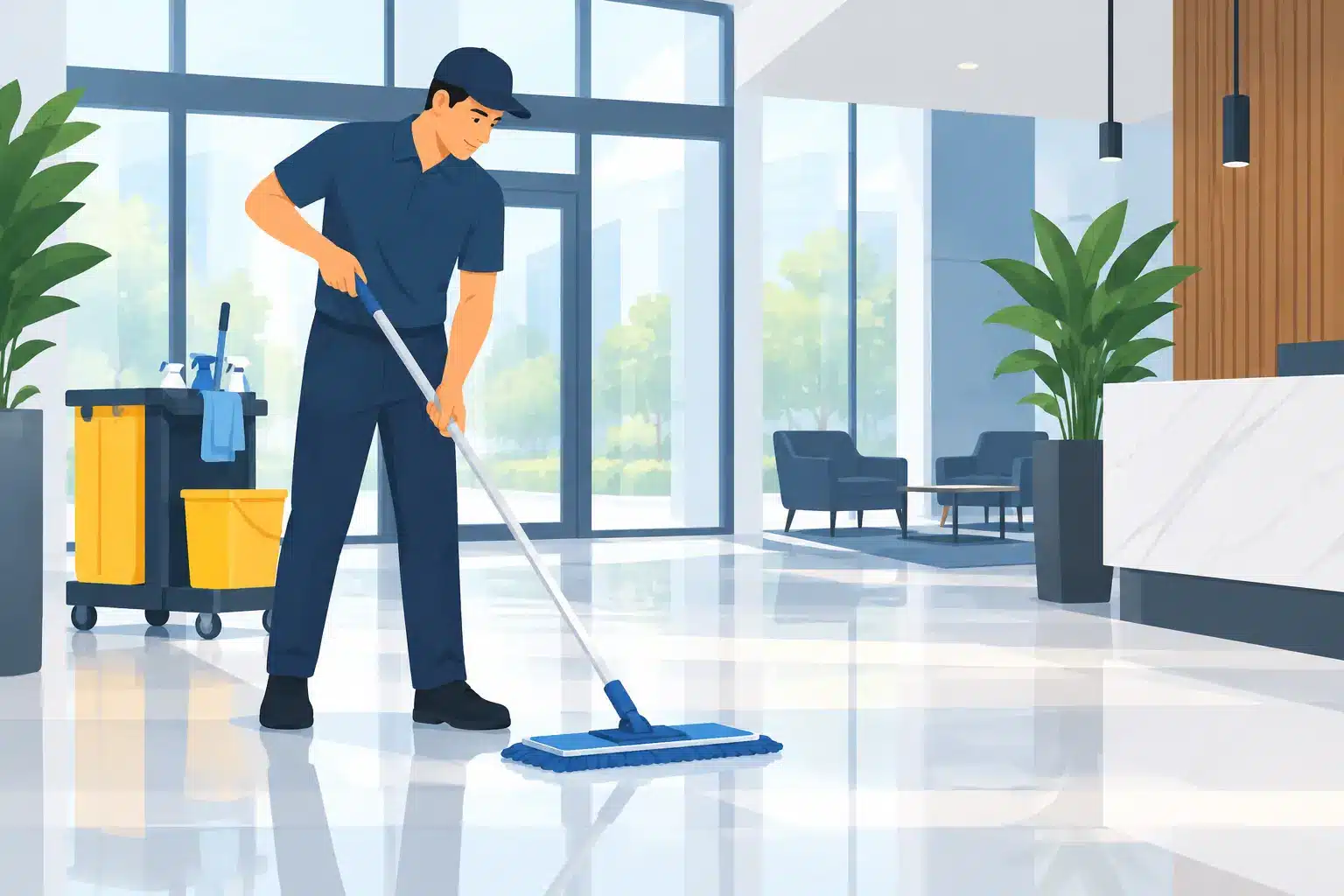

A lobby can look presentable at 8:00 a.m. and noticeably neglected by noon. Wet entryways, overflowing restroom supplies, fingerprints on glass, and a spill near a reception desk all affect how people experience a facility. Day porter duties address those issues as they occur, keeping occupied buildings clean, safe, and ready for employees, visitors, tenants, patients, or customers.
Unlike an after-hours cleaning crew, a day porter works while the facility is open. The role is not simply to repeat nightly janitorial work during the day. It is an active, visible support function focused on appearance, hygiene, safety, and quick response in high-use areas.
What Are Day Porter Duties?
Day porter duties are the routine cleaning, monitoring, replenishment, and light maintenance tasks performed during operating hours. The exact scope should reflect the building, its traffic patterns, and its health and safety requirements.
In a busy office, the priority may be clean restrooms, orderly break rooms, and polished common areas. In a medical clinic, the focus may shift toward disinfecting touchpoints, maintaining supplies, and responding quickly to contamination concerns. A retail store may need continuous attention at entrances, fitting rooms, and customer-facing displays, while a condominium may require lobby care, elevator detailing, and support for high-traffic amenity spaces.
The most effective day porter program is planned around real facility activity. It accounts for when visitors arrive, when restrooms see the heaviest use, where waste accumulates, and which spaces create the strongest first impression.
Core Day Porter Duties During Business Hours
A day porter typically begins by inspecting priority areas rather than assuming every space needs the same level of attention. This initial walkthrough identifies immediate concerns such as spills, full trash bins, empty dispensers, tracked-in dirt, or visible debris in public areas.
Maintaining entrances and common areas
Entrances are among the most demanding areas in a commercial property. Rain, snow, salt, dust, and foot traffic can quickly create slip hazards and leave floors looking worn. A porter may sweep, spot mop, maintain floor mats, clean glass doors, remove debris, and place caution signage when conditions require it.
Lobbies, corridors, elevators, stairwells, and waiting rooms also need regular attention. The work often includes removing litter, wiping visible surfaces, cleaning fingerprints from glass and push plates, straightening furniture, and maintaining a professional presentation throughout the day.
This work is especially valuable in buildings where clients, prospective tenants, patients, or customers arrive continuously. A clean entrance signals that the facility is managed with care before anyone reaches the reception desk.
Restroom cleaning and supply replenishment
Restrooms are one of the clearest measures of cleaning quality in an occupied facility. A day porter checks them on a scheduled basis and more often during peak traffic periods. Tasks may include cleaning and disinfecting fixtures, spot mopping floors, emptying waste receptacles, removing visible debris, and addressing odors.
Replenishing toilet tissue, hand towels, soap, and sanitizer is equally important. An otherwise clean restroom creates frustration if basic supplies are missing. For facilities with public access, schools, gyms, clinics, or large workforces, a documented restroom check schedule can provide added accountability.
Break room and kitchen support
Shared kitchens and break rooms can become messy quickly, particularly around lunch periods. Day porter duties in these spaces may include wiping tables and counters, cleaning spills, loading or organizing dishes where agreed, emptying garbage and recycling, and maintaining coffee station or condiment areas.
A porter is not responsible for managing employee behavior, but consistent upkeep makes it easier for staff to use shared spaces responsibly. It also reduces the likelihood that food waste, overflowing bins, or unattended spills become sanitation or pest concerns.
Waste, recycling, and visible debris removal
Waste collection during the day prevents overflowing bins in reception areas, food service spaces, washrooms, and high-traffic corridors. Porters remove trash and recycling according to the facility’s procedures, replace liners, and maintain clean collection points.
The right frequency depends on the operation. A low-traffic office may need limited daytime collection, while a restaurant, school, warehouse, or retail location may need multiple rounds. Waste handling should also account for secure disposal practices, recycling requirements, and any site-specific protocols for medical or regulated materials.
Spill response and safety support
Fast spill response is one of the most important functions of an on-site porter. A wet floor, dropped food, leaking container, or broken glass can create a safety issue in minutes. The porter isolates the area, posts appropriate signage, cleans the hazard using approved methods, and reports conditions that require additional maintenance or repair.
A day porter does not replace building engineering, security, or emergency response personnel. However, they can identify concerns early and direct them to the appropriate contact. This may include reporting a leaking washroom fixture, damaged flooring, burned-out lighting, broken dispenser, blocked exit, or recurring odor.
Touchpoint cleaning and targeted disinfection
High-touch surfaces can require attention throughout the day, particularly in health-sensitive or high-volume environments. Door handles, elevator buttons, reception counters, railings, shared equipment, and washroom touchpoints may be cleaned and disinfected according to the facility’s needs.
The distinction matters. Cleaning removes dirt and residue, while disinfection is performed using appropriate products and contact times. A professional provider should use products suited to the surfaces and environment, especially in medical offices, daycares, schools, food-related spaces, and fitness facilities.
Where a Day Porter Adds the Most Value
Not every building needs a full-time porter. The decision depends on traffic volume, public visibility, operating hours, restroom demand, and how quickly conditions change between nightly cleans.
A small office with limited visitors may be better served by regular evening janitorial service and occasional daytime support. By contrast, a multi-tenant office, clinic, retail center, large gym, educational facility, or condominium with active common areas may benefit from daily porter coverage.
Day porter service is also useful when a building has high standards for presentation but cannot disrupt occupants with frequent full cleaning rounds. The porter can work discreetly, addressing immediate needs without interrupting meetings, customer service, instruction, or patient care.
Building a Day Porter Schedule That Works
A general task list is a starting point, not a complete service plan. Effective coverage is based on frequency, inspection points, and response expectations. For example, a porter may inspect restrooms every hour during peak times, refresh the lobby after morning arrivals, monitor the break room around lunch, and complete touch-up rounds before afternoon visitors arrive.
Facility managers should clearly define which areas receive scheduled service and which requests qualify as on-demand support. This prevents confusion when a porter is asked to handle work outside the agreed scope, such as heavy lifting, technical repairs, biohazard cleanup, or specialized floor restoration.
Communication is equally important. A daily log, shift checklist, or supervisor check-in can document completed rounds, supply needs, incidents, and maintenance observations. This gives operations teams a practical record of service while helping the cleaning provider adjust staffing or task frequency when conditions change.
What to Expect From a Professional Day Porter
A reliable porter should arrive in proper uniform, follow site access and safety procedures, use approved cleaning products, and work with awareness of the people around them. In customer-facing facilities, professionalism matters as much as cleaning skill. The porter may be the cleaning representative that tenants, employees, or visitors see most often.
Training should cover safe chemical handling, floor safety, infection-control practices where applicable, waste procedures, and respectful conduct in occupied spaces. Insurance, supervision, and clear escalation procedures also matter, particularly in facilities with public access or compliance requirements.
At Pristine Maintenance and Services, porter coverage can be tailored to the operating realities of a facility rather than assigned as a fixed, one-size-fits-all checklist. That approach helps ensure attention is directed where it has the greatest operational impact.
A well-managed day porter keeps small issues from becoming visible problems. When the schedule matches the building’s rhythm, occupants notice a space that stays clean, supplied, and professional from opening through closing.


0 Comments